

Great Pyrenees rescue dogs available for adoption near you: A 2026 guide to regional programs, costs and suitability
Great Pyrenees rescue dogs available for adoption near you can involve foster networks, regional programs, screening and travel. This guide explains breed needs, adoption fees, typical records, household eligibility and warning signs when comparing organizations.
Key facts
- Published 2026 guides place Great Pyrenees adoption fees at approximately $150 to $400, depending on age and organization. 1 2
- Some regional rescue programs require visible physical fencing because Great Pyrenees may roam beyond household boundaries. 3 4
- Texas Great Pyrenees Rescue describes a statewide foster network with dogs assigned to regional areas for adoption. 5
- Adoption screening commonly includes an application, conversation, home assessment, veterinary references and a meet-and-greet. 3
Great Pyrenees rescue dogs available for adoption near a particular household are usually found through breed-specific organizations, municipal shelters, foster networks and regional transport programs. Individual dogs may be adopted, placed on hold or moved between foster homes quickly, so a general program directory cannot guarantee that a particular animal remains available. The practical approach is to compare service areas, screening rules, dog histories, costs and travel requirements before beginning an application.
Where Great Pyrenees rescue programs operate
Breed rescue is organized differently across the United States. Texas Great Pyrenees Rescue describes a statewide network with foster homes and dogs assigned to regional areas, while its meet-and-greet activity has been associated with Flower Mound, Texas. 5 Florida Great Pyrenees Rescue is another regional example, although individual dog pages change as animals move through the program. These organizations illustrate why location matters: the nearest foster home may still be several hours away, and a regional program may limit adoption to particular states.
Other examples serve broader geographic areas. Western Maine Great Pyrenees Rescue describes a foster-based program centered in North New Portland and adoption activity for approved homes in Maine and New Hampshire. 6 Great Pyrenees Rescue Resources Utah Montana identifies Utah and Montana as its main service area. 1 Local animal shelters can also have Great Pyrenees or mixes, particularly in rural areas, but breed identification may be approximate. Regional directories, shelter pages and national breed-rescue networks are useful starting points, followed by direct confirmation of service boundaries.
How adoption and foster placement usually work
A typical process begins with an application describing housing, fencing, work schedules, household members, animals and veterinary history. A rescue may then conduct a telephone or video interview, contact references and arrange a home assessment. One Great Pyrenees rescue outline lists an application, a conversation, a video or in-person meeting, a home check and veterinary or reference checks before a contract is signed. 3 Policies differ, so an approved application does not necessarily mean approval for every dog.
Foster homes can provide observations that kennel environments cannot, including how a dog behaves indoors, around visitors, during grooming, on walks and with other animals. Even so, behavior may change after relocation, especially during the first weeks. A meet-and-greet should cover all household members and resident dogs where appropriate. Questions about cats, children, food guarding, nighttime barking, leash skills, car travel, escape behavior and reactions to unfamiliar people are more useful than relying on broad labels such as gentle or easygoing.
Typical adoption fees and initial expenses
Published 2026 cost guides place Great Pyrenees adoption fees around $150 to $300, while regional rescue examples list approximately $275 for adults, $400 for puppies and $100 or less for some seniors. 1 2 These are market examples rather than a universal schedule. Age, medical treatment, transport, location and the organization’s cost structure can change the amount. A fee may cover sterilization, vaccinations, identification, parasite treatment or a health certificate, but the exact inclusions should be documented.
| Cost category | Published example | What to verify |
|---|---|---|
| Adult adoption fee | About $150 to $300 in a 2026 cost guide; $275 in one regional program | Medical procedures, records and contract terms 1 2 |
| Puppy adoption fee | About $400 in one Utah and Montana program | Age, vaccination status and sterilization arrangements 1 |
| Senior adoption fee | $100 or less in one regional program | Medication needs, diagnostics and ongoing veterinary care 1 |
Initial household costs extend beyond the adoption fee. A giant-breed dog requires appropriately sized food and equipment, a secure sleeping area, grooming tools, transport restraints and veterinary care. A household also needs a plan for recurring food, parasite prevention, routine examinations, grooming and unexpected treatment. Transport can add a separate charge when a dog crosses state lines, and some programs require the adopter to collect the dog in person.
Great Pyrenees temperament and living requirements
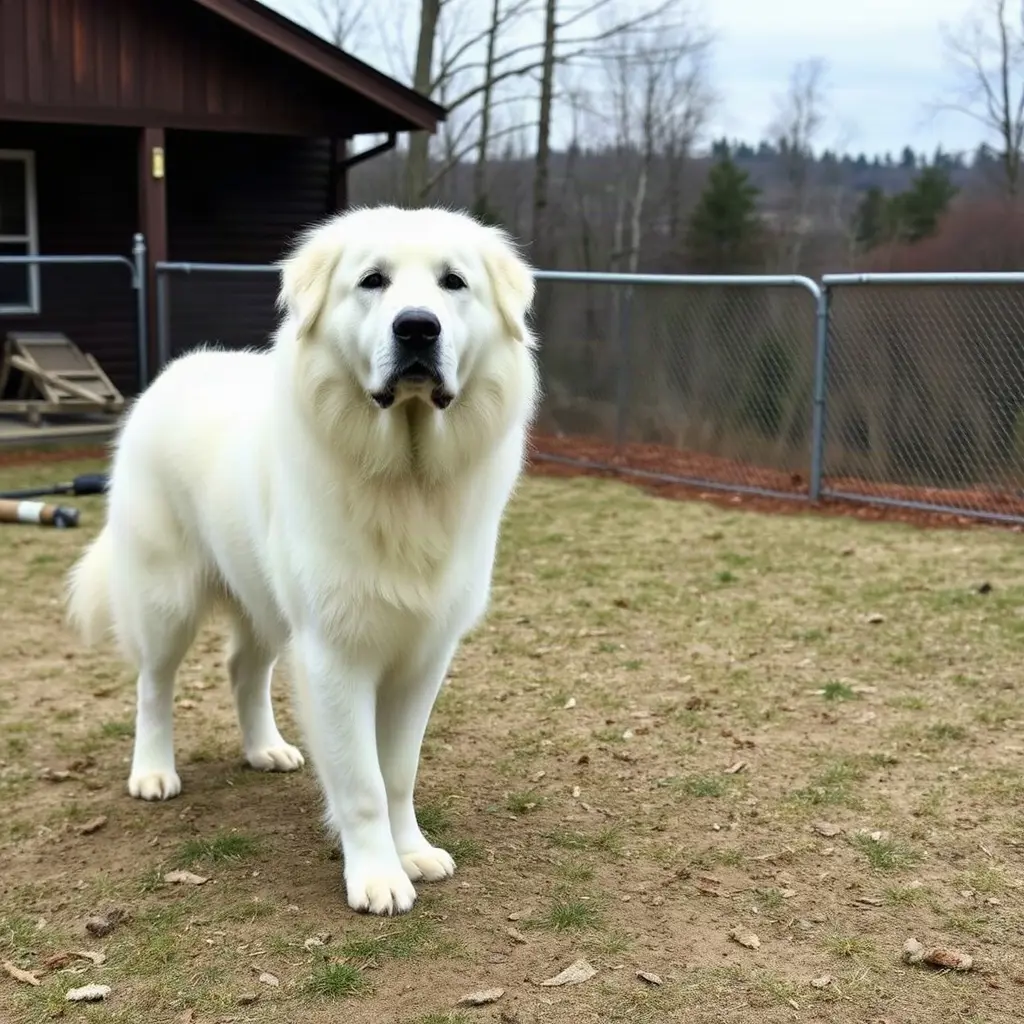
Great Pyrenees were developed as livestock guardians, so independence, territorial awareness and protective behavior are central considerations rather than minor quirks. Many are affectionate with familiar people but may bark at nighttime sounds, visitors, wildlife or activity beyond the property. They can be calm indoors while still needing regular walks, outdoor time and mental engagement. Training should emphasize calm handling, reliable routines and safe introductions, because physical strength makes preventable management errors more consequential.
Secure containment is a major suitability issue. Rescue programs commonly request visible physical fencing, and one regional description specifically notes that the breed may roam. 3 4 Invisible boundaries may not be accepted by a rescue and may be unreliable for a determined guardian dog. Thick coats also require regular brushing and can shed heavily during seasonal changes. Apartment living is not automatically impossible, but barking, elevator or hallway encounters, limited outdoor access and landlord rules require careful evaluation. A cool, shaded environment is important during hot weather.
Questions to ask about a rescue dog
Available records may vary because some dogs arrive with known histories while others have been abandoned or transferred without complete documentation. Before agreeing to adoption, request vaccination dates, sterilization status, microchip information, parasite treatment, medications, prior injuries and known chronic conditions. Ask whether the dog has received a veterinary examination and whether copies of records will accompany the placement. A responsible organization should explain what is known, what remains uncertain and who is responsible for follow-up care.
Behavioral questions should be specific and based on observed routines. Ask how the dog reacts to children, cats, dogs of different sizes, visitors, handling, grooming, food, confinement, vehicles and being left alone. Clarify whether the dog has escaped, guarded objects, shown fear, damaged property or displayed aggression. Also ask about return procedures, post-adoption support, geographic restrictions and whether the organization can provide a foster-to-adopt arrangement. Written answers are preferable to vague assurances, especially for a large guardian breed.
How to assess eligibility and warning signs
Common eligibility factors include permission to keep a large dog, suitable containment, realistic time for adjustment, agreement from all household members and a plan for existing pets. Some organizations prefer experienced Great Pyrenees owners, while others consider first-time adopters who demonstrate preparation. A quiet home may suit a dog that is cautious with strangers, whereas a busy household may suit only a dog with a well-documented tolerance for activity. Matching should focus on the individual dog, not the breed’s reputation alone.
Warning signs include pressure to send money before seeing reliable records, reluctance to explain medical history, inconsistent descriptions, unclear contracts, no identifiable service area and refusal to discuss returns. A rescue’s charitable status by itself does not prove good practices. Check whether names, contact details, foster arrangements and veterinary documentation are consistent, and be cautious when an organization presents every dog as universally compatible. Availability changes continuously, so direct confirmation, an in-person or supervised video meeting and a written agreement are important safeguards.
Sources
- Great Pyrenees Rescue Resources Utah Montana, 448 W 2400 S, Woods Cross, UT (2026): https://www.voofla.com/US/Woods-Cross/110905261446307/Great-Pyrenees-Rescue-Resources-Utah-Montana
- How Much Does a Great Pyrenees Cost? 2026 Price Guide — Dogster: https://www.dogster.com/lifestyle/great-pyrenees-cost/
- Adopt a Great Pyrenees - by Kenneth Roach: https://pyreneeshomewardtrails.substack.com/p/adopt-a-great-pyrenees
- Great Pyrenees Rescue, Montana, Missoula, MT (2026): https://www.voofla.com/US/Missoula/826672954057486/Great-Pyrenees-Rescue%2C-Montana
- TEXAS GREAT PYRENEES RESCUE: http://txgpyr.blogspot.com/
- Western Maine Great Pyrenees Rescue, North New Portland, ME (2026): https://www.voofla.com/US/North-New-Portland/106593391821272/Western-Maine-Great-Pyrenees-Rescue