Clearance pricing for Michelin tires: An Australian market guide to costs, stock age and performance
Key facts
- Published Australian pricing research places premium passenger tyres broadly between 220 and 380 AUD per tyre when fitted.
- Australian passenger tyres commonly last about 30,000 to 60,000 kilometres, depending on construction, driving and maintenance.
- Michelin-brand replacement volumes rose 6% in the first quarter of 2026, while 18-inch and larger products represented 69% of brand sales.
- Tyre suitability depends on the vehicle placard, owner’s manual, size, load index, speed rating and intended road conditions.
Clearance pricing for Michelin tires is best understood as an inventory-management question rather than a standing market promise. In Australia, the amount attached to a Michelin tyre reflects its dimensions, construction, intended use, import and freight costs, currency movements, fitting services and the age of the stock. The practical task is to compare equivalent specifications and the complete fitted cost, while checking that the tyre matches the vehicle and remains appropriate for local driving conditions.
What shapes Michelin tyre pricing in Australia
Michelin occupies the premium end of the replacement market, but there is no single Michelin price. A compact touring tyre in a common 15-inch size uses less material and may be easier to source than a large, reinforced SUV, electric-vehicle or performance tyre. Low-profile construction, run-flat technology, higher load ratings and specialist tread compounds generally add complexity. Australian prices also absorb international freight, port handling, exchange-rate changes and workshop labour.
A 2026 Perth market guide places premium tyres, including Michelin and comparable brands, at about 220 to 380 AUD each fitted, with the quoted package including fitting, balancing, GST and old-tyre disposal. That is a regional reference range, not a Michelin tariff or a universal national price. 1 A separate Australian sample of 2,791 advertised tyre listings across common 14-inch to 16-inch sizes ranged from 37 to 535 AUD per tyre, showing how strongly size, brand tier and service inclusions affect comparisons. 2
How inventory cycles affect market adjustments
Tyre retailers and distributors must rotate inventory because manufacturers introduce revised tread designs, change original-equipment fitments and manage products made in different production periods. Storage space, shipping schedules, vehicle-model turnover and demand for particular sizes can all affect how a retailer positions an older or less frequently requested line. These adjustments apply to specific stock, not necessarily to every Michelin product.
Market conditions also move independently of retail timing. Australia relies heavily on imported tyres, so global factory output, freight costs, raw-material prices and currency movements can influence replacement pricing before a product reaches a workshop. Michelin reported that currency effects accounted for its first-quarter 2026 revenue decline, while replacement sales of the MICHELIN brand increased 6% by volume. 3 That combination illustrates why brand demand and final consumer pricing do not always move in the same direction.
Michelin segments and competing premium choices
Michelin products sold in Australia generally serve several broad use cases: quiet touring for everyday passenger cars, high-performance driving, SUV and light-truck applications, and more rugged all-terrain use. The relevant comparison is the model’s specification and intended duty, not only the logo on the sidewall. Touring tyres usually prioritise comfort and long wear, performance tyres place greater emphasis on steering response and wet braking, and all-terrain designs trade some road refinement for traction on loose surfaces.
Other premium brands, including Bridgestone, Continental, Goodyear and Dunlop, compete across similar categories. Independent Australian tyre guidance notes that brand position can influence wet braking, noise, tread life, manufacturing consistency and after-sales support, but also stresses that brand alone is not enough to select a tyre. 4 A fair comparison keeps size, load index, speed rating, vehicle position and intended use constant, then examines independent tests and the label information available for the same category.
How to compare grip, efficiency and tread life
Tyre labels and technical sheets commonly separate wet grip, rolling resistance or fuel-efficiency performance, and exterior noise. These measures describe different trade-offs. Lower rolling resistance can support energy efficiency, while wet-grip performance relates to braking and handling on wet roads. Neither label replaces consideration of heat, alignment, road surface, driving style or the vehicle’s electronic safety systems.
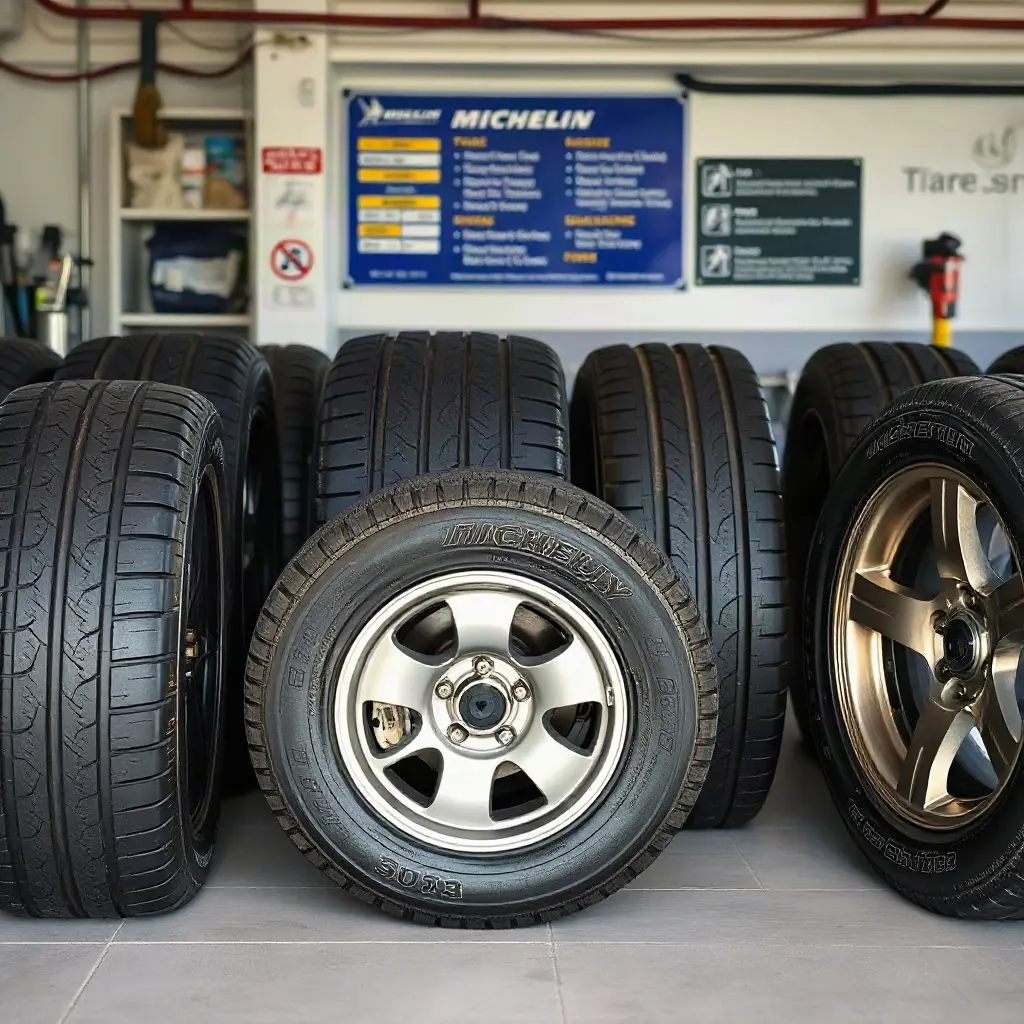
Australian guides place typical passenger-tyre life at about 30,000 to 60,000 kilometres, although the result varies with compound, vehicle weight, road surface, acceleration, cornering and maintenance. 5 Another 2026 guide gives a broader practical expectation of roughly 40,000 to 60,000 kilometres or five to seven years for many quality passenger tyres, while noting that sunlight and high road temperatures can shorten service life. 6 A tyre with a higher initial cost can therefore have a different long-term value if it maintains useful tread for longer, but mileage claims should never be treated as guaranteed.
Checking fitment before comparing a set
The vehicle’s tyre placard and owner’s manual provide the starting point for selection. They identify the approved size and commonly specify the minimum load index and speed rating. Diameter, width, aspect ratio, construction type and seasonal capability must match the vehicle’s requirements. A tyre that physically fits the wheel may still be unsuitable if its load capacity, speed rating or handling characteristics do not meet the manufacturer’s specification.
Driving conditions also matter. A city hatchback, a long-distance touring sedan, a heavily loaded SUV and an electric vehicle place different demands on a tyre. Michelin reported that 18-inch and larger tyres made up 69% of MICHELIN-brand sales in the first quarter of 2026, reflecting the continuing shift toward larger-wheel vehicles rather than proving that larger tyres are suitable for every car. 3 Larger wheels can affect ride comfort, replacement cost and exposure to pothole damage, so the approved fitment should remain the controlling factor.
Stock age, maintenance and total ownership cost
The manufacturing date is normally shown in a four-digit code on the sidewall, identifying the production week and year. Checking that code helps distinguish recently produced stock from tyres that have spent longer in storage. Age is only one consideration: storage conditions, sunlight, heat, moisture and the tyre’s physical condition also matter. Sidewall cracking, uneven wear, bulges or repeated pressure loss require professional assessment regardless of remaining tread.
Maintenance has a direct effect on usable life and safety. Correct inflation, regular rotation where permitted, wheel alignment and prompt inspection after impacts can reduce irregular wear. The total cost should include fitting, balancing, valves, disposal, alignment when needed and the likely replacement interval, rather than comparing tyre-only figures. Australian market commentary also identifies shipping, manufacturing inputs and supply-chain pressures as contributors to higher tyre costs, which can create differences between regions and between fitted and online-only quotations. 7
Risks and a practical comparison framework
The main risk in interpreting inventory-based pricing is treating a reduced figure for one specification as evidence that every Michelin tyre has changed in value. A lower quoted amount may reflect an uncommon size, an older production date, a tyre-only price, missing fitting charges or a different load and speed rating. Conversely, a higher figure may include balancing, disposal and other workshop services. Written inclusions are essential for a meaningful comparison.
- Match the exact size, load index, speed rating and construction listed for the vehicle.
- Compare wet grip, rolling resistance, noise and intended use across equivalent models.
- Record whether fitting, balancing, valves, disposal and GST are included.
- Inspect the four-digit production code and the physical condition of the sidewalls.
- Allow for rotations, inflation checks, alignment and eventual replacement when assessing ownership cost.
This approach places inventory adjustments in context without assuming that a particular price is available or appropriate. Michelin’s premium positioning may appeal to drivers prioritising particular combinations of wet-road behaviour, comfort, durability or vehicle-specific fitment, while another premium brand may suit a different balance. The sound decision is the tyre that satisfies the vehicle specification and driving environment after the complete service cost, age and maintenance requirements are considered.
Sources
- How Much Do New Tyres Cost in Perth? (2026 Price Guide) — Tyre On Sale Perth: https://tyreonsale.com.au/blog/how-much-do-new-tyres-cost-perth-2026
- Choosing Tyres for the Average Australian Hatchback: https://treadtorque.com.au/choosing-hatchback-tyres-australia/
- Financial information for the three months ended March 31, 2026 | Michelin: https://www.michelin.com/en/publications/group/financial-information-for-the-three-months-ended-march-31-2026
- Tyre Brand Guide - TreadTorque Tyre Advice: https://treadtorque.com.au/tyre-brand-guide/
- How many kms do tyres last in Australia?: https://morleytyrecentre.com.au/how-many-kms-do-tyres-last/
- How Long Do Tyres Last in Australia? Replacement Guide 2026: https://back2roadtyres.com.au/how-long-do-tyres-last-australia/
- Why Tyres Are So Expensive Now (And Whether You’re Being Ripped Off): https://www.karpro.com.au/resources/why-tyres-are-so-expensive-now-and-whether-youre-being-ripped-off