Dresses: the cuts and styles that flatter petite silhouettes in 2024: A Proportion and Fit Analysis
How petite proportion affects dress fit
Petite describes height rather than body shape. The commonly used category includes women approximately 5 feet 4 inches, or 162 centimetres, and under, and it can include hourglass, pear, apple, rectangle and inverted-triangle figures. The central styling issue is proportion calibration: a dress must place its waist, shoulders, sleeves and hem in relation to a shorter vertical canvas rather than simply being reduced in overall size. 1
Petite-specific garments generally adjust several measurements at once, including bodice length, shoulder width, sleeve length, waist placement and hem length. This distinction matters because a standard dress can position its waist near the ribcage, leave excess fabric at the shoulders or allow the hem to pool around the feet. Labels are not completely uniform across retailers, so height guidance and garment measurements remain more informative than the size number alone. 6
Hemlines that preserve a longer-looking leg line
Above-the-knee and mini hemlines can be effective because they expose more leg, while a classic knee length creates a defined stopping point without adding excess fabric. A useful petite styling principle is to avoid a hem landing at the widest part of the calf, where a strong horizontal interruption can make the lower body appear shorter. The mini-dress approach also has a practical qualification: a style designed as a mini for a taller wearer may fall near or just above the knee on a petite frame. 5
Midi and maxi dresses are not automatically unsuitable, but their success depends on exact length and uninterrupted shape. A midi that finishes around the narrowest part of the calf can look more balanced than one ending mid-calf, while an ankle or floor length can work when the fabric falls in a clean column. Shoes in a similar tone to the leg or dress can reduce another visual break, although comfort, hem safety and the intended setting remain more important than creating an artificial height effect. 2
Waist placement and silhouettes
High-waisted and empire-waist dresses place the visual division above the natural waist, which can make the legs appear longer and improve torso-to-leg balance. Wrap dresses create a related effect through an adjustable waist, V-neckline and diagonal front line. These features can define the body without requiring a rigid, sharply horizontal belt. A natural or raised waist is generally more compatible with petite proportions than a drop waist, which extends the torso visually and can shorten the apparent legs. 2
Sheath, column, fitted slip and restrained A-line silhouettes tend to maintain a continuous line from shoulder to hem. A subtle A-line flare can provide movement without surrounding the body with excessive volume, while a streamlined slip dress uses minimal seams to keep the outline visually clear. Very full skirts, oversized tiers and heavy gathered fabric can overwhelm a shorter frame when their volume is not scaled to the wearer. The issue is not fullness itself, but the relationship between volume, length and detail. 1
Necklines, seams and visual direction
V-necklines direct the eye down the centre of the body and can lengthen the appearance of the neck and upper torso. Square and sweetheart necklines provide a defined upper boundary and may balance petite proportions when their width is moderate. A front seam, narrow vertical pleat or controlled slit can reinforce directional length, particularly in a short or midi dress. These details work most effectively when they remain proportionate rather than becoming dominant decorative features. 8
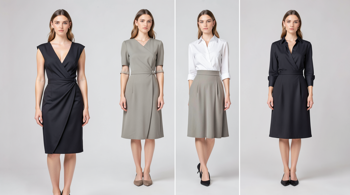
Colour continuity also affects how the eye reads a dress. A single-colour outfit or a low-contrast combination allows the vertical line to continue, whereas a wide contrasting belt, strong colour blocks or oversized horizontal stripes can divide the body into shorter segments. Small-scale prints and measured embellishment generally harmonise more easily with a petite frame than very large florals, broad stripes or oversized appliqué. Scale should still reflect personal style, but the visual consequences are predictable. 4
Practical 2024 dress categories
For warm-weather wardrobes, lightweight cotton, linen blends, jersey and breathable viscose are practical fabric categories for petite dresses because they support movement and layering without necessarily adding bulk. Shirt dresses can provide a polished casual option when they finish at or just above the knee and have a defined waist or controlled shape. A loose, unstructured shirt dress that extends well below the knee may create the boxy, excess-fabric effect frequently associated with standard proportions on shorter wearers. 7
Occasion dressing benefits from the same principles. Cocktail sheath, wrap, column and carefully proportioned fit-and-flare shapes can preserve a clear vertical line, while a floor-length dress should fall close to the body or use a controlled drape. Petite collections may include workwear, casual, occasion, maxi and midi categories, showing that height-specific fit is not limited to one dress type. The relevant test is whether the neckline, waist and hem align with the wearer’s own landmarks. 6
Fit risks, alterations and maintenance realities
The principal risk of buying a regular dress is not merely a long hem. Incorrect torso length can shift the waist, cause armholes to gape and move darts or bust shaping away from their intended position. Altering a hem is usually more straightforward than correcting shoulders, armholes or a misplaced waist seam, so petite-specific construction can reduce the number of changes required. However, no universal petite standard applies across every brand, and individual proportions can differ substantially at the same height. 4
Fabric care and repeated alterations also affect long-term fit. Linen and cotton may require attention to laundering and pressing, jersey can change how closely a dress follows the body, and adjustable straps or wrap ties allow some ongoing fit control. Before choosing a style, assess whether the hem can be walked in safely, whether the waist remains positioned correctly while sitting, and whether layering changes the silhouette. These checks address practical wear rather than relying only on a mirror image. 3
Sources
- Fashion Informed, Petite Women Dress Fit Guide
- KIMLUD, Best Dresses for Petite Women 2026
- Better Homes & Gardens, Petite Editors’ Dress Fit Guidance
- Whattowears, Great Petite Dresses for Women
- Style at a Certain Age, Why Mini Dresses Fit Short Women Perfectly
- Alibaba Buying Guides, How to Choose Petite Women Dresses
- Style at a Certain Age, Shirtdresses for Petites
- Jovani, Cocktail Dress Silhouettes for Petite Frames
- PixieGirl, The Petite Guide: Dressing for Your Proportions