Joint Pain in Older Adults: Solutions: Evidence-Based Guidance and Safety Considerations
Joint Pain in Older Adults: Solutions requires more than assuming every ache is a normal consequence of aging. Osteoarthritis commonly develops gradually and may respond to exercise, weight management, physical therapy, medication, or injections, while persistent swelling, prolonged morning stiffness, or unexplained symptoms warrant clinical assessment.
Recognizing Common Patterns and Causes
Osteoarthritis is the most common form of arthritis and commonly affects the knees, hips, hands, and spine. Typical symptoms include localized aching, pain that worsens with walking or repetitive use, improvement with rest, and brief stiffness after waking or sitting. Symptoms can limit mobility, sleep, social participation, and everyday activities, so “common” should not be interpreted as inevitable or untreatable. 1
Joint pain can also arise from rheumatoid arthritis, gout, old injuries, fibromyalgia, infections, circulatory problems, cancer, or other medical conditions. Morning stiffness lasting more than 30 to 60 minutes, visible swelling that remains for several days, warmth, tenderness, or pain affecting multiple joints may suggest inflammatory arthritis rather than uncomplicated osteoarthritis. Earlier assessment can help protect long-term function when inflammatory disease is present. 2
Why Medical Assessment Matters
A clinician generally examines joints for swelling, warmth, skin-color changes, tenderness, and restricted movement. Depending on the findings, blood, urine, or joint-fluid tests may help distinguish among types of arthritis. X-rays can show cartilage loss, bone damage, or bone spurs, although early changes may not always appear. MRI and ultrasound can provide more information about cartilage, tendons, ligaments, soft tissue, fluid, or bursae. 3
Assessment is particularly important when pain is persistent, worsening, severe at rest, associated with swelling, or unexplained by an injury. Pain in older adults may be overlooked because some people consider it a natural part of aging or hesitate to report it. In hospital patients aged 80 or older, almost 46 percent reported pain, and almost 13 percent of those patients were dissatisfied with pain control, illustrating the importance of regular evaluation and reassessment. 4
Exercise and Physiotherapy as Core Measures
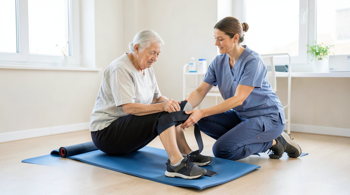
Appropriately graded exercise is a central treatment for osteoarthritis because it can improve pain, physical function, muscle strength, and confidence with movement. Options may include strengthening, aerobic activity, joint-mobility work, swimming, walking, or balance-focused programs, with intensity adjusted to symptoms and medical conditions. Avoiding all activity can contribute to muscle weakness and reduced function, whereas a structured plan can support mobility around an affected joint. 5
A systematic review and meta-analysis of 13 randomized controlled trials in older adults with knee osteoarthritis found that exercise significantly relieved pain and improved physical function, although results showed substantial variation between studies. Physical therapy modalities alone did not show a statistically significant difference in that analysis, indicating that the content, intensity, duration, and supervision of a program matter. Physiotherapy can also address balance, movement technique, assistive devices, and daily-task strategies. 6
Weight, Daily Habits, and Joint Protection
For older adults with overweight or obesity and knee or hip osteoarthritis, weight reduction can lessen joint stress and improve pain and physical function. Weight management is generally considered alongside movement rather than as a replacement for strengthening or aerobic activity. A clinician or dietitian can help account for nutrition needs, other illnesses, medications, and the risk of unintended weight loss, which can be an important concern in later life. 7
Activity modification can reduce repeated strain without requiring complete inactivity. Shorter periods of activity, rest breaks, supportive footwear, walking aids, and other assistive devices may help maintain independence. Heat or ice may provide symptom relief for some people, while sleep and stress management can influence the experience of chronic pain. Tai chi and other balance-oriented exercise programs may improve physical function and help address fall-risk concerns. 8
Medication Options and Associated Risks
Medication selection depends on the joint involved, the likely diagnosis, other medicines, kidney and cardiovascular health, stomach risks, and treatment goals. Topical nonsteroidal anti-inflammatory drugs, such as diclofenac gel, may help localized osteoarthritis pain while producing less whole-body exposure than oral forms. Acetaminophen can relieve pain but does not reduce inflammation. Injections may be considered for selected joint conditions after clinical evaluation. 9
Oral nonsteroidal anti-inflammatory drugs can cause gastrointestinal, kidney, and cardiovascular complications, risks that require particular attention in older adults. They should be discussed with a health professional regarding dose, duration, interactions, and monitoring. Opioids are rarely used for routine joint pain because of misuse, dependence, sedation, and other safety concerns. Medication should support function and comfort, not substitute for diagnosis, exercise planning, or review of changing symptoms. 10
When Specialist Care or Surgery Is Considered
Joint injections, rheumatology care, orthopedic review, or other specialist input may be considered when symptoms remain limiting, the diagnosis is uncertain, or conservative measures have not produced adequate improvement. Severe pain, substantial disability, progressive loss of function, or difficulty with essential activities can justify a broader treatment discussion. The appropriate pathway depends on the joint, imaging and examination findings, general health, and the person’s goals. 3
Joint replacement is generally considered only after non-surgical approaches have not provided sufficient relief and arthritis substantially affects daily life. It is not determined by an X-ray alone because structural damage and pain severity do not always match. Surgery also involves eligibility assessment, rehabilitation, ongoing strengthening, and medical risks. Urgent review is appropriate for a hot, markedly swollen joint, fever, sudden severe pain, or rapid unexplained deterioration because infection or another serious condition may be involved. 2
Sources
- Mayo Clinic, “Arthritis - Diagnosis and treatment”
- Carson Tahoe Health, “Joint Pain in Older Adults: When to Seek Medical Care”
- Mayo Clinic, “Arthritis - Diagnosis and treatment”
- Health.vic.gov.au, “Pain in older people”
- National Institute on Aging, “Osteoarthritis and Exercise”
- Medicine, “Efficacy of non-pharmacological interventions for knee osteoarthritis in the elderly”
- Healthdirect Australia, “Osteoarthritis”
- American Journal of Lifestyle Medicine, “Lifestyle Interventions and Supplements for Joint and Arthritis Pain”
- National Institute for Health and Care Excellence, “Osteoarthritis in over 16s”
- AARP, “Effective Medications for Joint Pain Relief”