Tai Chi Programs for Older Adults in Australia: A National Evidence and Access Report
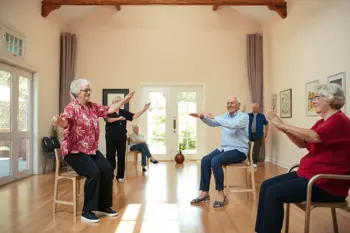
Tai Chi programs for older adults in Australia generally use slow, flowing movements, controlled breathing and balance exercises in community, leisure and support-service settings. Available Australian examples show that classes may be adapted for seated or standing participation and may sit alongside strength, falls-prevention, aquatic and general exercise programs. 1
How Australian programs are structured
Program design varies substantially by provider. Resthaven, which operates across South Australia, lists Tai Chi and Chi Ball among exercise-group options for older people living independently, alongside general exercise, falls and balance classes, aquatherapy, resistance training and cardiovascular work. Its sessions are tailored to individual abilities and goals and are facilitated by occupational therapists, physiotherapists or exercise physiologists. 1
Other programs are delivered through leisure centres, councils, community organisations, retirement villages and independent instructors. A Melbourne-area instructor profile describes Sun Style Tai Chi for Health, Tai Chi for Arthritis, Tai Chi for Diabetes and Qi Gong breathing exercises for older adults. A separate instructor in North Ringwood reports combining Tai Chi with strength training and holds a Level 1 coaching certification recognised by the Australian Kung Fu Wushu Federation. 56
Potential health and wellbeing outcomes
Tai Chi is commonly presented as a low-impact activity that can support balance, flexibility, posture, limb strength, coordination, relaxation and general wellbeing. Australian Seniors describes the activity as a gentle, flowing practice involving a mind-body connection and stress reduction, while the supplied research summary identifies Australian evidence on falls among community-dwelling older people. These findings describe potential population-level benefits, not guaranteed outcomes for every participant. 811
Participant experience can also include social value. Resthaven reports that group members often regard friendships, laughter and social interaction as important parts of participation, in addition to physical exercise. ANFE similarly describes strength and balance sessions as supportive social groups intended to provide motivation, supervision and opportunities to make new friends. Tai Chi should therefore be assessed as both movement practice and group activity, while avoiding claims that it replaces medical treatment. 19
Formats for different abilities
Older-adult classes may differ in intensity, pace and physical demands. The supplied Australian instructor information identifies seated and standing options, beginner sessions, Qi Gong, breathing and relaxation work, and programs designed for people managing controlled chronic conditions with referral from a general practitioner or allied health professional. These adaptations can make participation more practical for people with reduced mobility, but the suitability of a particular class remains an individual clinical question. 7
- Seated or standing participation can be available in community classes and social events. 3
- Sun Style movements are used in several Tai Chi for Health programs described in the supplied data. 510
- Some classes combine Tai Chi with Qi Gong, breathing, strength, balance or relaxation exercises. 5710
Where classes can be found
Access points include community centres, aquatic and leisure facilities, aged-care or home-support organisations, local social groups and lifelong-learning networks. Resthaven identifies locations throughout South Australia, with some sessions in community centres or pools. U3A is described in the supplied research summary as providing peer-led Tai Chi groups across Australian states, although schedules, teaching arrangements and eligibility differ between local groups. 115
Leisure-centre programming can be seasonal rather than continuous. Peninsula Leisure’s 2025 Seniors Festival program in Frankston scheduled Tai Chi at 8:30 am on four Wednesdays in October, with spaces subject to booking through the PARC reception or telephone service. In the Northern Territory, a COTA Coomalie event listed sitting or standing Tai Chi within a broader social day at Litchfield Outback Resort, with a $5 participant charge and required bookings. 23
Eligibility, fees and practical barriers
Participation rules are provider-specific. Some services are open to older adults living independently, while others may be linked to membership, a festival, a community organisation or a health-support pathway. ANFE states that a Commonwealth Home Support Programme subsidy for its balance and strength sessions is available to eligible registered people living in Adelaide’s four metropolitan areas. This example indicates that funding access can depend on registration, location and program category rather than age alone. 9
Fees and booking arrangements also vary. The COTA Coomalie event specified a $5 cost and a closing date for bookings, while Peninsula Leisure stated that class places were limited. These details illustrate practical friction points such as transport, venue access, time of day, membership conditions, session continuity and advance registration. Because program information changes, participants should verify the current schedule, fee, accessibility and cancellation conditions with the relevant provider rather than treating historical event details as an ongoing timetable. 23
Instructor standards and safety questions
Instructor experience is not uniform across the market. The supplied profiles range from 13 years and 9 months of Tai Chi instruction in Melbourne to more than 32 years teaching Tai Chi and strength training in a community-centre setting, and 35 years of broader personal-training experience in Queensland. One Townsville provider describes modified Sun, Yang and Chen styles, one-hour weekly sessions and beginner-to-advanced pathways. Experience and qualifications should be checked separately rather than assumed from a class label. 56710
Tai Chi classes are exercise services, not automatically regulated clinical interventions. Questions about instructor training, first-aid capability, supervision, chair availability, flooring, emergency procedures and modification for disability can help clarify risk management. People with pain, recent falls, unstable medical conditions or controlled chronic disease should consider advice from a doctor or allied health professional; the supplied Queensland instructor profile specifically describes referrals for clients with controlled chronic conditions. 7
How to compare a program objectively
A useful comparison should focus on the match between the participant’s needs and the class structure. Relevant criteria include whether the session is seated, standing or mixed; whether beginners are accommodated; whether movements are taught progressively; whether the venue is accessible; and whether the instructor can modify exercises. The presence of allied-health professionals may be relevant for some support-service programs, but it does not by itself establish that every Tai Chi class provides individual clinical assessment. 17
| Comparison factor | Information to verify |
|---|---|
| Physical format | Seated, standing, mixed, balance-focused or general movement |
| Provider setting | Community centre, leisure facility, support service or peer-led group |
| Professional support | Instructor qualifications and whether allied-health staff are involved |
| Access conditions | Eligibility, registration, membership, fees, bookings and transport |
| Safety arrangements | Modifications, supervision, chairs, flooring and emergency procedures |
Overall, Australian Tai Chi provision is diverse rather than standardised. The strongest practical approach is to distinguish evidence about Tai Chi as an activity from claims about a particular instructor or venue, then assess safety, accessibility, continuity and personal suitability. National health and arthritis information sources identify Tai Chi as a potentially appropriate low-impact activity, but individual advice remains important where symptoms, falls history or chronic conditions affect exercise tolerance. 12131417
Sources
- Resthaven, Exercise Groups: https://www.resthaven.asn.au/living-at-home/home-support-services/exercise-groups/
- Peninsula Leisure, Seniors Festival 2025: https://peninsulaleisure.com.au/events/seniorsfestival2025/
- COTA NT, COTA Coomalie’s Healthy Socialising Day: https://www.cotant.org.au/event/cota-coomalies-healthy-socialising-day/
- COTA NT, Healthy Socialising: https://www.cotant.org.au/event/healthy-socialising/
- Averil Lewis instructor profile: https://linkedin.com/in/averil-lewis-92266867
- Janice Zurzolo instructor profile: https://linkedin.com/in/janice-zurzolo-89ab5b26
- Annette Sherratt instructor profile: https://linkedin.com/in/annette-sherratt-11332993
- Australian Seniors, The benefits of tai chi for seniors: https://www.seniors.com.au/health-insurance/discover/tai-chi-for-seniors
- ANFE Community Care, Balance and Strength Exercises: https://anfe.org.au/programs/balance-and-strength-exercises/
- Mike Soric instructor profile: https://linkedin.com/in/mike-soric-3146b25a
- Medical Journal of Australia, source identified in supplied research summary: https://www.mja.com.au
- Arthritis Australia, source identified in supplied research summary: https://arthritisaustralia.com.au
- Healthdirect Australia, source identified in supplied research summary: https://www.healthdirect.gov.au
- Better Health Channel, source identified in supplied research summary: https://www.betterhealth.vic.gov.au
- U3A Online, source identified in supplied research summary: https://u3aonline.org.au
- City of Melbourne, source identified in supplied research summary: https://www.melbourne.vic.gov.au
- Australian Physiotherapy Association, source identified in supplied research summary: https://australian.physio