Retired passenger shuttle buses at auction 2026: An Australian buyer's guide to costs, inspections and registration
Key facts
- Australian government surplus auctions generally add GST and a buyer’s premium to the winning bid price.1
- Published Australian 2026 market observations place minibuses such as Toyota Coaster and Mitsubishi Rosa models around A$15,000 to A$90,000.
- Ex-route buses are commonly described within a broad A$5,000 to A$50,000 asking range, depending heavily on compliance and condition.2
- Former commercial passenger vehicles may require inspection, certification, registration changes and an appropriate heavy-vehicle licence.
Retired passenger shuttle buses at auction in 2026 mainly refers to former government, council, school, community or commercial fleet vehicles being disposed of through public auction channels. The process can provide access to minibuses and larger buses, but auction inventory is not guaranteed, and vehicles are commonly sold on an as-is, where-is basis. The central questions are the total cost after fees and registration, the condition of the driveline and body, and whether the vehicle can legally be used for the intended purpose.
Where retired fleet buses come from
Government fleet vehicles leave service when age, kilometres, operational requirements or replacement schedules make continued fleet use less practical. Queensland’s QFleet program, for example, is described as operating a planned replacement cycle, with vehicles commonly two to four years old, scheduled maintenance and documented service histories.3 Larger passenger vehicles may instead come from councils, community transport programs, schools, regional operators or private commercial fleets.
Government and council disposals are usually handled by contracted auctioneers rather than by government departments directly. A 2026 overview identifies different contractors operating across Australian jurisdictions and explains that registered participants can bid online, while GST and a buyer’s premium are added above the hammer price.1 Private commercial auction houses may hold fleet, passenger and commercial vehicle sales, sometimes with physical inspection periods and online or simulcast bidding.
How the auction process works
A typical process starts with registration for an auction account, acceptance of the sale terms and review of the catalogue. The catalogue may show the bus’s make, model, year, odometer reading, seating configuration, registration status and known faults. Inspection arrangements vary, but an in-person examination is especially important because photographs and short descriptions cannot establish engine condition, roadworthiness or compliance.
Bidding may take place online, at a physical venue or through both systems at once. The winning bid is only one part of the calculation. GST, the buyer’s premium, transfer charges, transport, repairs, inspection fees and registration expenses can materially change the final ownership cost. Collection deadlines also matter, because a bus that cannot be driven away may require heavy-vehicle transport and secure storage.
Typical Australian price ranges
Australian 2026 market observations place 12 to 25-seat minibuses, including examples such as the Toyota Coaster, Mitsubishi Rosa and HiAce Commuter, at roughly A$15,000 to A$90,000 in asking prices. Ex-route buses are placed at approximately A$5,000 to A$50,000, while ex-school buses are around A$10,000 to A$60,000. These are broad market observations, not auction guarantees or final transaction values.2
| Vehicle category | Examples or description | Observed Australian 2026 range |
|---|---|---|
| Minibus | Toyota Coaster, Mitsubishi Rosa, HiAce Commuter | About A$15,000 to A$90,000 |
| Ex-route bus | Former urban or regional service bus | About A$5,000 to A$50,000 |
| Ex-school bus | Mid-size rigid passenger vehicle | About A$10,000 to A$60,000 |
| Coach | Touring or charter vehicle | About A$30,000 to A$400,000 or more |
The same source cautions that asking prices are not selling prices and that commercial stock is often quoted excluding GST.2 Price differences reflect seating, kilometres, body condition, diesel emissions equipment, transmission, air conditioning, luggage capacity and compliance status. A lower hammer price can be offset by tyres, suspension, corrosion repairs, accessibility equipment or certification work.
Mechanical and structural inspection
The engine and transmission deserve a specialist inspection wherever auction rules permit one. Check for cold-start smoke, abnormal noises, coolant contamination, oil leaks, warning lights, uneven idle, delayed gear engagement and evidence of overheating. Examine the cooling system, belts, hoses, batteries, turbocharger, exhaust system and fuel system. A road test should assess steering wander, braking performance, vibration, transmission behaviour and suspension movement.
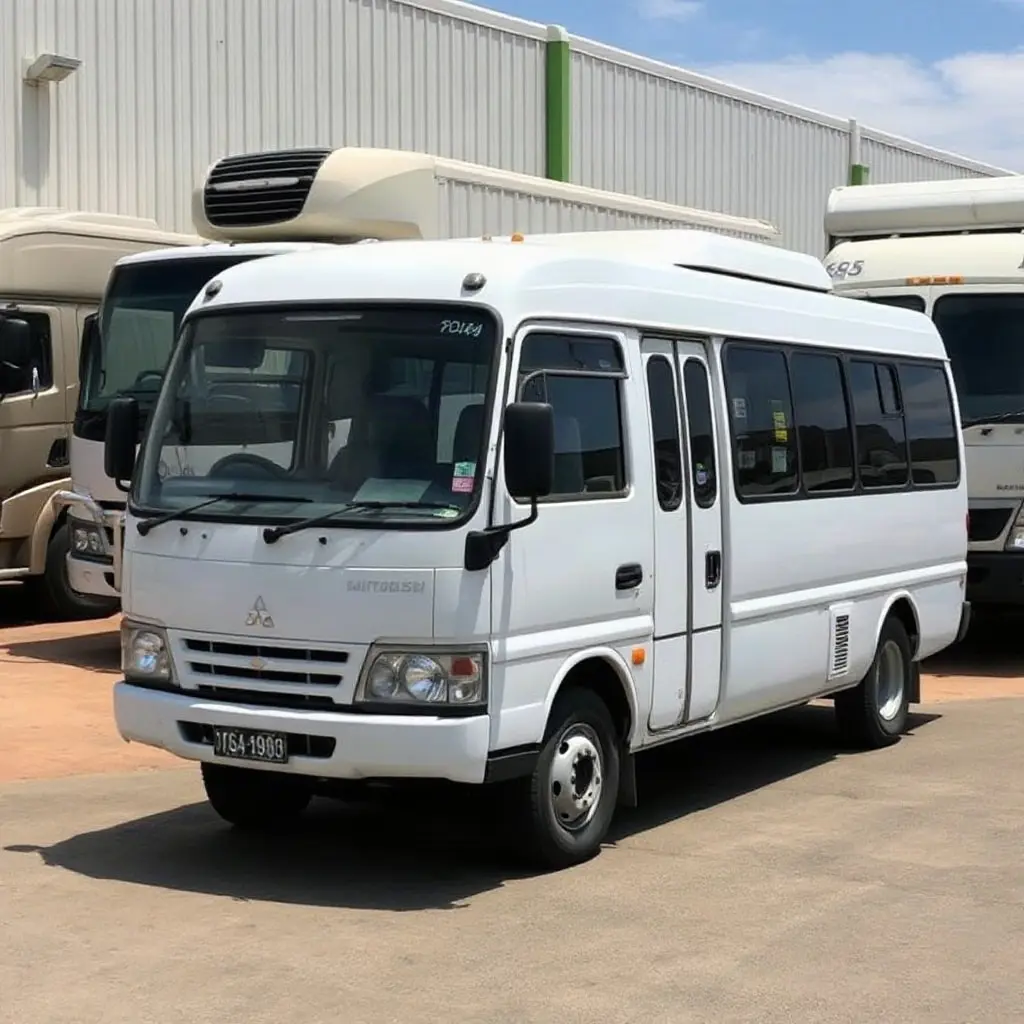
Passenger buses also require checks beyond those used for an ordinary car. Inspect the chassis rails, body mounts, floor, steps, handrails, emergency exits, seat anchoring, doors, windows, heating and air conditioning. Look underneath for corrosion, impact damage, fluid leaks and worn suspension components. Tyres can be costly because commercial vehicles need appropriate load ratings. Maintenance records should be matched against the odometer, workshop invoices, inspection certificates and fleet asset numbers.
Documents, history and auction risks
Before bidding, the useful document set includes the vehicle identification number, registration history, service book, workshop invoices, roadworthiness or heavy-vehicle inspection records, seating approval, modification certificates and any defect notices. Ask whether the bus was used for school, route, charter, community or airport work, because operating patterns affect wear. Former fleet vehicles may have regular scheduled servicing, but that does not guarantee that every component remains serviceable after retirement.
Government fleet sales can offer clearer asset histories and standardised maintenance processes, while private commercial auctions may contain a wider range of ages, operators and maintenance standards. Neither channel removes the buyer’s responsibility to interpret the inspection report and sale conditions. Common risks include missing equipment, removed destination displays, worn interiors, odometer uncertainty, unresolved defects, restricted registration and transport difficulties. Auction terms should be read for fees, warranties, inspection rights and collection deadlines.
Registration, licensing and ongoing ownership
Changing a former commercial passenger vehicle to private use is regulated by the relevant Australian state or territory. Requirements can include a roadworthy inspection, identity checks, engineering or modification certification, approved seating documentation and a change in registration class. The permitted number of seats, vehicle mass and intended use can affect the process. A bus that remains configured for many passengers may also require a heavy-vehicle driver licence, even when used privately.
Registration charges, compulsory accident cover, inspection fees, number-plate changes and possible engineering work vary by jurisdiction and vehicle category. Ongoing ownership costs include diesel, tyres, servicing, brake components, air-conditioning repairs, storage, cleaning and specialist labour. Depreciation can be uneven because an older bus may have limited private demand, while a compliant conversion or well-documented low-kilometre minibus may appeal to a broader group. These costs should be assessed before the auction total is treated as the purchase cost.
Comparing bus types for personal use
A 12 to 25-seat minibus is generally easier to store, manoeuvre and adapt than a full-size route bus. Toyota Coaster, Mitsubishi Rosa and HiAce Commuter vehicles are identified in Australian market guidance as common minibus examples, with the broadest stated range applying collectively to that segment.2 Their disadvantages can include commercial-grade ride quality, high seating capacity relative to private needs and expensive repairs for diesel, automatic transmission or air-conditioning systems.
Ex-route buses can provide substantial interior volume but may carry high kilometres, urban-cycle wear and complex electrical or accessibility equipment. Ex-school buses sit between minibuses and larger coaches in size and may suit community or conversion projects, subject to registration approval. Coaches offer luggage capacity and long-distance comfort, but their size, turning circle, storage needs and operating costs are substantially greater. The appropriate comparison is therefore not only the bid amount, but also passenger capacity, legal classification, intended travel and the cost of returning the vehicle to compliant private use.
Sources
- How Australian Government & Surplus Auctions Work (2026): A Complete Guide | GovAuctions.app: https://govauctions.app/au/guides/how-australian-government-auctions-work
- What Does a Used Bus Cost in Australia? Minibus to Coach Prices | Heavy Vehicle Marketplace: https://heavyvehiclemarketplace.com/blog/what-does-a-used-bus-cost-australia
- What is a QFleet Auction? | DriveWise: https://www.drivewise.com.au/blog/what-is-a-qfleet-auction