7-day outback adventure to Uluru with guided tours and camping equipment: An evidence-based field guide
A 7-day outback adventure to Uluru with guided tours and camping equipment generally means an active journey through South Australia and the Northern Territory, combining guided walks, Indigenous cultural experiences, swag camping and major landmarks including Uluru, Kata Tjuta, Kings Canyon, Coober Pedy and the Flinders Ranges. One published Adelaide to Uluru itinerary covers seven days and six nights, with meals, a Storyteller Guide, an air-conditioned vehicle and national park fees included in its stated inclusions. 1
Route structure and major landscapes
Adelaide departures commonly travel north through the Ikara-Flinders Ranges National Park before crossing remote desert country toward Coober Pedy and the Red Centre. The route can include the Oodnadatta Track, lunar-like landscapes, ancient gorges and long stretches of open terrain. This geography explains why the journey is not simply an Uluru sightseeing transfer: the experience is structured around changing landforms, remote settlements and extended road travel. 2
The Red Centre portion normally focuses on Uluru-Kata Tjuta National Park, Kata Tjuta and Watarrka National Park, where Kings Canyon is located. Published itineraries describe a progression from the Flinders Ranges to underground accommodation in Coober Pedy, followed by walks and cultural interpretation around the sacred sites of the Red Centre. Small-group formats can contain between four and 20 travellers, depending on the operator and departure. 3
What a seven-day itinerary can include
A representative schedule begins with an early departure from Adelaide and a first day in the Flinders Ranges. Activities may include the 3.2-kilometre Arkaroo Rock trail and swag camping with amenities at Discovery Parks Wilpena Pound. Later stages can feature Uluru sunset viewing, a visit to the Uluru-Kata Tjuta Cultural Centre, the 2.6-kilometre Walpa Gorge Walk and a guided Uluru base circuit of up to 10 kilometres, with shorter alternatives sometimes available. 4
Kings Canyon adds another physically active component, with published programs identifying a six-kilometre Rim Walk through Watarrka National Park. Coober Pedy provides a contrasting overnight setting, with accommodation in underground bunkhouse or lodge-style facilities carved into the earth. The final sequence depends on direction: Adelaide to Uluru itineraries finish near Yulara, while reverse programs begin there and travel toward Adelaide through the same broad landscape corridor. 5
Guides, culture and national park access
Guided tours are central to the interpretation of Uluru and Kata Tjuta. A Storyteller Guide may explain geological features, local history and cultural meaning during walks, while cultural-centre visits introduce Anangu traditions and exhibitions. Some itineraries also identify Welcome to Country experiences, bush-food tastings, didgeridoo demonstrations or optional ranger and Anangu-host presentations. These activities should be understood as cultural interpretation rather than entertainment detached from place. 6
Uluru-Kata Tjuta National Park operates under formal access requirements, and a valid park pass is required for visitors. Commercial guided tours commonly include national park and entrance fees within their listed inclusions, but the exact treatment should be checked against the itinerary and departure conditions. Respect for sacred areas, photography guidance, track rules and Indigenous cultural protocols remains part of responsible participation in the park. 7
Camping equipment and sleeping arrangements
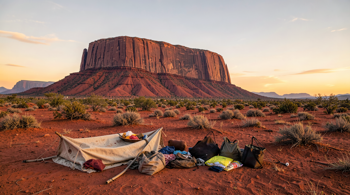
Swag camping is the defining accommodation style on many seven-day outback programs. A swag is a rugged outdoor sleeping shelter used with bedding, typically placed at established campsites with facilities. Published tour information identifies six nights of swag camping with amenities and one night in an underground bunkhouse dormitory. Other operators may provide tents or safari tents, so the word camping does not describe one universal standard of comfort or privacy. 1
Equipment inclusions vary and should be separated from personal items. Operators may supply swags, tents, sleeping arrangements and bush-cooking equipment, while travellers are commonly instructed to bring a sleeping bag, travel pillow, two-litre minimum water container, hiking shoes, torch or headlight, weather-appropriate clothing, sunscreen, insect repellent and a waterproof jacket. One published luggage limit is one 15-kilogram backpack or soft travel bag plus a small day pack. 8
Fitness, age and everyday demands
The documented fitness requirement for this style of tour is moderate, with walking distances reported between approximately three and 12 kilometres on some programs. Uneven ground, heat exposure, early starts, rough roads and repeated hikes can make the experience more demanding than the headline duration suggests. Tours may also involve camp chores and shared meal routines, meaning participation extends beyond sitting in a vehicle and visiting viewpoints. 6
Published eligibility information for one Adelaide to Uluru program lists a minimum age of 12, maximum age of 65 and a group size of four to 20. Another listing identifies the activity as medium intensity and recommends at least moderate physical fitness, while noting that it is unsuitable for some travellers with spinal injuries or poor cardiovascular health. Medical suitability, mobility and dietary requirements therefore require individual assessment before departure. 3
Timing, preparation and risk factors
The cooler months from May to September are generally identified as the most suitable period for Red Centre camping because desert temperatures can be extreme outside that season. Conditions remain variable, however, and published packing guidance specifically recommends thermals, bed socks and warm clothing for cooler months such as October, November, March and April. Water capacity, sun protection and weather-appropriate layers are essential planning considerations rather than optional comforts. 9
The principal friction points are long driving days, remote terrain, limited luggage capacity, basic outdoor sleeping and exposure to changing weather. Coober Pedy's underground accommodation offers a distinct alternative to a campsite, but it does not remove the need for outdoor walking elsewhere. Before selecting an itinerary, travellers should verify departure and finishing locations, included meals, accommodation type, equipment supplied, optional activities, health restrictions, dietary procedures and the current park-access conditions.
Sources
- 1. Peterpans, 7 Day Adelaide to Uluru Adventure: https://peterpans.com/tours/7-day-adelaide-to-uluru-adventure-untamed-escapes/
- 2. Somewhere Good, From Adelaide: 7-Day Adventure Tour to Uluru: https://somewheregood.com/from-adelaide-7-day-adventure-tour-to-uluru/
- 3. TourFinder, 7 Day Adelaide to Uluru Adventure and Cultural Tour: https://tourfinder.au/en-AU/experience/7-day-adelaide-to-uluru-adventure-and-cultural-tour-vt-5665P49
- 4. TourRadar, 7-Day Uluru to Adelaide Tour by Untamed Escapes: https://www.tourradar.com/t/240395
- 5. Untamed Escapes, Adelaide to Alice Springs Accommodated Tour: https://untamedescapes.com.au/tours/7-day-adelaide-to-alice-springs-accommodated-tour/
- 6. Travel Buddies, From Adelaide: 7-Day Adventure Tour to Uluru: https://travel-buddies.com/from-adelaide-7-day-adventure-tour-to-uluru/
- 7. Parks Australia, Uluru-Kata Tjuta National Park Passes: https://parksaustralia.gov.au/uluru/plan/passes/
- 8. G Adventures, Outback Adventures: https://www.gadventures.com/trips/outback-adventures/7994/
- 9. Desert Safaris Australia, Best Time to Visit Uluru: https://www.desertsafaris.com.au/best-time-to-visit-uluru