Fitness trackers comparison: features and battery performance in 2026: An Australian buying guide
Key facts
- Reported battery estimates range from about seven days for Fitbit Charge 6 to 21 days for Xiaomi Smart Band 10.
- Australian reference prices include $249 for Garmin Vivosmart 5 and from $649 for Apple Watch Series 10 in 2026.
- Built-in GPS, sleep monitoring, heart-rate sensors, notifications and water resistance vary substantially between models.
- Subscription requirements, phone compatibility, comfort and sensor limitations can matter as much as the headline specifications.
A fitness trackers comparison for 2026 needs to look beyond step counting. Australian buyers are choosing between simple activity bands, GPS sports watches, full smartwatches and health-focused rings, with differences in features, battery performance, compatibility and ongoing costs. The following guide compares the main models identified in 2026 Australian coverage and explains which type suits everyday activity, sleep tracking, structured exercise or longer periods between charges.
Models and typical Australian prices
The Australian market includes compact bands such as the Fitbit Inspire 3 and Garmin Vivosmart 5, broader fitness watches such as the Garmin Vivoactive 5, and smartwatches including the Apple Watch Series 10. A 2026 Australian comparison listed the Garmin Vivosmart 5 at $249 and the Apple Watch Series 10 from $649, while Oura Ring 4 was listed from $569. These are editorially reported market reference prices, not permanent prices or offers. 1
Other models occupy different points in the category. Coverage lists Fitbit Charge 6 at about $223.05 and describes the Xiaomi Smart Band 9 Active at about $44.05, while the Amazfit Bip 6 is reported at $132 and the Amazfit Active 3 at $159 in a 2026 comparison. Because prices change with model generation, retailer and configuration, typical figures should be checked across manufacturer sites and established electronics or department retailers such as Apple and Myer. 2
| Model | Reported battery estimate | Category emphasis |
|---|---|---|
| Fitbit Inspire 3 | Up to 10 days | Basic activity, sleep and notifications |
| Fitbit Charge 6 | About 7 days | Activity tracking and connected services |
| Garmin Vivoactive 5 | Up to 11 days | Training and built-in GPS |
| Amazfit Bip 6 | Up to 14 days | GPS watch and everyday activity |
| Xiaomi Smart Band 10 | Up to 21 days | Long-runtime band |
Features that separate bands, watches and rings
Most fitness trackers count steps or distance and transfer the information to a companion app, where activity is displayed in graphs. More advanced devices add resting and exercise heart-rate readings, sleep stages, workout profiles, swimming records, calorie logging, menstrual health tools and phone notifications. CHOICE notes that exercise support can include swimming, rowing and weightlifting, although the exact depth of analysis depends on the model. 3
GPS is a major dividing line. The Fitbit Charge 6, Garmin Vivoactive 5, Amazfit Bip 6 and Amazfit Active 3 are described in 2026 comparisons as having GPS capability, whereas Xiaomi Smart Band 9 Active is described as relying on a paired phone for location recording. Built-in GPS is more useful for runners and cyclists who do not want to carry a phone, but it normally consumes more battery during a recorded session than phone-assisted tracking. 2
| Priority | Models to examine | Why they may fit |
|---|---|---|
| Simple daily and sleep tracking | Fitbit Inspire 3, Garmin Vivosmart 5 | Compact bands with activity and wellness functions |
| Running and structured workouts | Garmin Vivoactive 5, Amazfit Active 3 | Built-in GPS and deeper training features |
| Phone-linked smartwatch functions | Apple Watch Series 10 | Calls, email, notifications and health tools |
| Ring-based sleep and wellness tracking | Oura Ring 4 | Screenless form and sleep-focused insights |
Battery performance in everyday use
Published estimates vary from around seven days for Fitbit Charge 6 to up to 10 days for Fitbit Inspire 3, 11 days for Garmin Vivoactive 5, 12 days for Amazfit Active 3 and 14 days for Amazfit Bip 6. Xiaomi Smart Band 9 Active is listed at up to 18 days, while Xiaomi Smart Band 10 is listed at up to 21 days. These are model estimates under specified settings, not a guarantee of identical everyday use. 4 2
Battery performance falls when built-in GPS is used frequently, the display remains continuously lit, notifications arrive often or health sensors operate at intensive intervals. Sleep tracking also requires wearing the device overnight, which affects charging habits. Fitness journalism generally evaluates battery life alongside setup, accuracy, features and ease of use rather than treating the manufacturer's maximum estimate as the only measure. 5
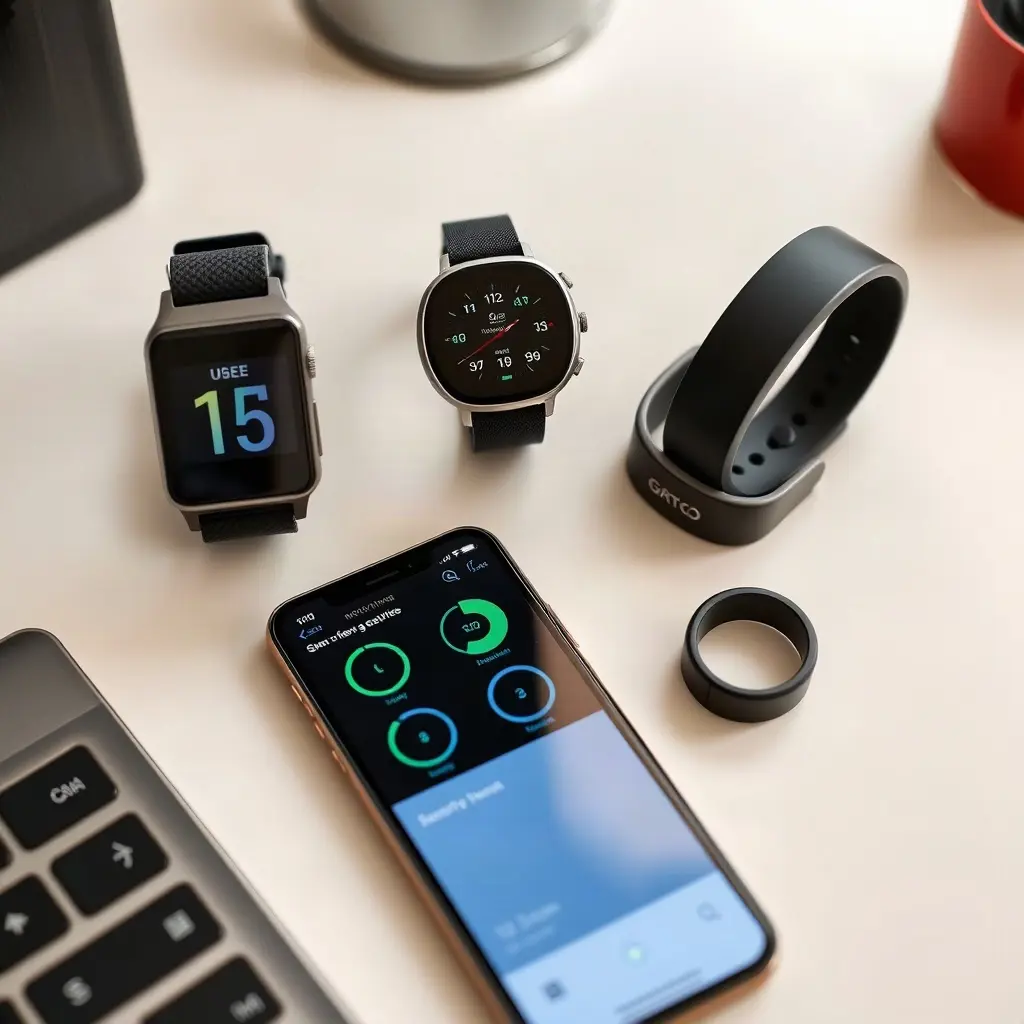
A practical comparison therefore includes charging method, charging duration, whether a spare charger is needed and whether charging interrupts sleep records. Battery capacity also declines with age. A watch that lasts several days may suit people who want richer notifications and GPS, while a longer-runtime band can reduce charging interruptions at the cost of a smaller display or fewer advanced functions.
Phone compatibility, apps and subscriptions
Compatibility can determine whether notifications, setup and synchronisation work as expected. PCMag describes Fitbit Charge 6 as supporting multiple phone platforms, while Garmin Vivoactive 6 is described as working with both Android and iOS. Apple Watch models are designed around the Apple ecosystem, so phone ownership should be checked before comparing health and communication features. 5 6
Companion apps also differ in how much information is included without recurring payments. The Garmin CIRQA Smart Band coverage states that its health, sleep and fitness metrics are accessed through Garmin Connect without a mandatory monthly subscription, while the Fitbit Charge 6 comparison warns that Fitbit Premium becomes relevant after an introductory period. The distinction is important because the purchase price is not the only cost over the device's useful life. 7 2
Before purchase, the relevant checks are operating-system compatibility, notification permissions, app account requirements, data export options and which coaching or historical insights require a subscription. App privacy settings should also be reviewed because health and activity data may be synchronised to cloud services. These issues can create friction even when the sensor hardware appears suitable.
Accuracy, safety and water resistance
Optical heart-rate sensors estimate pulse using reflected light and can be affected by loose fit, movement, tattoos, skin contact and intense exercise. Step counts and sleep stages should therefore be interpreted as useful trends rather than clinical measurements. CHOICE explains that trackers present activity data through companion apps, while independent testing commonly considers accuracy as well as battery life and ease of use. 5 3
Some higher-end wearables add ECG functions, blood-oxygen readings, fall detection or emergency features. The Apple Watch Series 10 is described as offering heart-rate monitoring, blood-oxygen statistics, an ECG app and ovulation tracking, but the availability of health functions can depend on country, software and phone configuration. Such features do not replace medical assessment or diagnosis. 1
Water resistance is not the same as unlimited waterproofing. Buyers should check the stated rating, permitted depth, duration and exclusions before swimming or exposing a device to salt water, steam or high-pressure water. A tracker can also be comfortable for daytime wear but irritating overnight, so strap material, weight, screen brightness and charging routine are practical safety and usability considerations.
Which type suits different priorities?
For everyday movement and sleep records, a slim band such as Fitbit Inspire 3 or Garmin Vivosmart 5 may provide the necessary activity, heart-rate and sleep functions without the bulk of a full smartwatch. The Inspire 3 is reported with up to 10 days of battery life and reminders to move, notifications, menstrual health tracking and a smart alarm. 4
For runners, cyclists and people following structured training, a GPS watch such as Garmin Vivoactive 5 or Amazfit Active 3 is more suitable for independent location recording and training analysis. The Garmin model is listed with up to 11 days of battery life, while Amazfit Active 3 is listed with up to 12 days and multi-band GPS. Those figures still shorten during repeated GPS sessions. 2
Long battery life points toward Xiaomi Smart Band 10, listed at up to 21 days, or Amazfit Bip 6, listed at up to 14 days. A smartwatch such as Apple Watch Series 10 offers broader communication and health functions but should be assessed alongside its charging routine and ecosystem requirements. Oura Ring 4 provides a different, screenless format focused strongly on wellness and sleep, with subscription terms requiring careful review. 1 2
Sources
- 8 best fitness trackers and watches in Australia in 2025: https://www.womensweekly.com.au/health/fitness/the-best-fitness-tracker-to-sweat-it-out-with/
- Best Fitness Tracker Australia 2026: Top 6 Picks: https://nestpath.com.au/homeowner-hub/best-fitness-tracker-australia
- What to know before buying a fitness tracker: https://www.choice.com.au/health-and-body/diet-and-fitness/sportswear-and-shoes/buying-guides/fitness-trackers
- Best fitness trackers: Smartwatches and smartrings to keep your steps up in 2026 from Fitbit, Kogan, Samsung, Garmin, and more | Nine.com.au: https://www.nine.com.au/shopping/technology/best-fitness-trackers-smartwatches-smartrings-list-what-to-buy-2026-20260109-p5rnu8.html
- The Best Fitness Trackers for 2026: https://au.pcmag.com/fitness-trackers/44834/the-best-fitness-trackers
- 9 Best Fitness Trackers of 2026: Garmin, Oura, Google Fitbit: https://www.wired.com/story/best-fitness-trackers/
- Best fitness trackers 2026: The best new smartwatches and smartrings to keep up with your wellness goals in 2026 from Google, Oura, Garmin, and more | Nine.com.au: https://www.nine.com.au/shopping/health-fitness/best-fitness-trackers-new-smartwatches-smartrings-list-what-to-buy-2026-20260804-p60lhe.html