Sydney to Melbourne train travel for seniors in Australia: A reporting focused overview of routes, timing, fares, and senior eligibility across NSW and Victoria
Sydney to Melbourne train travel for seniors in Australia is commonly discussed alongside senior public transport concessions in New South Wales and Victoria, even though the intercity connection itself is a long-distance rail journey rather than an urban commute. In NSW, the Gold Senior/Pensioner Opal Card provides unlimited travel on the Opal network for no more than $2.50 a day using public transport services across the Opal network, but interstate rail travel uses separate long-distance fare arrangements. 1
In Victoria, Victorian Seniors Card holders can receive public transport concessions when using a Seniors myki, including a 50% discount on trains, trams and buses, and additional travel benefits tied to calendar periods. 2 This article frames what seniors can expect when making the NSW-to-Victoria rail trip and highlights practical friction points such as eligibility differences and the need to carry the right concession entitlement while travelling.
What the Sydney to Melbourne train trip looks like for seniors
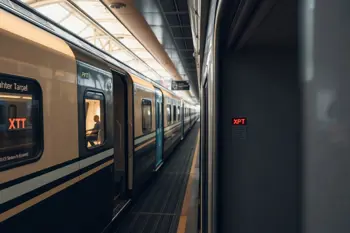
The Sydney to Melbourne corridor is described as an XPT long-distance service with a journey time that is commonly reported around 11 to 12 hours, with a day option and an overnight option. 3 Independent travel writeups also describe the day service and overnight service departing Central Station and arriving Southern Cross, using approximate times such as a day departure around 7:40 AM and arrival around 6:30 PM, and a night departure around 8:40 PM arriving next morning around 7:30 AM. 4
Route length is described in multiple sources as roughly 960 kilometres, which helps explain why the trip is not comparable to short commuter services. 4 For older travellers, this has operational implications: the main accessibility considerations are less about tapping in and out and more about the comfort of a long seated or sleeping-car journey, availability of specific assistance arrangements, and the ability to manage boarding and disembarkation at major stations.
| Commonly described XPT journey features (Sydney to Melbourne) | What appears in the provided research |
|---|---|
| Typical duration | About 11 to 12 hours depending on service type 3 |
| Service pattern | Twice daily pattern described as morning/day and overnight service in travel writeups 4 |
| Route distance | Approximately 960 kilometres 4 |
| Cabin options | Economy and first-class seating, with option of sleeping berths on overnight service 5 |
Timing, seating, and sleeping-car logistics
Travel planning for seniors is often shaped by whether the overnight service is used. The provided material describes capacity constraints for sleeping berths on the overnight XPT, with a note that sleeper cars have limited capacity and tend to sell out quickly, making early booking relevant for those specifically seeking sleeping-car accommodation. 5
Sleeping-car bookings are described as having a different handling process than standard online reservation patterns, with one source stating sleeping car bookings can only be made via phone with the NSW TrainLink booking centre. 6 This type of operational difference matters for seniors because booking channels, form factors, and assistance availability can change depending on whether seats or sleeper compartments are requested.
- Day service expectation: described arrivals around early evening in Melbourne for a departure around 7:40 AM from Sydney Central in one published guide. 4
- Overnight service expectation: described departures around 8:40 PM with arrival around 7:30 AM the next morning in the same published guide. 4
- Sleeper availability risk: sleeping cars are described as limited in capacity and recommended to be booked well in advance. 5
Senior concessions: how NSW and Victoria entitlements intersect
Senior concessions in Australia are state-based, and the research highlights that NSW and Victoria run different schemes. In NSW, the Gold Senior/Pensioner Opal Card provides unlimited travel on the Opal network for no more than $2.50 a day using public transport services across that network, with eligibility requiring a NSW or ACT Seniors Card, or an equivalent valid seniors card issued by another state or territory government. 1
In Victoria, Victorian Seniors Card holders can receive public transport concessions using a Seniors myki, with benefits listed as a 50% discount on trains, trams and buses including V/Line services, plus additional periodic benefits and free travel during the Victorian Seniors Festival. 2 The provided material also notes that when travelling interstate, seniors should take their card and enquire about available transport concessions for interstate card holders. 2
| Jurisdiction | Senior public transport concessions described |
|---|---|
| NSW (Opal network) | Gold Senior/Pensioner Opal Card: unlimited travel for no more than $2.50 a day on Opal network; eligibility depends on Seniors Card or equivalent. 1 |
| Victoria (Myki system) | Victorian Seniors Card with Seniors myki: 50% discount on trains, trams and buses including V/Line; additional weekend and festival-related benefits described. 2 |
| Interstate consideration | When travelling interstate, take the card and enquire about transport concessions for interstate card holders. 2 |
Fare entitlements and documentation: what to carry and what can go wrong
The research repeatedly underscores documentation requirements when using senior fare categories. It is stated that passengers must carry their valid concession entitlement card at all times when travelling on a senior ticket to avoid potential fines. 7 For a Sydney to Melbourne rail journey, the compliance point is not limited to platform access; it extends to fare inspection scenarios during the trip.
Another operational friction point is that concessions do not automatically map across systems. While NSW Gold Opal benefits relate to the Opal network, Victoria’s Seniors myki concessions relate to Victoria’s public transport system, and interstate rail ticketing follows long-distance rail fare structures. 1 2 This is relevant for seniors because incorrect assumptions about eligibility can lead to paying adult fares or being unable to use a claimed concession correctly.
- Carry-concession requirement: valid concession entitlement card should be carried at all times when travelling on a senior ticket. 7
- System mismatch risk: Opal Gold benefits apply on the Opal network, while Victoria’s Seniors myki benefits apply within Victoria’s public transport system. 1 2
- Interstate verification step: take Victorian or NSW senior cards and enquire about interstate concessions. 2
Accessibility and assistance on the XPT for older travellers
Accessibility for seniors is addressed through general guidance on transport assistance and specific references to assistance requirements. One provided research note states that accessibility features on the XPT include wheelchair spaces and accessible toilets, though advance notice is required for specific assistance needs. 8 For older travellers, this can be more significant than the raw travel time, because the main variable becomes whether assistance is arranged before departure.
Australian public transport assistance guidance is also referenced in the research payload as a topic area for transport accessibility and help planning. 9 Even without operational minutiae, the compliance lesson is clear: seniors who require mobility support should treat assistance planning as part of booking and not as a last-minute request, especially for long-distance intercity services.
Practical decision points: day vs overnight, and station-to-city factors
Deciding between day and overnight service affects fatigue management, meals, and how much time is spent in transit versus at destination. One research item describes the XPT as a journey that offers time to relax, read, and enjoy changing scenery, with the route covering rolling hills, rural towns, farmland, and rivers. 4 For some seniors, these features matter as much as speed because they shape comfort over a multi-hour period.
Station context matters as well. Published guidance for Melbourne travel notes that both buses and trains travel to and from Southern Cross Station in Melbourne and Central Station in Sydney in general east coast travel patterns. 10 Another provided source gives navigational detail about Southern Cross Station entrances and nearby connections, reflecting that station familiarity can reduce stress when transferring or finding luggage services. 11
- Day service described as arriving early evening in Melbourne in one published guide, allowing more same-day destination time. 4
- Overnight service described as arriving next morning, which may reduce daytime travel load but shifts the focus to sleeping-car accommodation and wake-up logistics. 4 5
- Melbourne terminal orientation: Southern Cross has multiple main entrances and connections to Metro and V/Line platforms described in a dedicated navigation guide. 11
Sources
- Service NSW: Public transport concessions for seniors and pensioners | Gold Opal Card and Regional travel concessions. https://www.service.nsw.gov.au/referral/travel-concessions-seniors-and-pensioners
- Seniors Online Vic: Public transport benefits for Victorian Seniors Card holders using Seniors myki, including discount and festival benefits. https://www.seniorsonline.vic.gov.au/seniors-card/public-transport-benefits
- NSW TrainLink XPT details and duration references from provided research (route and duration described). https://transportnsw.info/routes/details/intercity-trains/xpt/train
- Australia Travel Guide: Sydney to Melbourne options and XPT duration and service pattern described. https://australia.traveltoguide.com/how-to-get-from-sydney-to-melbourne/
- Australia Work & Travel Magazine: Sydney to Melbourne by Train describing XPT route length, day and night service pattern, and ticket class and sleeping cab mention. https://bbmlive.com/sydney-to-melbourne-by-train/
- Travels With JB: Slowing down on the XPT and sleeping car booking via phone with NSW TrainLink booking centre. https://travelswithjb.com.au/slowing-down-on-the-xpt-between-melbourne-and-sydney/
- Research note on senior documentation requirement to carry concession entitlement card to avoid potential fines (provided in LLM research compilation). https://www.choice.com.au/travel/leisure-and-hobbies/travel-services/articles/seniors-discounts-travel
- Research note on XPT accessibility features including wheelchair spaces and accessible toilets with advance notice requirement (provided in LLM research compilation). https://www.nsw.gov.au/topics/transport-accessibility/assistance
- NSW Government topic on transport accessibility and assistance. https://www.nsw.gov.au/topics/transport-accessibility/assistance
- BBMLive: Travel Sydney Melbourne by Air, Road or Train noting Central and Southern Cross connections. https://bbmlive.com/nsw/sydney-melbourne-air-road-train/
- Seniors in Melbourne: Navigate Southern Cross Station Like a Local with entrance and connection descriptions. https://seniorsinmelbourne.com.au/southern-cross-station/