Rural properties for sale in the Kootenay region: Exploring available listings: A 2026 market and due-diligence guide
Key facts
- A typical single-family home in the Kootenay and Boundary region was benchmarked at $640,700 in July 2026. 1
- July 2026 recorded 318 sales, 518 new listings and 1,940 active listings across the Kootenay and Boundary region. 1
- Townhouse and condominium benchmark prices were $509,400 and $346,500 respectively in July 2026. 1
- Rural suitability depends on verified zoning, legal access, water, septic systems, utilities, hazards and ongoing maintenance obligations.
Rural property searches in the Kootenay region cover a wide area of British Columbia, from West Kootenay communities such as Nelson, Castlegar, Trail, Fruitvale and Rossland to the Kootenay and Boundary market more broadly. The important distinction is that market reports describe regional activity, while individual property status, boundaries, services and permitted uses require separate verification.
What the Kootenay rural market includes
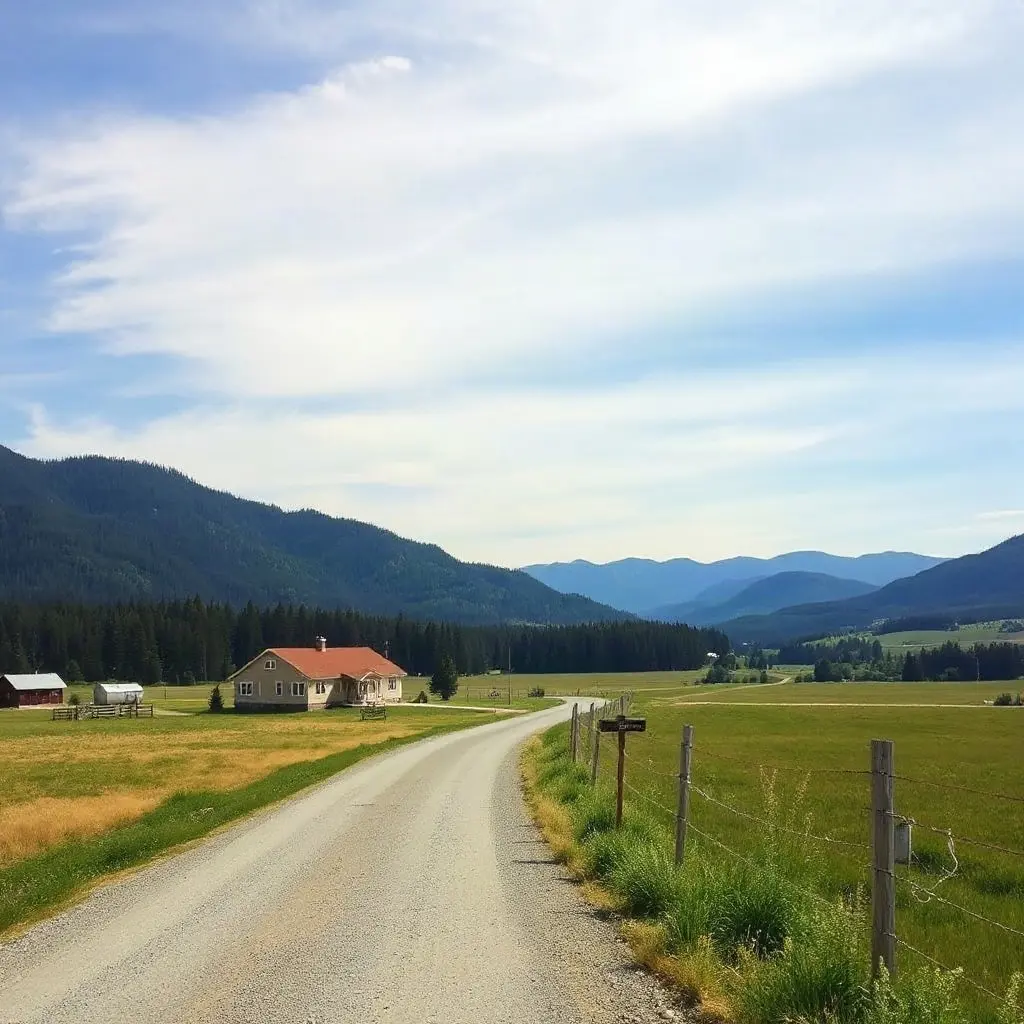
Rural property is not one uniform category. Common forms include country homes on acreage, agricultural parcels, hobby farms, recreational cabins, vacant land and larger holdings outside serviced town centres. An existing house may be suitable for immediate occupation, while an undeveloped parcel can involve driveway construction, power extensions, water investigation, septic approvals and development restrictions.
Local geography creates substantial variation. West Kootenay reporting covering Nelson, Castlegar, Trail, Fruitvale, Rossland and Grand Forks described slower second-quarter 2026 sales activity, with sales 5.5% below that area's ten-year average and buyers showing greater price sensitivity. 2 That pattern does not establish the value of a rural parcel, but it shows why broad regional headlines should not replace community-level analysis.
Published prices and market comparisons
The clearest published comparison is for residential property rather than acreage or vacant land. In July 2026, the Kootenay and Boundary region recorded a benchmark price of $640,700 for a typical single-family home, $509,400 for a townhouse and $346,500 for a condominium. 1 Benchmark figures describe representative properties, not guaranteed prices for rural homes, farms or undeveloped parcels.
| Property category | July 2026 benchmark | Interpretation |
|---|---|---|
| Single-family home | $640,700 | Typical benchmark home, which may differ substantially from an acreage |
| Townhouse | $509,400 | Attached housing comparison |
| Condominium | $346,500 | Apartment-style ownership comparison |
Monthly activity also varied over time. June 2026 brought 312 sales, 547 new listings and 1,891 active listings in the Kootenay and Boundary region. 3 July activity rose to 318 sales and 1,940 active listings, while new listings reached 518. 1 These totals describe the wider residential market, not verified rural inventory or the time required to sell a particular parcel.
Comparing communities and property types
Community comparisons should account for more than headline prices. Nelson and Rossland may attract interest connected with established services, recreation and distinctive housing stock, while Castlegar, Trail and Fruitvale can present different employment patterns, terrain and access arrangements. Grand Forks and surrounding rural areas have their own climate, agricultural and hazard considerations. The West Kootenay quarterly report recorded year-over-year listing changes ranging from declines in Rossland and Nelson to modest inventory increases in Trail and Castlegar. 2
A rural home near a municipality may have easier access to schools, medical services, shops, waste collection and maintained roads than a remote acreage. Conversely, a larger parcel may offer privacy or agricultural potential but require private road maintenance, fuel storage, well equipment, septic servicing and longer travel. Zoning, topography and service costs can therefore matter as much as the advertised structure when comparing properties.
Due diligence for land, homes and acreage
Rural due diligence begins with the parcel's legal identity rather than fences, signs or marketing descriptions. Title and registered plans can help confirm ownership interests, easements, covenants and boundaries. The relevant regional district or municipality should confirm zoning, permitted residential or agricultural uses, setbacks, accessory buildings, subdivision rules and any restrictions on short-term accommodation or commercial activity.
- Confirm legal road access, winter maintenance responsibility and any neighbouring land crossing.
- Obtain information about wells, water quality, storage, septic systems and replacement options.
- Assess buildings, roofs, foundations, driveways, drainage, slopes and retaining structures.
- Check electricity, heating fuel, waste services, cellular coverage and internet options.
- Review whether renovations, new buildings, subdivision or a change of use require approval.
Conditions in a purchase agreement can address inspections, title review, documents and other due diligence, subject to the wording accepted by the parties. Professional advice may be appropriate because a rural parcel can involve survey questions, access rights, environmental constraints and permitting issues that are not visible during a showing.
Taxes, closing costs and ongoing obligations
A British Columbia purchase can involve property transfer tax, legal or conveyancing charges, title-related expenses, inspections, appraisal or survey work, and adjustments for items such as property taxes or utilities. The amount depends on the purchase price, buyer circumstances, property classification, exemptions and transaction structure. Rural purchases can add well, septic, environmental, structural and access investigations.
Ownership costs continue after closing. Private roads may require shared maintenance, snow clearing and drainage work. Wells and septic systems need monitoring and eventual repair, while acreage owners may face costs for fencing, outbuildings, fuel systems, vegetation management and long driveways. A realistic comparison should include these recurring obligations rather than focusing only on the purchase price.
Wildfire, flooding and practical rural risks
Kootenay terrain can create exposure to wildfire, flooding, erosion, steep slopes, avalanches and difficult winter travel. Risk is highly site-specific. A parcel near a creek may have different flood considerations from an elevated hillside, while a forested property may require vegetation management and evacuation planning. Hazard information, drainage history, access during emergencies and the condition of bridges or culverts deserve attention.
Market activity can also be affected by wider events. Reporting on August 2026 noted that wildfire activity had dampened demand in parts of the Interior as communities dealt with evacuations and property losses. 4 This does not predict the value or insurability of any individual property. It does show why buyers should evaluate emergency access, municipal services, hazard maps, rebuilding rules and ongoing maintenance before treating a rural parcel as comparable with an urban home.
How to interpret property search information
Online property portals and local market reports are useful for identifying categories, communities and asking-price patterns, but they are not substitutes for verification. Status can change, descriptions can simplify zoning or services, and photographs cannot establish legal access, boundary location, water reliability or septic capacity. A property marketed as recreational, agricultural or developable still requires confirmation from the responsible authority and the land records.
A careful process moves from regional comparison to parcel-level review: define the intended use, compare recent market benchmarks, identify the governing jurisdiction, verify title and access, investigate services and hazards, arrange appropriate inspections, and review the agreement before removing conditions. This approach keeps regional statistics in perspective and separates general market information from the legal and physical facts that determine whether a rural property is suitable.
Sources
- Kootenay-Boundary home sales climb in July, outpace last year | Nelson Star: https://nelsonstar.com/2026/08/18/kootenay-boundary-home-sales-climb-in-july-outpace-last-year/
- West Kootenay Real Estate Market Update Q2 2026: Prices, Sales, Forecasts: https://kootenayhomes.com/west-kootenay-real-estate-market-update-q2-2026/
- June 2026: Kootenay Real Estate Market: https://www.interiorrealtors.ca/kootenay-residential-real-estate-market-delivers-strong-sales-in-june/
- Kootenay-Boundary housing market holds steady despite August cooldown | Trail Times: https://trailtimes.ca/2026/09/04/kootenay-boundary-housing-market-holds-steady-despite-august-cooldown/