

How much is 10 grams of gold worth today? A data-based valuation guide
The value of 10 grams of gold depends on spot price, purity, currency, and whether the metal is being valued as bullion or jewelry. This guide compares supplied market snapshots, explains the calculation, and outlines why dealer offers can differ from melt value.
How much is 10 grams of gold worth today? The answer depends on the market timestamp, purity, currency, and whether the gold is held as a bar, jewelry, or scrap. Supplied price references show that 24-karat gold has recently produced 10-gram spot values ranging from about US$1,290 to US$1,396, while a Canadian-dollar estimate places the same weight at approximately C$1,450 to C$1,550 before premiums and selling deductions. 1 2 3 8
What 10 grams of pure gold is worth
For pure or nearly pure 24-karat gold, the basic calculation is weight multiplied by the quoted price per gram. GoldCalc reported a basis of US$4,259.83 per troy ounce on June 9, 2026, equivalent to US$136.96 per gram, producing a 10-gram metal value of approximately US$1,369.60. Goldgrambars later listed a 10-gram bar value of US$1,290.87 using a different market snapshot. The difference does not necessarily indicate an error because gold prices and publication timestamps were not synchronized. 1 5
| Reference snapshot | Price per gram | Approximate 10-gram value |
|---|---|---|
| GoldCalc, June 9, 2026 | US$136.96 | US$1,369.60 |
| Bullion.com, September 16, 2026 | US$139.60 | US$1,396.00 |
| Goldgrambars, July 17, 2026 | US$129.09 approximately | US$1,290.87 |
Why published values can differ
Live gold quotations vary by time, market feed, bid or ask convention, and currency conversion. Bullion.com displayed US$139.60 per gram and identified separate ask and bid figures, while Monex reported US$129.18 per gram in another supplied snapshot. These references should therefore be treated as dated market observations rather than one universally fixed price. A precise valuation requires the spot quote and exchange rate captured at the same time as the assessment. 2 3
The standard conversion uses one troy ounce equal to 31.1034768 grams. A quoted ounce price is divided by that number to determine the approximate gram price, and the result is multiplied by 10. For Canadian readers, the US-dollar result must also be converted into Canadian dollars using the prevailing exchange rate. GoldPrice.org provides a Canadian-dollar reference, while the Bank of Canada publishes foreign-exchange information relevant to conversion. 8 9
How purity changes the calculation
A 10-gram item is not automatically worth the same as 10 grams of pure gold. Karat describes the proportion of gold in the alloy: 24K is treated as nearly pure, 18K is 75% gold, and 14K is approximately 58.3% gold. Applying those proportions to the pure-gold rate gives a metal-content estimate, but it does not account for stones, clasps, solder, springs, or other non-gold components included in the stated weight. 4 6
| Purity | Gold content in 10 grams | Illustrative supplied value |
|---|---|---|
| 24K | Approximately 10 grams | US$1,369.60 at US$136.96/g |
| 18K | 7.5 grams | US$1,027.20 at US$102.72/g |
| 14K | Approximately 5.83 grams | US$798.90 at US$79.89/g |
Jewelry, scrap, and bullion are valued differently
Melt value measures only the recoverable gold content. A finished jewelry item may have additional attributes such as condition, craftsmanship, brand, age, or stones, but those factors are separate from the metal calculation. Conversely, a buyer assessing scrap may deduct non-gold parts and refining costs. SnapAppraise describes melt value as the value of gold content alone, while its example shows that a 10-gram 14K item can have a materially different value from a 10-gram 24K item. 4
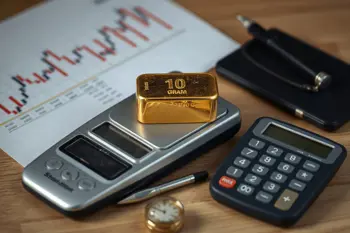
A manufactured bar or coin can also trade above melt value because fabrication, distribution, authentication, and dealer margins are incorporated into the transaction. The Royal Canadian Mint distinguishes bullion-market value from product premiums, and the supplied bullion references similarly separate spot rates from physical product pricing. A seller should therefore distinguish three figures: theoretical melt value, an institutional or retail market quote, and the actual amount offered for a specific object. 10 2
What a seller may actually receive
The amount paid by a dealer, jeweller, pawn shop, or refinery is commonly below calculated melt value because the buyer must manage testing, refining, operating costs, price risk, and resale margins. One supplied 14K example estimated a US$821.10 melt value for 10 grams and described indicative payout ranges of US$411 to US$575 from a pawn shop, US$534 to US$657 from a local buyer, and US$657 to US$755 from an online buyer. These are estimates, not guaranteed quotations. 6
Testing and documentation can affect the result. A karat stamp may provide an initial indication, but the supplied calculator research notes that testing kits or more sophisticated tools may be used when purity is uncertain. Weight should be measured accurately, and the assessment should clarify whether stones and non-gold components are included. Comparing the stated percentage of melt value, rather than only the final dollar figure, helps identify deductions and reduces confusion between a spot estimate and a purchase offer. 1
Canadian-dollar interpretation and practical limits
For Canada, the supplied general estimate places 10 grams of 24-karat gold at roughly C$1,450 to C$1,550 at current Canadian spot-price levels, before commissions, taxes, dealer premiums, or selling discounts. That range is a contextual estimate rather than a permanent quote because both the international gold price and the Canadian dollar can change. The same 10-gram weight would be worth about 75% of the pure-gold amount at 18K and about 58.3% at 14K. 8 9
The principal risks are valuation timing, uncertain purity, inaccurate weight, and market friction between a theoretical price and a completed transaction. Regulatory or institutional oversight does not eliminate those differences, and eligibility for a particular bullion market depends on the product's authenticity, fineness, documentation, and condition. The most defensible estimate records the date and time, uses a matching currency quote, separates gold-only weight from total weight, and treats any dealer figure as an offer subject to that party's assessment.
Sources
- GoldCalc.com, Scrap Gold Calculator
- Bullion.com, Gold Price per Gram
- Monex, Live Gold Spot Prices
- SnapAppraise, Gold Value Calculator
- Goldgrambars.com, Current Gold Gram Values
- MyGoldCalc, 10 Grams of 14K Gold
- GoldPrice.org, Gold Price in Canada
- Bank of Canada, Daily Exchange Rates
- Royal Canadian Mint, Bullion Information
- Minerals Base, Gold 10-Gram Price References