Non-invasive approaches to managing joint pain: A Clinical Evidence Review
Non-invasive approaches to managing joint pain focus on reducing discomfort, preserving movement, and improving coordination of muscles and joints without surgery. Common options include therapeutic exercise, heat, cold, electrical stimulation, massage, traction, and acupuncture, although these methods are generally used as adjuncts to rehabilitation rather than as standalone treatments. 1
Exercise and physical therapy as core treatment
Regular exercise is identified in National Institute for Health and Care Excellence guidance as a core treatment for osteoarthritis. Physical therapy can use customized strengthening, flexibility, and range-of-motion work to support the muscles around a painful joint and improve functional movement. Programs are normally adapted to the diagnosis, symptoms, physical capacity, and goals of the individual rather than applied as a single routine. 23
Low-impact aerobic activity such as swimming, cycling, and gentle movement can maintain activity while limiting repeated high-impact loading. Warm-water exercise, often described as hydrotherapy, uses buoyancy and reduced gravitational loading to make movement more manageable for people with stiffness or limited mobility. Exercise may still cause temporary soreness, so progression and technique require clinical judgment. 18
Weight management and mechanical load
Weight management is particularly relevant to osteoarthritis affecting weight-bearing joints such as the knees and hips. The Arthritis Foundation reports that each pound of weight loss reduces approximately four pounds of pressure on the knees, illustrating why body-weight changes can alter mechanical stress during daily activity. Weight-related strategies are most useful when paired with movement and dietary planning that can be maintained over time. 4
Weight reduction is not an eligibility requirement for physical therapy or exercise, and pain may have several causes, including osteoarthritis, inflammatory arthritis, injury, overuse, bursitis, tendon problems, or nerve compression. A clinician should therefore assess the underlying condition before attributing symptoms primarily to mechanical loading. Persistent or worsening pain can require diagnostic evaluation rather than continued self-management alone. 39
Heat, cold, and supportive rehabilitation modalities
Heat may be used for arthralgia, arthritis, muscle spasm, myalgia, sprains, strains, and related conditions. Hot packs, infrared heat, paraffin baths, hydrotherapy, and similar applications are commonly positioned around exercise therapy to help movement. Cold is listed for acute inflammation and may be considered when swelling or recent irritation is prominent. Selection depends on the condition, timing, location, and patient preference. 1
Merck Manual guidance describes ultrasound, low-level laser, massage, electrical stimulation, cervical traction, and acupuncture as nonpharmacologic modalities used across selected muscle, tendon, ligament, and joint disorders. These interventions are not interchangeable, and their use should specify the diagnosis, application site, frequency, and duration. The principal limitation is that passive modalities often support, rather than replace, active rehabilitation and functional exercise. 1
Electrical stimulation and digital care
Transcutaneous electrical nerve stimulation, or TENS, uses mild electrical currents intended to interfere with pain signaling and may provide temporary relief. A 2026 systematic review and meta-analysis examined non-invasive electrical stimulation for knee osteoarthritis, including transcranial direct current stimulation, neuromuscular electrical stimulation, whole-body electromyostimulation, and TENS. The review evaluated pain and function in middle-aged and older adults through randomized and controlled trials. 67
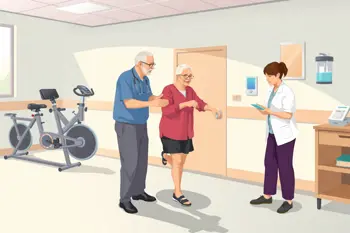
Interactive, therapist-guided digital physical therapy was compared with supervised in-person therapy in a systematic review of 14 randomized trials involving 1,730 participants. Digital care produced a statistically significant but clinically trivial improvement in WOMAC pain, with a mean difference of minus 0.55, and improved WOMAC function by minus 1.61; adherence was comparable, while evidence certainty remained limited. These findings support digital delivery as a possible access pathway, not proof that remote care is superior. 8
Mind-body exercise and acupuncture
A Bayesian network meta-analysis included 20 randomized controlled trials involving 1,457 middle-aged and older adults with knee osteoarthritis. The interventions included Tai Chi, Baduanjin, Wuqinxi, and Yijinjing, with outcomes measured through WOMAC subscales, quality-of-life scores, visual analog pain scores, and the six-minute walk test. Such comparisons indicate substantial research interest in structured traditional Chinese exercises, although rankings do not eliminate differences in study design or intervention delivery. 7
Acupuncture is described in the supplied evidence as an adjunctive option for chronic musculoskeletal pain, including osteoarthritis. Its role should be considered alongside diagnosis, exercise, and patient preference rather than as a replacement for care addressing weakness, restricted mobility, or joint instability. The Merck Manual also places acupuncture among modalities selected through clinician judgment, with treatment location, frequency, and duration defined in the rehabilitation plan. 12
Braces, orthotics, and emerging technologies
Shoe inserts and braces may help redistribute weight or alter alignment, potentially reducing mechanical stress during movement. Orthotics are generally selected according to the affected joint, gait pattern, symptoms, and functional demands. They do not correct every structural problem, and comfort, fit, skin irritation, and continued need for adjustment are practical maintenance considerations that should be reviewed during follow-up. 10
Research is also examining low-intensity pulsed ultrasound and extracorporeal shock wave therapy for knee osteoarthritis. A 2025 randomized trial included 110 participants receiving combined treatment and 110 receiving radial shock wave therapy, with outcome assessment involving clinical measures and inflammatory markers in synovial fluid. A separate randomized trial of 208 older adults tested digitally delivered transcranial direct current stimulation with mindfulness; improvements occurred, but the combined approach was not significantly better than stimulation alone and benefits were not sustained at three months. 910
Evidence limits, safety, and care planning
Non-invasive treatment is not automatically risk-free. Exercise can aggravate symptoms if load, technique, or progression is poorly matched, while heat, cold, electrical stimulation, braces, and ultrasound require appropriate application. The supplied clinical guidance emphasizes diagnosis, treatment type, application location, frequency, and duration, reflecting the need for individualized planning rather than unsupervised combinations of multiple modalities. 1
Research quality also varies. In the digital physical-therapy review, heterogeneity was substantial for some pain outcomes, including I² values of 89% for numerical rating scales and 86% for visual analog scales. The tDCS and mindfulness trial found short-term improvement without sustained benefit at three months, and the ultrasound and shock-wave trial could not completely blind participants because of the physical nature of treatment. These limitations make realistic expectations and clinical reassessment essential. 8910
Sources
- Merck Manual Professional Edition, Rehabilitative Measures for Treatment of Pain and Inflammation
- National Institute for Health and Care Excellence, Osteoarthritis in over 16s: diagnosis and management
- Mayo Clinic, Osteoarthritis diagnosis and treatment
- Arthritis Foundation, Weight Loss and Osteoarthritis
- Versus Arthritis, Non-steroidal anti-inflammatory drugs
- NHS, Transcutaneous electrical nerve stimulation
- Frontiers in Medicine and Frontiers in Public Health, systematic reviews of electrical stimulation and traditional Chinese exercises
- npj Digital Medicine, Digital versus in-person physical therapy for osteoarthritis pain and function
- npj Digital Medicine, Digitally delivered home-based neuromodulation and mindfulness for knee osteoarthritis
- Journal of Orthopaedic Surgery and Research and Cleveland Clinic, ultrasound, shock-wave therapy, and orthotics evidence