NHS hearing loss support: referral options and what to expect: A Clinical Overview
Navigating the public healthcare system for auditory health requires an understanding of clinical pathways and the specific roles of various healthcare professionals. For individuals experiencing difficulties with hearing, the process begins with an evaluation of current symptoms to determine the most appropriate point of clinical entry 1. Whether an individual chooses to seek an NHS referral or consult with private providers, the primary objective remains a comprehensive assessment of auditory function to identify the nature and severity of the hearing impairment 6.
The Initial Referral Pathway and GP Consultation
The standard route to obtaining NHS audiology support typically begins with a primary care consultation. A general practitioner (GP) will conduct an initial examination, which often includes an inspection of the ear canal to rule out simple obstructions such as an accumulation of earwax or acute infections like otitis externa 2, 3. If these conditions are excluded and the patient continues to report hearing difficulties, the GP may formally refer the individual to an NHS audiology service 1. In specific regions, some patients may access audiology services via a self-referral process, depending on local commissioning policies 1, 7.
Clinical guidelines emphasize the urgency of specific auditory symptoms. For instance, individuals presenting with sudden onset hearing loss-defined as loss developing over a period of three days or fewer-within the past 30 days should be referred immediately to an ENT service or emergency department for assessment within a 24-hour window 3. Similarly, red-flag symptoms such as significant pain, persistent discharge, or unilateral hearing loss require professional investigation to exclude more complex underlying medical conditions 3, 8.
Understanding the Audiology Assessment Process
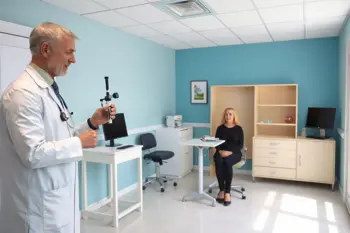
Once a referral is processed, the patient will attend an appointment at an audiology department, which may be located within a hospital setting or a designated community clinic 2, 7. A typical assessment involves a thorough clinical history and a series of diagnostic tests performed by a trained audiologist 7. These tests generally include otoscopy, where the specialist uses a tool called an otoscope to examine the eardrum, and pure-tone audiometry to measure the quietest sounds an individual can perceive across different frequencies 2, 5.
During the assessment, the patient is required to respond to various tones and, in some instances, speech-recognition tests, which help determine the specific configuration of hearing loss 5. The specialist also discusses the patient's lifestyle and communication challenges to inform the selection of appropriate management strategies 4, 7. Because audiology services are commissioned by local Integrated Care Boards, the specific clinic locations and administrative processes may vary depending on the patient's geographical residency 7, 8.
Patient Choice and Service Provision
Under current NHS framework agreements, patients in England have a legal right to choose the location for their first outpatient appointment 7. This choice may include various providers, including those operating under the 'Any Qualified Provider' (AQP) scheme, which encompasses accredited high-street clinics as well as hospital-based audiology departments 2, 7. The standard of care for hearing tests and device fitting is intended to be consistent across these settings, ensuring that patients receive equitable access to professional expertise regardless of the site of their care 2.
| Service Aspect | Expected NHS Standard |
|---|---|
| Diagnostic Test | Pure-tone audiometry and clinical consultation |
| Device Provision | Digital behind-the-ear models |
| Ongoing Care | Follow-up programming and maintenance |
| Costs | Appointments and prescribed aids are free |
Hearing Aid Fitting and Rehabilitation
If the diagnostic assessment confirms that hearing aids would be beneficial, the audiologist will guide the patient through the fitting process. This involves selecting a device that matches the level of hearing loss and the user's daily communication requirements 1, 6. Modern hearing aids provided by the NHS are digital and programmable, allowing the audiologist to calibrate the device to the patient's specific audiogram 6, 7. During the fitting appointment, the audiologist ensures the physical comfort of the device and demonstrates how to operate the controls, manage battery changes, and perform basic maintenance 1, 5.
Adapting to hearing aids is a gradual process that varies from one individual to another. Clinical guidance suggests that consistent use is necessary to achieve the maximum benefit, with many patients requiring a period of several weeks or even months to adjust fully to the amplification of environmental sounds 6, 9. Patients are encouraged to start wearing their devices in quiet environments before moving to more challenging, noisy settings, such as social gatherings or professional workplaces 6.
Maintenance and Long-Term Support
NHS audiology support extends beyond the initial fitting, with departments providing ongoing maintenance and troubleshooting resources 7. Common maintenance tasks, such as replacing ear tubing, domes, or batteries, are usually covered by the local service, though policies regarding the replacement of lost or damaged aids may vary between trusts 6, 7. If a device malfunctions, patients are generally advised to contact their audiology clinic directly rather than their GP, as these specialized departments hold the records and equipment necessary for repair 6.
In cases where a patient’s hearing levels change over time, the audiology service can facilitate re-assessments to determine if the existing devices remain sufficient or if new programming or hardware is required 7. This clinical oversight ensures that individuals receive continuous support as their needs evolve. Patients experiencing difficulties with their devices are encouraged to review the instruction materials provided at the time of fitting or to reach out to their local clinic for guidance on device-specific troubleshooting procedures 6.
Summary of Considerations
Choosing to pursue hearing care involves balancing waiting times, convenience, and individual expectations 6. While NHS services provide comprehensive, high-quality digital devices and professional clinical management at no point-of-use cost, waiting times for initial assessments can fluctuate based on regional demand 1, 6. Individuals are encouraged to check with their local service providers for current estimates on referral timelines and to communicate their specific needs clearly to their audiologist during the initial assessment and follow-up phases 1, 6.
Ultimately, whether an individual proceeds through a standard NHS referral or opts for alternative pathways, the focus remains on the diagnostic accuracy of the assessment and the effectiveness of the subsequent rehabilitation plan 6. Engaging with professional audiological support is widely recognized as a positive step toward managing hearing loss, potentially increasing confidence in speech recognition and improving overall participation in daily social and professional activities 6, 10.
Sources
- RNID: How to get hearing aids
- RNID: Get your hearing tested
- Medscape: NICE 2025 Guideline Summary
- B&NES, Swindon and Wiltshire Community Health: Audiology and Hearing Therapy
- Somerset NHS Foundation Trust: Your appointment at the hearing clinic
- Hearing Dogs for Deaf People: Accessing hearing devices
- Danalogic: NHS Hearing Aids Guide
- St George's University Hospitals: Audiology Appointment Information
- Northern Health and Social Care Trust: Hearing aids
- Hearing Link: Living with hearing aids