Minimalist eyewear trends for 2026: An evidence-based style and materials report
What defines minimalist eyewear in 2026
Minimalist eyewear in 2026 is moving toward clean lines, restrained silhouettes, lightweight construction, and limited visible branding. The main visual objective is to support facial features rather than dominate them, with slim metal, translucent acetate, rimless, and semi-rimless designs forming the central group of styles. Neutral, pastel, and transparent finishes reinforce the understated appearance, while soft rectangles, narrow aviators, and refined round shapes provide alternatives within the same low-visual-weight category. 1
This direction is closely associated with quiet luxury, a fashion principle that places material quality, construction, and subtlety above conspicuous logos. In eyewear, the approach appears through precision engineering, logo-free temples, thin profiles, and designs intended to integrate with capsule wardrobes. The trend is not limited to one demographic or wardrobe because the restrained proportions can work with professional clothing, casual styling, and retro-influenced outfits. However, minimalist appearance does not automatically indicate simple manufacturing or universal fit. 2
Rimless frames and cyber-minimalism
Rimless eyewear is one of the clearest expressions of the 2026 minimalist direction. Its construction removes the surrounding front frame, leaving lenses, bridge, and temples as the principal visible components. This creates an open facial appearance and reduces the visual interruption between the eyewear and the wearer. The renewed interest also reflects a modernized Y2K influence, in which futuristic styling is translated into narrow, lightweight, and more wearable proportions rather than exaggerated novelty shapes. 3
Cyber-minimalism extends the rimless idea through crystal-clear materials, thin metal accents, barely visible profiles, and lightly tinted lenses. Refined geometry is particularly important, with soft rectangles described as a versatile option because they retain a technological character without becoming overly theatrical. Subtle cool blue, soft violet, and technology-inspired grey tints can add depth while maintaining the transparent effect. The resulting style balances digital references with practical everyday wear, although the visual delicacy requires careful handling. 5
Materials, transparency, and color
Titanium remains central to premium minimalist construction because it combines low weight with durability and a slim appearance. Specialized polymers and lightweight hypoallergenic materials also support the trend by reducing bulk while addressing comfort and material-sensitivity concerns. Translucent acetate provides a different interpretation of minimalism: rather than disappearing entirely, it softens the boundary of the frame and allows facial features to remain visible through the material. Transparent champagne and other muted translucent tones reinforce this effect. 1
Clear frames have shifted from being treated solely as discreet optical equipment to becoming a deliberate design choice. Research coverage describes transparent acetate as a way to highlight facial structure while avoiding the visual weight of solid black, tortoiseshell, or heavily colored frames. Manufacturing quality matters because clarity depends on controlled production and resistance to cloudiness or yellowing. Consequently, transparency is not simply a color category. It is also a test of material consistency, finishing, and long-term care. 4
Geometry and proportion
Geometric minimalism is broadening the shape vocabulary beyond conventional circles and squares. Hexagonal, octagonal, and narrow rectangular lenses introduce structure while retaining a restrained footprint. These forms can create a more architectural effect on the face, particularly when paired with thin metal or transparent construction. The narrow rectangle has a 1990s association, but the 2026 interpretation is slimmer and more intellectual than a direct costume revival. Proportion remains more important than novelty, especially for daily prescription wear. 6
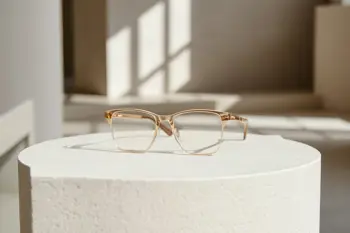
Soft-square shapes and gently angled frames provide a middle ground between traditional rounded eyewear and strongly graphic silhouettes. Slim aviator forms also remain relevant when their lines are reduced and their proportions are controlled. The reported trend landscape contains both minimal and oversized directions, indicating that minimalist design does not necessarily mean small lenses. Instead, it refers primarily to visual restraint, uncomplicated detailing, and a balanced relationship between frame volume and facial features. 2
Lens engineering and practical limitations
Minimalist frames can place greater importance on lens selection because the lens edges and mounting points are more exposed. Rimless designs are commonly associated with high-index materials and specialized edge treatments intended to maintain a slim appearance while supporting durability. For stronger prescriptions, lens thickness can affect the overall visual profile, so the desired barely-there effect may depend on optical specifications rather than frame design alone. This makes professional measurement and material assessment important parts of the fitting process. 1
Lens functionality is also becoming part of the minimalist discussion. Reported 2026 priorities include anti-reflective coatings, blue-light filtering, photochromic technology, progressive lenses, and durable materials for people moving between screens, indoor spaces, and outdoor environments. These features can support different visual routines, but they are not interchangeable and should be evaluated according to prescription, use, and optical guidance. A coating or filter should not be treated as a substitute for correct fit, prescription accuracy, or appropriate visual ergonomics. 7
Fit, maintenance, and sustainability
The apparent simplicity of minimalist eyewear can conceal demanding maintenance requirements. Rimless and ultra-thin constructions may need more frequent adjustment because small changes in alignment are highly visible and can affect comfort. Cleaning protocols also matter because fingerprints, residue, and scratches stand out against clear lenses and transparent materials. High-set or saddle-style bridges are being used to create a cleaner line across the face, but bridge position, temple length, lens width, and nose contact still determine whether a frame remains stable during daily activity. 1
Sustainability is increasingly connected with minimalist design through recycled materials, bio-polymers, and 3D-printed construction intended to reduce manufacturing waste. These approaches may lower material use, but environmental claims require scrutiny of durability, repairability, recycling systems, and full production impacts. The main market friction is that thin profiles and delicate mounting systems can be less forgiving of rough handling, while transparent materials may show aging more clearly. Minimalism therefore involves an ongoing balance among appearance, maintenance, resilience, and responsible production. 4
Sources
- ZENOTTIC Eyewear, “Minimalist Eyewear Guide: 2026 Quiet Luxury Trends”
- Glasses Direct, “Summer 2026 eyewear trends: minimalist vs statement frames”
- The Upcoming, “Less frame, more face: Why rimless glasses are the quiet luxury trend worth knowing about”
- Equate Magazine, “The Aesthetic Of Translucency In 2026 Minimalist Optics”
- ZENOTTIC Eyewear, “Cyber-Minimalism: The Return of Y2K Rimless Glasses in 2026”
- Modalova, “Eyewear Trends 2026: The New Luxury Of Lightness”
- Nations Optics, “Eyewear Trends 2026: The Most Popular Glasses & Lens Styles Everyone Is Choosing”