Zinc for daily energy: natural support, a research-based guide to intake and safety
Zinc for daily energy: natural support is best understood as a nutrition question rather than a promise of an instant lift. Zinc contributes to the processes that convert nutrients into usable fuel, while inadequate intake may affect energy, focus, immune resilience, and general wellness over time. Because the body cannot produce zinc and has limited storage capacity, regular dietary intake is important. 1
What zinc contributes to daily energy
Zinc is an essential trace mineral involved in many biological functions. It supports enzyme activity, energy production, immune function, cell growth and repair, hormone regulation, brain function, protein synthesis, and wound healing. These roles help explain why energy is not determined by calories alone. The body also needs micronutrients to process carbohydrates, proteins, and fats and to maintain normal cellular activity. 2
More than 300 enzymes require zinc for activity, including enzymes involved in metabolism and the synthesis of DNA and proteins. This does not mean zinc acts like a stimulant or creates an immediate sensation of energy. Instead, adequate zinc status helps maintain the underlying biochemical systems that allow cells to function normally. 5
Why inadequate intake may feel like fatigue
Zinc deficiency has been associated with fatigue, impaired cognitive function, and reduced physical performance. These effects can be difficult to identify from symptoms alone because tiredness can also have many nutritional, medical, sleep-related, or lifestyle causes. A low-zinc diet is therefore one possible contributor, not a universal explanation for low energy. 3
People who consume limited animal-based foods, follow restrictive eating patterns, or rely heavily on processed meals may need to pay closer attention to zinc intake. Plant foods can provide zinc, but compounds called phytates in some legumes, grains, nuts, and seeds may reduce absorption. This makes food variety and overall dietary quality relevant when assessing intake. 4
Daily intake and dietary sources
UK guidance cited in the research data recommends 9.5 milligrams of zinc per day for adult men and 7.0 milligrams for adult women. The United States reference values listed by the research sources are 11 milligrams for adult men and 8 milligrams for adult women. These figures describe total daily intake needs, not an instruction for every person to use supplements. 2
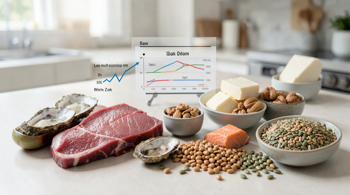
Food sources include red meat, shellfish, fish, dairy products, legumes, whole grains, seeds, and nuts. Oysters and red meat are described as particularly bioavailable sources, while legumes and seeds are important plant-based options. Including several source categories can help provide zinc alongside protein, fiber, and other nutrients that support normal energy metabolism. 8
| Food category | Role in zinc intake |
|---|---|
| Shellfish and red meat | Among the more bioavailable sources |
| Legumes and whole grains | Plant-based sources, with absorption affected by phytates |
| Nuts and seeds | Concentrated plant-based sources |
| Dairy products and fish | Additional dietary sources |
Energy, immunity, and recovery
Zinc supports immune function, including processes involving T-lymphocytes. Maintaining normal immune activity may indirectly support everyday energy because recurring or prolonged illness can contribute to tiredness. However, evidence does not support presenting zinc as a guaranteed way to prevent all infections or as a substitute for medical care when symptoms persist. 7
The mineral also contributes to wound healing, cell growth, and protein synthesis. Those functions are relevant to recovery after ordinary physical demands, but the available research does not establish zinc as a universal performance enhancer for people who already meet their nutritional requirements. Benefits are more biologically plausible when inadequate intake or deficiency is present. 2
Supplementation limits and potential risks
More zinc is not automatically better. The adult upper intake level identified in the research data is 40 milligrams per day from all sources unless a clinician advises otherwise. Excessive or prolonged intake may cause nausea and other stomach problems and can interfere with copper status. Copper deficiency may itself affect health and energy, making high-dose, long-term self-supplementation an avoidable risk. 6
Supplement labels require careful review when several products are used at once, because multivitamins, immune formulas, and lozenges may all contain zinc. The research data also identifies interactions with quinolone antibiotics, tetracycline antibiotics, penicillamine, and thiazide diuretics. Anyone taking these medicines or considering sustained supplementation should discuss timing, dose, and necessity with a qualified health professional. 6
How to interpret claims about zinc and energy
Zinc participates in thyroid hormone metabolism, cellular energy production, protein synthesis, and nervous-system functions. These mechanisms provide a credible nutritional rationale for maintaining adequate intake, but they do not prove that a zinc supplement will resolve unexplained fatigue. Persistent low energy warrants consideration of broader causes rather than assuming a single mineral is responsible. 9
Research on cognitive function and mental tiredness has linked adequate zinc status with improved cognitive outcomes and less mental fatigue, while the strongest practical conclusion remains conditional: zinc is important when intake is insufficient, but supplementation has limited justification when dietary needs are already met. A balanced diet, attention to risk factors, and appropriate clinical assessment provide a more reliable framework than high-dose use. 10
Practical assessment of zinc status
A food-first assessment can begin by reviewing how often zinc-containing foods appear across a typical week. Relevant categories include meat, shellfish, dairy, legumes, seeds, nuts, and whole grains. Particular attention may be appropriate for people with restrictive diets, older adults, athletes, or people affected by alcohol use disorder, all of whom are identified in the research data as groups more likely to have low intake or status. 4
Symptoms such as fatigue, reduced focus, frequent illness, or slower healing do not establish zinc deficiency on their own. Laboratory evaluation and clinical history may be needed when deficiency is suspected. The central safety principle is proportionality: meet recommended intake through varied foods where possible, avoid routinely exceeding the upper limit, and treat supplementation as a targeted decision rather than a general energy strategy. 3
Sources
- Our Well Wisher: Zinc: How to Make Your Energy Last Longer, https://ourwellwisher.com/zinc-how-to-make-your-energy-last-longer/
- National Institutes of Health Office of Dietary Supplements: Zinc Consumer Fact Sheet, https://ods.od.nih.gov/factsheets/Zinc-Consumer/
- PubMed research record on zinc deficiency and fatigue, https://pubmed.ncbi.nlm.nih.gov/25368314/
- British Dietetic Association: Zinc, https://www.bda.uk.com/resource/zinc.html
- Harvard T.H. Chan School of Public Health: Zinc, https://www.hsph.harvard.edu/nutritionsource/zinc/
- WebMD: Zinc, https://www.webmd.com/vitamins/ai/ingredientmono-982/zinc
- Cleveland Clinic: How Zinc Benefits Your Body, https://health.clevelandclinic.org/zinc
- Healthline: Best Foods High in Zinc, https://www.healthline.com/nutrition/best-foods-high-in-zinc
- Journal of Trace Elements in Medicine and Biology research on zinc and thyroid hormone metabolism, https://www.sciencedirect.com/science/article/abs/pii/S0946672X1730303X
- Nutrients Journal research on zinc, cognition, and mental tiredness, https://www.mdpi.com/2072-6643/9/11/1231