Zumba classes for seniors: active and social exercise: A Practical Evidence-Based Overview
Zumba classes for seniors are increasingly described as active and social exercise because they combine modified dance movements with music, group participation and opportunities to connect. Zumba Gold is a lower-intensity format intended for active older adults, beginners and people returning to exercise, with simpler choreography and reduced impact than standard Zumba. 1
What senior Zumba classes involve
Zumba Gold generally uses easy-to-follow steps influenced by Latin and international rhythms. The City of Somerville describes the format as focusing on balance, range of motion and coordination while developing cardiovascular endurance, muscular conditioning and flexibility. 2 A MOVE class in New Zealand is listed as a 45-minute, low-intensity session designed for people aged 60 and over, beginners and participants returning after injury. 1
Class structure and intensity are not identical everywhere. A London community session describes a 45-minute, low-intensity workout with simple steps, while a Zumba Gold Toning programme combines modified choreography with light resistance using toning sticks or small hand weights. 3 5 Some programmes also include seated or standing options, allowing participants to alter the movement pattern according to mobility and comfort. 7
Physical activity covered by the format
Dance-based exercise can combine several movement objectives within one session. The reported focus areas for Zumba Gold include cardiovascular fitness, muscular conditioning, flexibility, coordination, range of motion and balance. 2 MOVE states that its class supports cardiovascular health, coordination and balance, and identifies the programme as Strength and Balance Accredited by Live Stronger for Longer under criteria intended to reduce falls in older people. 1
National guidance places a single class within a broader weekly pattern rather than treating it as a complete exercise plan. The NHS advises older adults to build towards 150 minutes of moderate activity each week where possible and to include strength, balance and flexibility activities. 9 The World Health Organization recommends 150 to 300 minutes of moderate-intensity aerobic activity for adults aged 65 and over, together with muscle-strengthening and multicomponent activity involving balance. 10
Social participation and emotional wellbeing
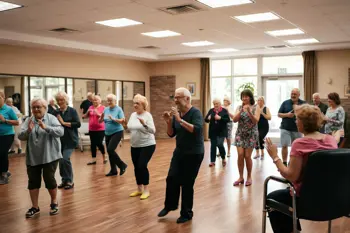
The social element is a central feature of group dance exercise. MOVE characterises its Zumba Gold setting as friendly, encouraging and social, while its tutor profile describes classes that bring people of different ages, abilities and backgrounds together. 1 The Regis Oxley account similarly reports that residents participate together, with some standing and others seated, and associates the activity with improved mood, confidence, interaction and connection. 7
Social benefits should not be treated as guaranteed medical outcomes, because attendance experience depends on the instructor, venue and group atmosphere. However, recurring classes can create a predictable setting for conversation and shared participation. Examples in the supplied data range from a monthly aged-care activity at Regis Oxley to community-centre sessions in London, Adelaide and Darwin, showing that senior Zumba may operate in residential, municipal and community environments. 3 4 6 7
How classes differ by venue
Venue schedules, eligibility rules and payment arrangements vary considerably. MOVE lists a Tuesday 10:00 to 10:45 a.m. session for participants aged 60 and over, held at Movement Studio 3 in Parakiore, with a stated charge of $10. 1 Mitchell Park Sports and Community Centre in South Australia lists a Friday 10:00 to 10:45 a.m. Zumba Gold session for seniors and adults, with bookings required and a stated per-session charge of $8. 4
Other examples show different access models and should be checked for current status because event pages may refer to past sessions. Primrose Hill Community Association lists a 2:30 to 3:15 p.m. class, requests trainers and water, and states that registration is not necessary. 3 A COTA Northern Territory listing describes a 45-minute, low-to-medium-intensity Zumba Mash-Up using light hand weights, with participants choosing their own pace. 6 These details illustrate variation, not a universal timetable or standard fee.
Adaptations, eligibility and safety
Lower intensity does not mean that every class suits every participant. MOVE asks participants to disclose health conditions or physical restrictions so tutors can accommodate them, and the format is described as suitable for people beginning exercise or returning after injury. 1 Zumba Gold Toning is presented for active older adults, beginners and people with mild injuries or mobility considerations, but its use of hand weights introduces an additional strength component that may require individual modification. 5
Useful adaptations may include smaller steps, lower arm movements, seated participation, support from a chair, rest periods and avoiding movements that cause pain. The Regis Oxley example documents a mixed seated and standing class, demonstrating that choreography can be adjusted for different physical abilities. 7 The Centers for Disease Control and Prevention advises older adults to combine aerobic, muscle-strengthening and balance activities while adapting activity to current fitness level. 11 Medical guidance may be appropriate for people with significant heart, balance, joint or other health concerns.
What to assess before attending
A suitable class should provide clear demonstrations, safe spacing, accessible flooring and alternatives for different fitness levels. The instructor’s ability to explain movements and respond to restrictions is particularly important when participants have varied mobility. The available examples include dedicated senior formats, seated Zumba, strength and balance teaching, and toning sessions, but a class title alone does not confirm that every adaptation is available. 1 5 7
Practical questions include whether the session is standing, seated or mixed; whether chairs are available; how long the class lasts; whether hand weights are used; and whether advance booking is required. Participants may also need supportive footwear and water, as specified by Primrose Hill Community Association. 3 Dates should be verified directly with the venue because several supplied listings are marked as past events, while recurrence information can change. The main objective is a manageable, enjoyable level of movement that can be sustained safely.
Sources
- MOVE, Zumba Gold
- City of Somerville, Council on Aging Zumba Gold
- Primrose Hill Community Association, Zumba Gold for Seniors
- City of Marion, Mitchell Park Zumba Gold
- UXBRIDGE, Zumba Gold Toning
- COTA NT, Zumba Mash-Up
- Regis Aged Care, Music and movement: Zumba at Regis Oxley
- NHS, Physical activity guidelines for older adults
- World Health Organization, Physical activity
- Centers for Disease Control and Prevention, Physical Activity Guidelines for Older Adults