Laser eye surgery cost and procedure in 2026: what to expect: A Clinical and Market Overview
Laser eye surgery, a widely performed elective procedure, continues to evolve in 2026 with advancements in laser technology and diagnostic precision 5. Patients evaluating these options often find a complex market where advertised pricing frequently differs from actual clinical fees. Understanding the distinction between various procedures, such as LASIK, PRK, and SMILE, is essential for informed decision-making regarding eye health and financial planning 3. This guide synthesizes current industry data to provide a transparent look at what individuals can expect during the assessment and surgical journey.
Current Market Pricing and Financial Realities
In 2026, the national average cost for refractive eye surgery in the United States generally ranges from $2,000 to $3,500 per eye for high-quality, custom procedures 3. While some advertisements may suggest significantly lower per-eye rates, these often reflect base-level technology or specific, limited conditions. Comprehensive, all-inclusive packages that account for pre-operative testing, surgeon expertise, the procedure itself, and mandatory post-operative follow-up visits typically fall into the $2,200 to $2,800 per-eye range for custom wavefront-guided treatments 3, 4.
Regional variations play a significant role in final quotes, with metropolitan centers like New York City, Los Angeles, and San Francisco often commanding prices 20% to 35% above the national average 4. Conversely, rural areas may see pricing 10% to 20% below these benchmarks 4. Because the surgery is elective, standard medical insurance rarely covers the cost; however, many patients utilize tax-advantaged accounts, such as Health Savings Accounts (HSA) or Flexible Spending Accounts (FSA), to leverage pre-tax savings, effectively reducing the net financial impact by 22% to 37% depending on the individual's tax bracket 4, 8.
| Technology | Estimated Cost (Per Eye) | Key Characteristic |
|---|---|---|
| Traditional LASIK | $1,500 - $2,000 | Microkeratome blade |
| All-Laser LASIK | $1,800 - $2,400 | Bladeless; more precise |
| Custom Wavefront | $2,200 - $2,800 | Maps unique eye profile |
| SMILE | $2,800 - $3,800 | Minimally invasive |
| PRK | $1,800 - $2,800 | No flap; surface ablation |
Understanding Surgical Methodologies
Modern laser vision correction utilizes various techniques to address refractive errors, including nearsightedness, farsightedness, and astigmatism 5, 6. LASIK remains the most common procedure, involving the creation of a thin corneal flap, followed by reshaping the underlying tissue with an excimer laser 3, 6. For patients with thinner corneas or those engaged in contact sports where a corneal flap might pose a risk, surface ablation methods like PRK (Photorefractive Keratectomy) are often recommended, as they do not require a flap 3, 8.
Another modern alternative, SMILE (Small Incision Lenticule Extraction), has gained prominence for being minimally invasive. It involves the removal of a small piece of corneal tissue through a micro-incision, which may be beneficial for patients with specific dry eye profiles 3. While these procedures offer high success rates, the choice of technology often correlates with the final cost, as premium options like custom wavefront-guided surgery or bladeless all-laser systems require more advanced diagnostic mapping and laser time 3, 6.
Candidacy and Pre-Surgical Assessment
Determining eligibility is the most critical phase of the refractive surgery process. Clinical guidelines typically require candidates to be at least 18 years of age with a stable prescription for at least 12 months prior to surgery 6. Ophthalmologists evaluate several physiological markers, including corneal thickness, topography, and the overall health of the ocular surface 6, 8. Individuals with pre-existing conditions, such as severe dry eye or systemic health issues that could impede the healing process, may not be suitable candidates for laser-based correction 6, 8.
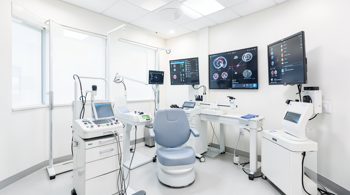
Patients should approach their initial consultation with a clear understanding that not everyone qualifies for every type of procedure. The diagnostic phase is comprehensive, often involving specialized imaging to map the eye's unique profile 3. Surgeons emphasize that these assessments are necessary to manage expectations and minimize the risk of complications. It is standard practice to discuss not only the potential for improved vision but also the limitations, including the natural onset of presbyopia, which may eventually necessitate reading glasses regardless of the initial success of the surgery 6.
Recovery and Post-Operative Expectations
The immediate recovery period following laser surgery is relatively brief, with most patients noticing functional vision improvement within 24 hours 5, 6. However, final stable vision may take weeks to achieve as the ocular surface heals 6. Typical post-operative experiences include temporary light sensitivity, glare, dry eyes, and fluctuating vision quality as the cornea stabilizes 6, 11. Surgeons provide specific instructions regarding the use of lubricating eye drops and protective shielding, particularly during sleep in the first week post-procedure.
Long-term maintenance involves regular follow-up visits, typically scheduled at intervals of one day, one week, one month, and three months after surgery 3. These appointments allow the provider to monitor healing, detect potential signs of infection or inflammation, and verify that the refraction remains stable 3, 6. While serious complications are rare, occurring in less than 1% of cases, patients must be aware of the potential for dry eye syndrome or persistent visual disturbances, which are documented risks in clinical literature 10, 11.
Evaluating Providers and Clinic Packages
When researching where to undergo the procedure, it is crucial to clarify exactly what is included in the quote provided by the clinic 8. Reputable centers provide all-inclusive pricing that covers the surgeon's fee, the surgical facility usage, pre-operative measurements, and all required post-operative examinations 3. Patients should inquire about the clinic's policy regarding enhancements, as some refractive results may require a secondary fine-tuning procedure to reach the desired visual outcome within a specific timeframe.
Avoid relying solely on advertised "starting at" prices, which often target specific, low-prescription candidates and exclude the technology upgrades required for more complex prescriptions 3. A transparent provider will offer a clear breakdown of costs during the consultation, explaining why a specific technology is recommended for the patient's individual eye health profile 7. Comparing the depth of pre-operative testing and the transparency of the cost structure is a more effective strategy than searching for the lowest listed price in the marketplace 7.
Sources
- Cleveland Clinic: LASIK Eye Surgery Overview
- American Academy of Ophthalmology: Laser Vision Correction
- CostPrism: 2026 LASIK Cost Guide
- CostPrism: LASIK Cost Calculator and Methodology
- LASIK.com: Procedure Statistics and Outcomes
- CareCostIndex: LASIK Clinical Procedures
- LeeVision: Expert Pricing Considerations
- Acibadem Hospitals Group: Insurance and HSA Utilization
- LegalClarity: National Average Cost Analysis
- LasikPlus: Safety Data and Clinical Standards
- Mayo Clinic: LASIK Candidacy and Recovery