Natural options for joint discomfort: dosage and safety: An evidence review
Natural options for joint discomfort require two separate questions: whether an ingredient may ease symptoms, and whether its dose and safety profile are understood. Research on osteoarthritis supplements remains mixed, and professional reviews describe many products as conditional adjuncts rather than established replacements for exercise, weight management or medical treatment. 1
What the evidence can and cannot show
Osteoarthritis is a major cause of disability, and cases are expected to rise as the population ages. A 2026 review identified glucosamine, chondroitin, turmeric, ginger, omega-3 fatty acids, vitamins and herbal formulations as commonly used options, but concluded that randomized trials remain insufficient for firm recommendations. 1 A 2025 network meta-analysis of randomized trials also evaluated botanical extracts for knee osteoarthritis using outcomes such as pain, function and quality of life, while noting that results differ between preparations. 2
Evidence from one supplement should not automatically be applied to another product containing the same broad ingredient. Extract concentration, chemical form, formulation, product testing and study duration can differ. Arthritis organizations therefore advise discussing supplements with a qualified clinician or pharmacist, particularly because herbal products may cause side effects or interact with prescribed medicines. 3
Turmeric, curcumin and other botanicals
Turmeric and curcumin have shown possible short-term improvements in osteoarthritis symptoms in some studies, but the evidence is not conclusive and better-quality trials are needed. Oral turmeric products can cause gastrointestinal effects, while concentrated or enhanced-absorption formulations may have pharmacological effects that are not equivalent to culinary turmeric. 4 No universally established dosage can be applied safely to every product.
Boswellia, ginger and other botanical extracts have preliminary or inconsistent evidence. A 2025 network meta-analysis reported potential therapeutic value across botanical interventions, but the research base consisted of different extracts and clinical protocols, making direct dose comparisons difficult. 2 People with liver disease, bleeding disorders, pregnancy, breastfeeding or multiple prescriptions should obtain individual medical advice before using concentrated herbal preparations.
Glucosamine and chondroitin dosage questions
Glucosamine studies commonly use 1,500 milligrams daily, while some research summaries describe chondroitin doses of 800 to 1,200 milligrams daily. However, clinical results for pain and physical function remain inconsistent, and differences in formulations may help explain conflicting findings. 5 NICE advises against offering glucosamine for osteoarthritis because strong evidence of benefit is lacking. 6
Glucosamine and chondroitin are not risk-free simply because they are widely marketed. The National Center for Complementary and Integrative Health notes potential concerns about bleeding with warfarin, while chondroitin may also present concerns for people taking anticoagulant or antiplatelet medicines. 5 Shellfish-allergic consumers should check the source of glucosamine, and people with diabetes or kidney conditions should discuss suitability before use.
Omega-3 fatty acids and vitamin D
Omega-3 fatty acids have limited evidence for osteoarthritis pain, although EPA and DHA may be useful for some inflammatory arthritis conditions. Arthritis UK describes a concentrated supplement providing 3 grams of combined EPA and DHA as an amount used for inflammatory arthritis and suggests that effects may take about three months to assess. 7 This information does not establish the same benefit for osteoarthritis.
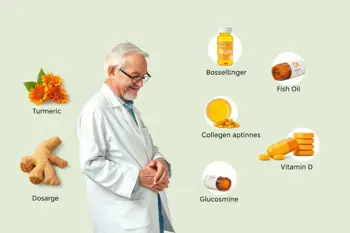
High-dose omega-3 supplementation can upset the stomach and may affect bleeding, especially when combined with anticoagulants or antiplatelet medicines. 8 Vitamin D supports bones and muscles and may be relevant when deficiency exists, but it is not a proven general treatment for joint pain. NHS guidance recommends 10 micrograms daily for most people in the United Kingdom during autumn and winter. 9
Collagen and product-quality considerations
A 2025 randomized, double-blind, placebo-controlled trial studied low-molecular-weight collagen peptides in 80 adults aged 40 to 75 with grade I or II knee osteoarthritis. The study was designed to assess both efficacy and safety, reflecting the continuing need for clinical evidence rather than relying only on laboratory or marketing claims. 10 The available research does not establish one universally appropriate collagen dose for all joint conditions.
Supplement labels should identify the specific ingredient, chemical form and amount per serving. Products that disclose only a proprietary blend make comparison with published research difficult. UK-authorized traditional herbal medicines carry a Traditional Herbal Registration mark, while unlicensed herbal products may have uncertain contents, quality or contamination risks. 11 Regulatory status and quality controls therefore form part of safety assessment, not merely purchasing preference.
When supplements should not replace assessment
Persistent, severe, hot or swollen joints require medical assessment because the cause may not be uncomplicated osteoarthritis. Joint deformity, fever, unexplained weight loss or symptoms following an injury are also warning signs that should not be managed solely with supplements. 12 A clinician can distinguish osteoarthritis from inflammatory arthritis, infection, gout or an injury requiring a different approach.
Exercise and weight management are central NICE recommendations for osteoarthritis, where appropriate, and supplements should be considered adjuncts rather than substitutes. 6 Before starting a product, a pharmacist or clinician should review anticoagulants, diabetes medicines, kidney or liver disease, allergies, pregnancy, breastfeeding and all other supplements. A symptom diary can help identify whether a product produces a meaningful change or an adverse effect.
Practical dosage and safety summary
| Option | Research-related dosage information | Main cautions |
|---|---|---|
| Glucosamine | Common studies use 1,500 mg daily | Inconsistent benefit, warfarin interaction, possible shellfish source |
| Chondroitin | Research summaries describe 800 to 1,200 mg daily | Mixed evidence and possible bleeding concerns |
| Omega-3 EPA and DHA | About 3 g combined is described for inflammatory arthritis | Limited osteoarthritis evidence and bleeding risk |
| Vitamin D | 10 micrograms daily for most people in the UK during autumn and winter | Useful for bone and muscle health, not a general pain treatment |
| Turmeric, Boswellia, ginger and collagen | No single broadly established dose | Variable extracts, interactions and incomplete evidence |
The most defensible interpretation of current research is that dosage cannot be separated from product identity, medical history and treatment goals. Natural products may help some people with joint discomfort, but uncertain effectiveness, interaction risks, variable quality and limited long-term data justify cautious, supervised use rather than automatic self-treatment.
Sources
- Springer Nature, Current Physical Medicine and Rehabilitation Reports
- Frontiers in Pharmacology
- Arthritis New Zealand
- National Center for Complementary and Integrative Health, Turmeric
- National Center for Complementary and Integrative Health, Glucosamine and Chondroitin
- National Institute for Health and Care Excellence
- Arthritis UK
- NIH Office of Dietary Supplements, Omega-3 Fatty Acids
- NHS, Vitamin D
- Frontiers in Nutrition, Collagen Peptides Trial
- UK Government, Herbal Medicines Safety
- Versus Arthritis