Three plant-based herbal blends that may support occasional joint comfort: An Evidence and Safety Review
Three plant-based herbal blends that may support occasional joint comfort generally combine turmeric, ginger, Boswellia, Devil’s Claw, nettle, or other traditional botanicals. Product descriptions commonly frame these formulas as support for mobility, flexibility, healthy inflammatory response, or occasional stiffness rather than as treatments for a diagnosed condition. 1
How the Three Blend Categories Differ
The first category is turmeric-centered, often pairing turmeric or curcumin with black pepper extract and sometimes ginger or Boswellia. The second combines several traditional joint-comfort botanicals, such as Boswellia, ginger, Devil’s Claw, white willow bark, or yucca. The third uses an infusion or liquid extract format and may include nettle, mullein, burdock, meadowsweet, or moringa. These categories describe ingredient patterns, not proof that every formula produces the same result. 2
Label language is an important distinction. The reviewed products use terms such as “supports joint comfort,” “supports mobility,” “helps maintain flexibility,” and “supports a healthy inflammatory response.” Such wording indicates the intended wellness positioning of a supplement, but it does not establish that the product can diagnose, prevent, treat, or cure arthritis, injury, or another medical disorder. Individual formulas also vary in extract strength, serving size, standardization, and quality testing. 3
Blend One: Turmeric, Boswellia, and Ginger
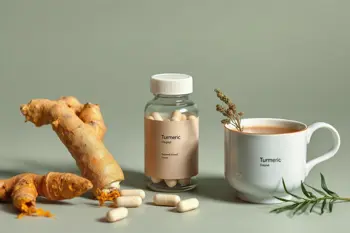
Turmeric is the central botanical in this category because its curcuminoids are widely studied for their relationship to joint health and inflammatory-response support. One reviewed formula lists 900 milligrams of an organic turmeric root complex, Boswellia extract standardized to 65% boswellic acid, organic ginger, and BioPerine black pepper extract. The stated rationale is that turmeric, Boswellia, and ginger provide complementary plant compounds, while piperine is used to support curcuminoid absorption. 4
Another turmeric-centered product specifies 500 milligrams of turmeric root and 300 milligrams of turmeric extract, delivering a guaranteed minimum of 300 milligrams of curcuminoids per serving. It also includes ginger, Boswellia, and Devil’s Claw, with two tablets listed as the suggested daily serving. These figures are product-label details rather than a universal dose recommendation. They also show why comparisons based only on the word “turmeric” can be misleading, since root powder and concentrated extracts are not equivalent descriptions. 5
Blend Two: Boswellia, Ginger, and Traditional Botanicals
Boswellia serrata, commonly called Indian frankincense, is frequently included in botanical formulas intended to support joint function and occasional stiffness. Ginger adds a warming botanical traditionally used for comfort, while Devil’s Claw is often paired with these ingredients in joint-support formulas. A vegan multi-nutrient product reviewed for this topic lists Boswellia, ginger, Devil’s Claw, white willow bark, yucca, cat’s claw, horsetail, licorice, and other nutrients. 6
The advantage of a broad blend is ingredient diversity, but the same feature creates an evidence problem. If a formula contains many botanicals, it becomes difficult to determine which ingredient accounts for a perceived effect, whether the combination has been directly studied, or whether the total extract amounts are sufficient for comparison with research. Proprietary formulas can further limit transparency when individual quantities are not fully disclosed. A vegan label confirms the stated dietary format, not clinical effectiveness. 7
Blend Three: Herbal Teas and Liquid Extracts
Tea-based formulas offer a different delivery method from capsules and tablets. One reviewed joint tea contains mullein, yucca, Devil’s Claw, stevia, turmeric, and burdock, and is described as caffeine-free and plant-based. Another loose-leaf tea combines white willow bark, meadowsweet, yarrow, and nettle leaf. Nettle is traditionally valued for mineral content, while meadowsweet and white willow contain naturally occurring salicylates that are associated with traditional discomfort support. 8
Liquid extracts represent another format. A moringa blend provides a listed 650-milligram botanical mixture of moringa, turmeric, ginger, Boswellia, and black pepper per serving. Compared with tea, a liquid extract may offer a more concentrated serving, but the label must be examined for the amount of each individual extract, extraction method, alcohol or glycerin base, and serving consistency. Without those details, comparisons among teas, drops, capsules, and tablets remain limited. 9
What the Evidence Can and Cannot Show
Curcumin, Boswellia, ginger, Devil’s Claw, and related botanicals have been discussed in complementary-health literature for joint comfort and inflammatory response. A PubMed Central review reports research interest in herbal extracts for minor joint-pain management, while consumer medical references describe traditional or studied uses for individual ingredients. However, evidence for one standardized extract cannot automatically be transferred to a different blend, especially when the dose, preparation, and population differ. 10
Potential botanical synergy is often used to explain why turmeric is paired with Boswellia, ginger, or black pepper. The practical interpretation should remain cautious: combining ingredients may broaden the formula’s traditional rationale, but it can also increase the number of possible interactions and adverse reactions. Evidence quality depends on controlled human studies, consistent preparations, transparent dosing, and clinically meaningful outcomes. Product testimonials or star ratings do not substitute for those measures. 3
Safety, Eligibility, and Label-Reading Considerations
Eligibility is not simply a question of whether a product is plant-based. People with persistent, severe, unexplained, or injury-related joint symptoms may require clinical assessment rather than self-directed supplement use. Extra caution is warranted with blends containing salicylate-containing herbs such as white willow or meadowsweet, concentrated botanicals, black pepper extract, or numerous ingredients. The reviewed NatureWise product also displays a California Proposition 65 warning concerning possible lead exposure, illustrating why regional warnings and testing statements deserve attention. 4
Ongoing maintenance involves reading the complete Supplement Facts panel, following the labeled serving instructions, checking allergen and dietary declarations, and reassessing whether the intended occasional-support use remains appropriate. The supplied product pages mention third-party testing for some formulas, but testing claims do not mean every batch has identical clinical evidence. Market availability can also change: the Nature Made three-in-one product page identifies that product as discontinued. Such changes make current labeling and product status relevant to any comparison. 1
Sources
- Nature Made, 3-In-1 Joint Comfort Capsules
- LifeSource Vitamins, Arthritis Relief and Joint Rebuilder Vegan Formula
- National Center for Complementary and Integrative Health, Turmeric
- NatureWise, Turmeric Boswellia
- MegaFood, Turmeric Curcumin Extra Strength, Joint
- Arthritis Foundation, Supplement and Herb Guide for Arthritis
- LifeSource Vitamins, Product Details and Key Ingredients
- D Herbs, Joint Aid Tea, and Holly Healthcare, Organic Joint Comfort Tea
- Moringa With Barry, Moringa Joint Flex Mobility Support Extract
- PubMed Central, Review of Herbal Extracts for Minor Joint Pain Management