Heart-healthy snacks: nutritious choices for 2026: Evidence, portions, and practical comparisons
Heart-healthy snacks: nutritious choices for 2026 increasingly means choosing foods that add fiber, plant protein, unsaturated fats, and minimally processed ingredients rather than simply removing snacks from the diet. Current guidance and expert commentary identify beans, chickpeas, edamame, fruit, vegetables, nuts, seeds, whole grains, and unsweetened dairy or fortified alternatives as useful patterns, while sodium, saturated fat, and added sugar remain key nutrients to monitor. 5
What makes a snack heart-healthy
A cardiovascular-supportive snack generally combines nutrient density with a manageable portion. The American Heart Association emphasizes fruits, vegetables, nuts, seeds, whole grains, and low-fat dairy while advising limits on added sugars, sodium, and saturated fat. Harvard nutrition guidance similarly centers minimally processed foods such as fruit, nuts, yogurt, vegetables, and whole-grain foods. These categories can provide fiber and unsaturated fats without relying on highly processed snack products. 5
Fiber is particularly relevant because higher intake is associated with better gut health, lower cholesterol, and greater satiety. One cited study found that fewer than one in 10 U.S. adults meet the daily fiber recommendation, while another report linked a five-gram increase in daily fiber with significantly lower blood levels of C-reactive protein, an inflammation marker associated with heart attack risk. 6
Plant protein has a central role
For heart health, protein source may matter more than total protein quantity. Preventive cardiologist Tracy Paeschke reported that plant protein intake is consistently associated with lower cardiovascular and all-cause mortality, whereas protein from processed and red meat has shown neutral or harmful associations. A study following more than 200,000 people for over 30 years also found that a higher ratio of plant to animal protein was associated with significantly lower cardiovascular and coronary artery disease risk. 1
Legumes can therefore function as both protein and fiber foods. A half-cup serving of black beans provides about 8 grams of protein and 8 grams of fiber, and the beans also contain anthocyanins and flavonoids, plant compounds associated with antioxidant and anti-inflammatory activity. This nutrient combination makes bean-based snacks more substantial than many refined-grain or confectionery choices, although preparation ingredients such as salt and saturated-fat-rich toppings still influence the overall profile. 10
Chickpeas and edamame in comparison
Roasted chickpeas are identified by cardiology and nutrition experts as a practical alternative to chips or cookies because they provide fiber and plant protein while generally containing less saturated fat, sugar, and sodium than many traditional packaged snacks. Their nutritional value depends on preparation: dry roasting with little salt differs substantially from versions coated with salty seasoning or added oils. Portion awareness remains relevant because concentrated roasted foods can be easy to eat quickly. 3
Edamame offers another legume-based option. A 100-gram serving contains approximately 11.5 grams of protein and 5 grams of fiber, according to USDA data cited by the experts, and frozen edamame can be steamed before serving. Roasted edamame may be used in portable settings, but packaged versions should be assessed for sodium. Both foods illustrate a useful snack structure: a plant protein paired with fiber, rather than protein supplied by processed meat. 7
Nuts, seeds, fruit, and dairy options
Unsalted nuts and seeds supply fiber and mostly unsaturated fats, but they are calorie-dense, making a small handful a practical portion. Research summarized in 2026 reporting linked eating nuts several times a week with meaningfully lower cardiovascular and coronary heart disease risk, and the FDA permits a qualified claim that about one ounce daily, as part of a healthy diet, may reduce heart disease risk. Almonds and pistachios are both supported choices, not competing cures. 9
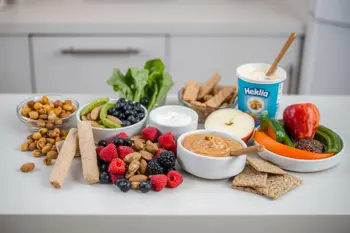
Other combinations can add variety without relying on sweetened or heavily salted products. Examples include an apple with unsalted nuts, vegetable sticks with hummus, plain yogurt with berries, or whole-grain crackers with a protein-rich spread. The broader dietary pattern matters more than any single snack, and lower-fat unsweetened dairy or fortified alternatives can fit alongside fruit, vegetables, whole grains, pulses, and seeds. 5
Labels, portions, and nutrients to limit
Packaged snack labels help compare products by saturated fat, sugars, and salt per 100 grams. UK front-of-pack traffic-light labeling provides a quick comparison across these nutrients, while the World Health Organization recommends less than 5 grams of salt per day for adults and free sugars below 10% of total daily energy intake. These limits are population guidance, not a guarantee that a labeled product is appropriate for every medical condition. 8
Snack choices can also displace less nutritious foods. Ongoing U.S. dietary tracking data cited in 2026 reporting found that 95% of Americans snack at least once daily, with snacks contributing 24% of average daily calories and 43% of added sugars. Replacing rather than adding a snack may therefore be nutritionally meaningful. The practical maintenance issue is consistency: checking labels, measuring portions of nuts, and limiting repeated reliance on salty or sugary packaged foods. 2
Medical considerations and realistic routines
People with diabetes do not automatically need snacks between meals. Diabetes-focused guidance states that whether a snack is appropriate depends on individual medication, activity, and blood-glucose needs. When snacks are suitable, fruit, vegetables, yogurt, nuts, and seeds may be considered, but carbohydrate quantity and timing require individualized assessment. A clinician or registered dietitian can help align snack choices with treatment and glucose-management requirements. 6
A sustainable routine can use a simple formula: combine a fiber-rich carbohydrate with protein or unsaturated fat. Examples include fruit with unsalted nuts, whole-grain toast with nut butter, or vegetables with hummus. The updated American Heart Association dietary framework also emphasizes varied fruits and vegetables, whole grains, beans, peas, lentils, nuts, seeds, seafood, lower-fat dairy, and replacement of saturated fats with unsaturated fats. Snacks work best when they reinforce this overall pattern. 8
Sources
- Prevention, “Experts Share the Best High-Protein Snacks for Heart Health”
- Business Insider, “Nutrition Scientist Loves Snacking: Her 5 Heart-Healthy Favorites”
- Yahoo Health, “This Is the No. 1 Snack for a Healthy Heart, According to Experts”
- Superpower, “Heart-Healthy Snacks”
- Harvard Health, “New guidelines detail what you should eat for a healthy heart”
- Yahoo Health, “This Is the #1 Best Fiber-Rich Snack for Heart Health, According to a Cardiologist”
- AOL, “A Cardiologist and Dietitian Reveal the Number-1 Snack for Heart Health”
- Prevention, “Scientists Outline 9 Steps to Better Heart Health in New AHA Dietary Guidelines”
- Prevention, “Almonds Vs. Pistachios: Which Is the Better Snack for Heart Health?”
- TODAY, “Dietitian Reveals No. 1 Plant-Based Protein to Boost Heart Health”