Auction inspection checklist for ex-government utility trucks: a UK buyer's evidence-led guide
Key facts
- Published 2026 UK pickup guides list comparable models from £32,980 to £48,140 excluding VAT, depending on specification. 1
- Auction budgeting should include the hammer price, buyer's premium, VAT and transport to the collection destination. 2
- Payload is the capacity remaining after the chassis, body, equipment, fuel, passengers and other carried weight are accounted for.
- Vehicles above 3.5 tonnes used for business may require an operator's licence, tachograph compliance and suitable emissions credentials. 2
An auction inspection checklist for ex-government utility trucks needs to go beyond a visual walk-around. Public-service vehicles may have structured maintenance records, but short journeys, prolonged idling, off-road work, body modifications and specialist equipment can create wear that mileage alone does not reveal. The central question is whether the truck's identity, condition, legal status, payload and intended use justify the total ownership cost.
Documents, identity and auction conditions
Begin with the vehicle identification number, registration mark, odometer reading and documentation. The VIN should match the chassis and available records, while the V5C, service invoices, annual test documents and MOT history should form a consistent timeline. Mileage that rises and falls, unexplained gaps or a replacement instrument cluster require clarification before bidding. Previous government ownership is neither proof of careful treatment nor evidence of neglect; the individual vehicle's records matter more.
Read the auction terms as carefully as the catalogue description. UK truck auctions commonly involve ex-fleet or ex-contract vehicles, and the seller's photographs and notes may not describe every defect. Published auction guidance says the total budget should include the hammer price, buyer's premium, VAT where applicable and transport home. 2 Confirm payment deadlines, collection windows, access arrangements, storage charges, warranty exclusions and whether a test drive is possible.
Chassis, body and corrosion checks
Inspect the chassis rails, crossmembers, suspension mounts, spring hangers, body brackets and towing points for corrosion, distortion, cracked welds or poor repairs. Surface rust is not equivalent to perforation or structural thinning. Pay particular attention beneath tool bodies, tippers, tanks and mudguards, where trapped soil and water can conceal deterioration. Check that the body is securely mounted and that doors, tailgates, hinges, steps and load restraints work as intended.
- Measure the load area and compare it with the equipment routinely carried.
- Look for uneven tyre wear, mismatched tyres, sidewall damage and exposed cords.
- Inspect lights, mirrors, glazing, wipers, number plates and warning markings.
- Ask whether removed radios, beacons, lockers or public-service fittings have left holes, damaged wiring or water paths.
Engine, transmission, brakes and suspension
Start the engine from cold if access permits. Excessive smoke, uneven idle, warning lights, oil pressure issues, coolant contamination, belt noise and unusually high crankcase pressure deserve specialist attention. Check fluid levels and leaks around the engine, gearbox, transfer case, axles and hydraulic pump. Short urban routes and long periods of idling can produce a different wear pattern from motorway mileage, particularly in clutches, diesel emission systems and cooling components.
Operate the clutch, manual or automatic transmission, four-wheel-drive selection, differential locks and power take-off where fitted. Test braking response, parking-brake holding ability, steering play and suspension noise at low speed in a controlled area. Brakes, steering, tyres, suspension and chassis corrosion are safety-critical. A truck with a major defect in any of these areas should be treated as unsuitable until an independent commercial-vehicle inspection establishes the repair scope.
Specialist equipment and electrical systems
Utility bodies can be more valuable than the base vehicle, but they also add failure points. A tipper should raise and lower smoothly without hydraulic leaks or abnormal pump noise. A winch needs checks for cable condition, drum operation, controls, mounting security and power supply. PTO-driven equipment should be engaged only under safe conditions, with attention to vibration, hydraulic pressure, hoses, valves and cylinders.
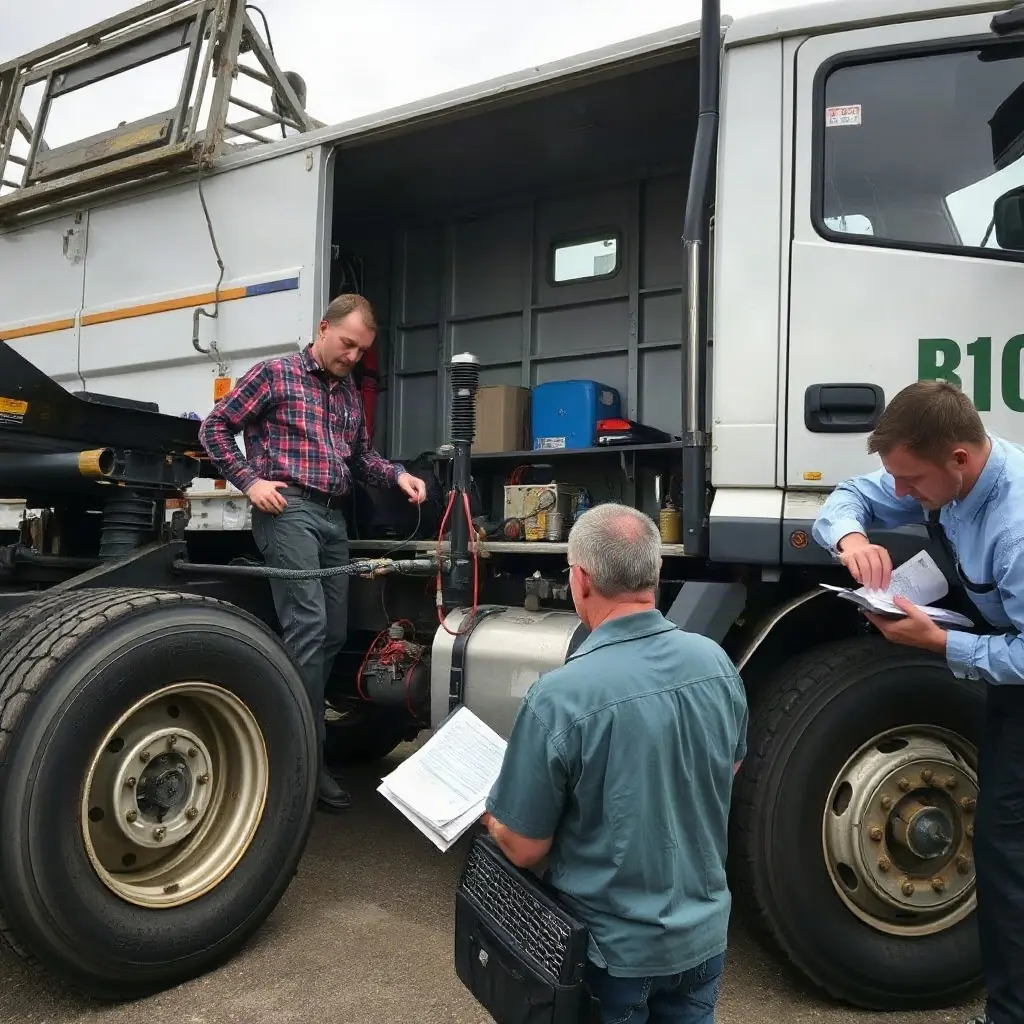
Inspect the battery, alternator, fuse boxes, auxiliary circuits and earth points. Beacons, radios, work lamps, reversing alarms, cameras, heaters and charging sockets may have been added later, so wiring should be protected, labelled and securely routed. Determine whether specialist equipment is legally usable, insured for the intended work and included in the recorded weight. Faulty or unnecessary equipment can reduce payload and create removal, repair or certification costs after collection.
Payload, towing and operational suitability
Payload is the legal capacity remaining after the vehicle, body, tools, fuel, passengers and other equipment are weighed. A catalogue figure for a bare chassis can therefore overstate the capacity of a finished utility truck. Obtain the maximum authorised mass, axle limits, kerb or unladen weight and trailer limits from the vehicle documents and weigh the actual configuration where possible.
| Model | Published list price from, excluding VAT | Published payload | Fuel type |
|---|---|---|---|
| Ford Ranger | £36,250 | 1,098kg | Petrol, diesel or PHEV |
| Volkswagen Amarok | £48,140 | 1,050kg | Diesel |
| KGM Musso | £32,980 | 1,025kg | Diesel |
| Toyota Hilux | £34,670 | 1,065kg | Diesel |
| Mitsubishi L200 | £39,995 | 1,092kg | Diesel |
A 2026 UK comparison lists these pickup prices and payloads, showing why a current pickup may be a useful benchmark for a lighter utility role rather than a direct substitute for a heavy chassis-cab truck. 1 The choice should reflect seats, ground clearance, load dimensions, towing, emissions-zone access, fuel consumption and the body required for the work.
Current alternatives and ownership costs
The Ford Ranger, Toyota Hilux, Mitsubishi L200, KGM Musso and Volkswagen Amarok provide a reference set for comparing a former fleet truck. Independent 2026 reviews describe the Ranger as offering strong road manners and a broad powertrain range, while noting that fuel economy is not its strongest attribute. 3 A current alternative also brings predictable warranty terms, modern driver assistance and easier access to manufacturer servicing, although depreciation, tax treatment, insurance classification and maintenance costs vary by trim and use.
For larger loads, a panel van or chassis-cab model may be more suitable than a double-cab pickup. Large vans are available in short-wheelbase, long-wheelbase and high-roof formats with different payload ratings, so body volume and axle loading must be compared alongside purchase cost. 4 For trucks above 3.5 tonnes used commercially, licensing, tachograph and emissions requirements can affect operating costs and route access. 2
When inspection access is restricted
If the auction permits no full start-up, lift or road test, the uncertainty should be treated as a cost rather than ignored. Record every unanswered question, request available service and test documents, and arrange an independent commercial-vehicle inspection if the sale rules allow it. Photographs cannot establish brake condition, gearbox engagement, hydraulic pressure, chassis thickness or the true payload of a modified body.
- Separate cosmetic defects from faults affecting safety, legality or structural integrity.
- Set a maximum all-in figure before bidding, including inspection, transport, servicing, repairs and equipment work.
- Allow for registration, roadworthiness preparation, emissions-zone constraints and specialist certification.
- Walk away when identity cannot be verified, structural corrosion is suspected or repair costs cannot be bounded.
The most defensible auction decision is therefore based on evidence, not the previous owner's reputation. A maintained public fleet can produce a useful work vehicle, but an apparently sound truck can still have inadequate payload, expensive hydraulics, unsafe corrosion or a body unsuitable for the intended job.
Sources
- Best pick-up trucks in the UK 2026: every model rated: https://www.whatcar.com/best/pick-up-trucks/n19493
- Buying HGVs and Trucks at Auction in the UK — Universal Auction Group: https://www.universalauctionsgroup.com/articles/buying-hgvs-and-trucks-at-auction-in-the-uk
- The best pick-up trucks - driven, rated and ranked | Autocar: https://www.autocar.co.uk/car-news/best-cars/best-pickup-trucks
- Best large vans 2026: our detailed list includes specs, full review links: https://www.parkers.co.uk/vans-pickups/best/large-vans/