Inspecting used tipper bodies from government fleet auctions: a UK buyer's inspection report
Key facts
- Steel bodies withstand abrasive loads, while aluminium bodies reduce weight but require careful checks for cracks and repairs. 1
- A 3.5-tonne tipper generally falls within category B licensing, while vehicles from 3.5 to 7.5 tonnes require category C1. 2
- Used auction inspections should compare mileage with service history, annual testing, plating, tachograph records, tyres, brakes and the V5C. 3
- UK tipper vans commonly carry about 900 kg to 1,400 kg, depending on body and chassis specification. 4
Inspecting used tipper bodies from government fleet auctions means assessing the complete working vehicle, not just the cab, mileage or auction photographs. Retired public-sector equipment may have scheduled servicing and detailed records, but repeated loading, road maintenance, grit spreading or construction work can still produce severe wear. The central questions are whether the body matches the intended load, whether the tipping system operates safely, and whether the documents support the vehicle's legal status.
Start with the body, sub-frame and payload
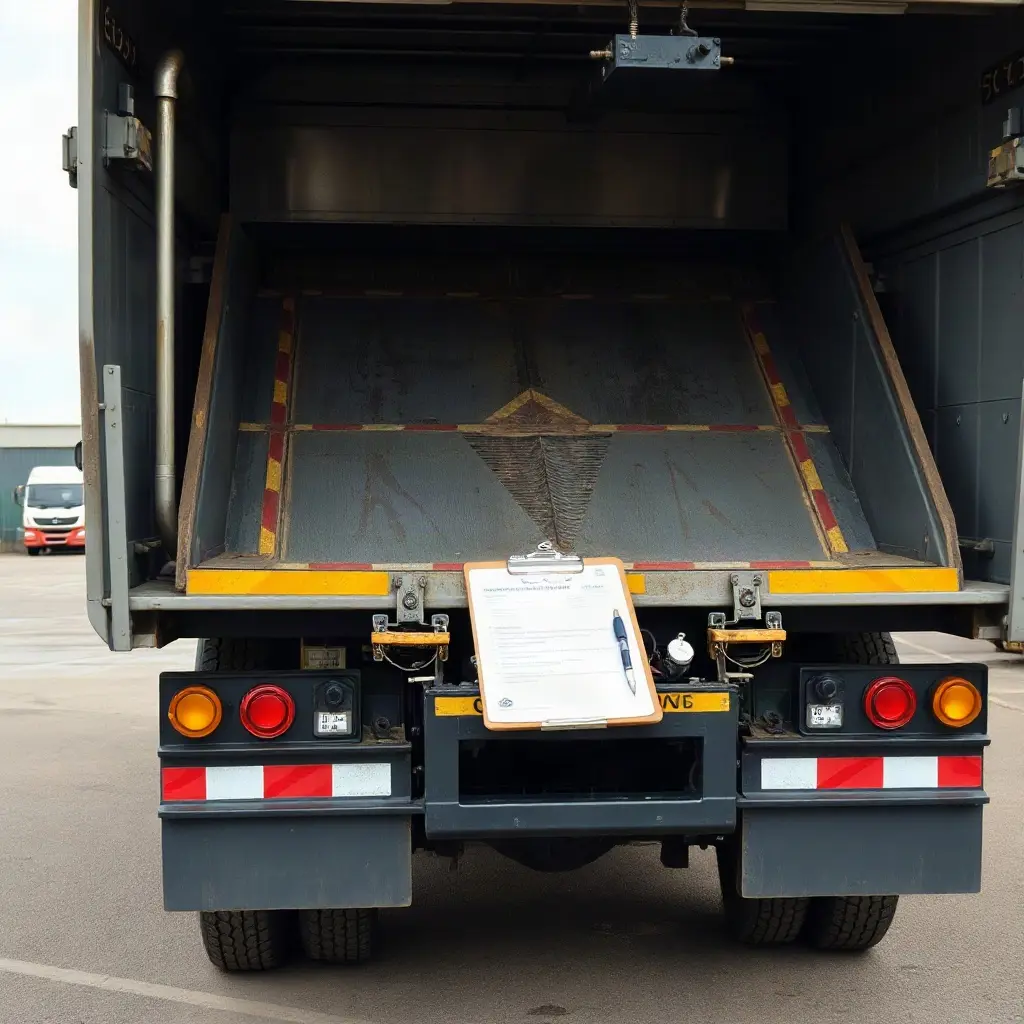
The tipper body is the most important area because its condition directly affects payload, safety and future repair costs. Inspect the floor, side panels, corners, tailgate hinges and body mounts for distortion, deep corrosion, cracking and poorly executed repairs. Steel is suited to abrasive materials such as rubble and spoil, while aluminium can reduce unladen weight but needs close examination around cracks and previous welds. The description “heavy duty” has little value without floor thickness, side height and stated capacity. 1
Look beneath the body at the sub-frame, pivot points and mounting brackets. Corrosion is particularly important where wet soil, salt, grit or construction dust has collected. A floor that has been plated over may conceal thinning metal rather than represent a durable repair. The unladen weight and ministry plate should be checked against the proposed payload, because added equipment or a replacement body can reduce carrying capacity. A physically large body must still remain within the permitted gross vehicle weight.
Test the hydraulic tipping system safely
A hydraulic inspection should cover the pump, hoses, control valve, reservoir, ram, seals, pivots and locking points. Look for oil staining around cylinder rods and fittings, scored chrome, bent components, damaged hoses and slow or uneven movement. Common warning signs include a body that drifts down, jerks while rising, reaches an unusual angle or needs excessive engine speed. These symptoms can indicate leakage, worn seals, contaminated fluid, restricted flow or a failing pump.
The tipping function should only be operated on firm, level ground with adequate overhead clearance and no person beneath the raised body. The ram, hinges and construction should be checked by a suitably experienced specialist when the mechanism shows abnormal noise, instability or visible damage. A three-way body introduces additional locks and hinges that require inspection, while a rear tipper places particular importance on tailgate operation and positive locking. Tipper bodies can be rear, side or three-way configurations, each suited to different unloading conditions. 2
Read fleet records as evidence, not a guarantee
Government and other institutional fleets often use replacement cycles and formal maintenance systems, which can make service records more informative than an undocumented private vehicle. Useful evidence includes invoices, inspection sheets, defect reports, annual test results, plating records, mileage entries and records of hydraulic or body repairs. The record should be chronological and should explain changes in mileage, bodywork or ownership rather than simply showing a recently stamped service book.
Fleet history does not automatically establish good condition. Vehicles may have spent years on short journeys, rough worksites, winter salting routes or repeated stop-start cycles. Compare the recorded mileage with engine hours where available, tyre wear, brake condition, cab wear and body damage. Auction guidance also recommends checking the tachograph, emissions standard and V5C, alongside annual testing and plating information. 3 Photographs and vendor descriptions should be treated as preliminary information, not a substitute for physical inspection.
Compare chassis, axles and operating duty
The correct chassis depends on terrain, material density, route length and required payload. A 4x2 layout may suit lighter road work, whereas 6x4 or 8x4 arrangements can offer more traction and load distribution for demanding sites. Steel suspension is commonly selected for hard-use conditions, while air suspension can suit vehicles spending more time on the road. Neither layout is automatically superior because the relevant question is whether the specification matches the actual duty cycle. 1 5
Inspect chassis rails for cracks, bends, corrosion and fresh paint that may obscure repairs. Check springs, bushes, shock absorbers, propshafts, differentials, steering joints and axle casings. Tyres should be examined for uneven wear that may reveal alignment or suspension faults. Brake lines, drums or discs and air-system performance deserve particular attention because a heavily loaded tipper has little tolerance for braking defects. MOT advisories for springs, bushes and brake lines can reveal recurring problems that a clean exterior will not show. 1
Models and specifications found in the UK market
Used UK commercial fleets commonly include Ford, Vauxhall, Mercedes-Benz and Iveco tipper-based vehicles, although the exact configuration matters more than the badge. The comparison should identify gross vehicle weight, body type, axle layout, engine, cab seating, payload and emissions standard. A 3.5-tonne van-based tipper can be driven on a category B licence, while a vehicle above 3.5 tonnes and up to 7.5 tonnes generally requires category C1. 2
| Configuration | Typical inspection priority | Use consideration |
|---|---|---|
| 3.5-tonne tipper van | Payload, body weight, rear springs and licence category | Useful where compact dimensions and category B eligibility matter |
| 4x2 rigid tipper | Chassis, axle load, hydraulic stability and road manners | Often suited to lighter road and site work |
| 6x4 or 8x4 rigid tipper | Driveline, suspension, traction, frame and body mounting | More suitable for demanding terrain and heavier applications |
A 3.5-tonne tipper van may carry approximately 900 kg to 1,400 kg, but the body material, tools, passengers and fitted equipment reduce usable payload. 4 A larger truck is not automatically more practical if its unladen weight leaves insufficient capacity for the intended material.
Legal, safety and operating checks in the UK
Before road use, confirm the vehicle identity, V5C, gross weights, plating information, annual test status, tachograph requirements and emissions standard. A goods vehicle over 3.5 tonnes used for business generally involves operator licensing and tachograph obligations, while clean-air-zone operation may require Euro 6 depending on the location and rules in force. 3 The exact requirements depend on weight, use, route and vehicle category, so documentation should be checked against the intended operation.
Safety checks should include the tailgate locking mechanism, body props, warning labels, lights, mirrors, steps, handrails, access points and emergency controls. Never rely on a seller's statement that the body is “road legal” without examining the plate, inspection history and current condition. A vehicle may pass an annual test while still needing immediate attention to a hydraulic leak, corroded body support or unsafe load restraint arrangement. Legal compliance and mechanical suitability are separate tests.
Estimate long-term maintenance and residual value
Age and heavy-duty use affect value through more than mileage. Repeated loading cycles accelerate wear in hinges, floors, suspension, brakes, tyres and hydraulic components. Construction and dump-truck maintenance guidance notes that severe-duty vehicles experience greater brake, suspension, tyre, filter and fluid stress than highway vehicles, particularly where idling, dust and stop-start work are common. 6 Engine-hour records and maintenance intervals can therefore be as important as odometer readings.
Residual value depends on emissions compliance, plated weight, body condition, service documentation, payload, axle configuration and the cost of bringing defects up to standard. A repaired or replaced body may improve usefulness but can also alter weight and certification records. The total ownership assessment should allow for hydraulic servicing, tyres, brakes, corrosion treatment, annual testing, specialist inspections, downtime and transport from the auction site. Auction costs can also include a buyer's premium, VAT and collection or recovery expenses, so the hammer figure is not the complete cost. 3
When an auction vehicle should be rejected
Warning signs include unexplained mileage gaps, missing V5C information, severe chassis corrosion, fresh paint over structural areas, hydraulic oil contamination, a scored ram, distorted body mounts, damaged tailgate locks and tyres worn unevenly across an axle. Rejecting a vehicle is also sensible when the body capacity cannot be established or when the plated weight conflicts with the intended payload. A low odometer reading cannot compensate for years of harsh loading or poor documentation.
The most reliable decision combines a physical inspection, a controlled hydraulic demonstration, document checks and an independent commercial-vehicle assessment. Government ownership may explain why records exist, but it does not remove the need to verify condition. The practical standard is simple: the body, chassis, hydraulic system, legal documents and operating costs must all fit the planned work. If one of those elements remains uncertain, the vehicle's apparent value is difficult to assess objectively.
Sources
- How to Read an 8×4 Tipper Advert | Trucksalot: https://www.trucksalot.co.uk/truck-news/reading-an-8x4-tipper-advert.html
- Tipper Trucks Buying Guide 2026: https://www.idealcommercials.co.uk/tipper-vans-for-sale
- Buying HGVs and Trucks at Auction in the UK — Universal Auction Group: https://www.universalauctionsgroup.com/articles/buying-hgvs-and-trucks-at-auction-in-the-uk
- Tipper Vans: A Complete Guide for UK Businesses: https://www.vanbrokeruk.co.uk/guides/tipper-vans/
- Buying a used tipper: checking the bucket, hydraulics and chassis | Diezel Trucks: https://diezeltrucks.nl/en/kennisbank/kipper/
- How to Reduce Dump Truck Maintenance Costs by 30%: https://truckcmms.com/blog/reduce-dump-truck-maintenance-costs-30-percent