Natural Remedies for Dry Eye Relief Fast: Clinical Insights and Home-Care Strategies
Experiencing persistent ocular irritation, burning, and a gritty sensation often indicates that your tear film requires targeted physiological support 9. Many individuals seeking natural remedies for dry eye relief fast discover that a healthy ocular surface relies on a delicate balance of moisture and protective lipids 1. While standard commercial solutions provide temporary relief, addressing the underlying physiological mechanisms through clinical home care represents the most sustainable path to long-term comfort 2. Understanding how the biological components of your tears function allows for the safe application of supportive therapies without relying solely on synthetic chemicals 9.
The Biology of the Tear Film and Dry Eye Causes
Your tears are not merely saltwater; they consist of a highly complex, three-layer structure that protects the cornea 3. The innermost layer is the mucin layer, produced by the conjunctival goblet cells, which helps the tear film adhere to the eye 20. The middle aqueous layer, produced by the lacrimal glands, provides essential hydration, nutrients, and antimicrobial proteins to the corneal surface 20. Finally, the outermost lipid layer, produced by the meibomian glands along the eyelids, seals the moisture and prevents rapid evaporation 3.
Dry eye disease generally manifests in two primary forms: aqueous-deficient dry eye and evaporative dry eye 21. When the meibomian glands become blocked or inflamed, a condition known as meibomian gland dysfunction occurs 2. This leads to a weak lipid layer, causing tears to evaporate up to 16 times faster than normal 20. This evaporative dry eye accounts for approximately 86% of all clinical dry eye cases, highlighting the need to target the eyelid glands rather than just adding surface water 20.
Thermal Therapy and Meibomian Gland Clearance
Applying targeted, consistent heat is one of the most effective ways to stimulate the meibomian glands and restore the lipid layer of the tear film 1. A warm compress applied directly to closed eyelids helps melt the hardened oils (meibum) that clog the glands 7. To achieve a therapeutic effect, the compress must maintain a stable temperature for 5 to 10 minutes 7. Doing this consistently, at least four to five days a week, significantly improves overall tear quality 7.
While traditional warm washcloths are common, clinical studies suggest utilizing dedicated warming masks, such as a heated bead mask, because they retain moisture and heat much longer than standard cotton cloths 7. Following thermal therapy with a gentle eyelid massage helps express the loosened oils into the eye, providing rapid lubrication and preventing dry eye symptoms from flaring up during daily activities 23.
Eyelid Hygiene and Microbiome Management
Maintaining clean eyelid margins is critical for preventing blepharitis, an inflammatory condition that contributes heavily to meibomian gland blockage and tear film instability 7. Over time, bacteria and microscopic debris form a biofilm along the lashes, causing burning, stinging, and redness 4. A gentle, natural cleaning routine can keep these margins clean and functional 7.
A highly recommended natural cleansing agent is hypochlorous acid spray, which is a gentle compound produced naturally by human white blood cells to combat inflammation and bacteria 7. Spritzing this over closed eyes morning and night requires no rinsing and helps clear harmful biofilm safely 7. Additionally, specialized eyelid wipes containing low-concentration tea tree oil can help manage localized inflammation and support long-term lid health 2.
Nutritional Support and Dietary Hydration
Long-term eye moisture relies on systemic hydration and proper nutritional building blocks 11. Drinking adequate water throughout the day directly supports the lacrimal glands in producing the aqueous layer of the tear film 22. Additionally, clinical research indicates that omega-3 fatty acids, specifically eicosapentaenoic acid (EPA) and docosahexaenoic acid (DHA) found in fish oil, significantly reduce systemic ocular inflammation 6. These fatty acids improve the molecular composition of the meibum, allowing it to flow more freely 6.
To support tear quality from the inside, individuals can incorporate specific foods and high-quality supplements into their daily routines. The table below outlines key dietary components that support the ocular surface:
| Nutritional Source | Active Component | Primary Ocular Benefit |
|---|---|---|
| Salmon, Sardines, Mackerel | EPA / DHA (Omega-3) | Reduces meibomian gland inflammation 6 |
| Flaxseed Oil, Chia Seeds | Alpha-Linolenic Acid | Supports lipid layer stability 22 |
| Pure Water, Hydrating Fruits | Essential Moisture | Boosts aqueous tear production volume 22 |
Environmental Controls and Digital Habits
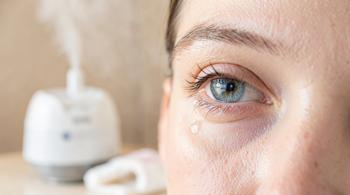
The modern environment poses several challenges to tear film stability, particularly indoor heating, air conditioning, and wind currents 5. Running a humidifier in your home or office space increases ambient humidity, which directly slows the rate of tear evaporation from the corneal surface 5. Similarly, avoiding direct air currents from fans, heaters, and hair dryers protects the fragile ocular lipid layer 1.
Prolonged screen use is a primary driver of temporary eye dryness because staring at digital devices reduces our natural blink rate 6. Implementing the 20-20-20 rule-looking at an object 20 feet away for at least 20 seconds every 20 minutes-encourages complete blinks 9. Deliberate blinking exercises help distribute the tear film evenly across the cornea, providing immediate, natural lubrication during long work hours 2.
Emerging Clinical Research on Natural Topical Solutions
While home remedies focus on lifestyle and hygiene, recent clinical trials have investigated the efficacy of specific natural topical agents. A notable prospective controlled study published in Frontiers in Ophthalmology evaluated the efficacy of medical-grade Leptospermum (Manuka) honey eye drops compared to standard sodium hyaluronate drops 13. The study found that patients using the Manuka honey drops experienced a statistically significant reduction in dry eye symptoms and conjunctival redness, driven by the honey's strong antioxidant and anti-inflammatory properties 13.
Additionally, molecular studies have explored the therapeutic effects of glycyrrhizic acid, a natural compound extracted from licorice root, which has been shown to target oxidative stress and protect corneal epithelial barrier function in dry eye models 24. While these clinical natural therapies show great promise, experts emphasize that individuals should avoid applying raw household ingredients, cooking oils, or unapproved herbal preparations directly into their eyes to prevent severe irritation or corneal infection 1.
Sources
- WebEyeClinic
- Pristine Eye Hospitals
- American Academy of Ophthalmology
- HealthCentral
- Acibadem Health Point
- Triangle Family Eye Care
- Sokol Eye Care
- Warby Parker
- Liv Hospital Content Team
- Natural Health News
- Frontiers in Ophthalmology
- Healing Picks
- Frontiers in Medicine
- A Simple Home Remedy
- Natural Knows
- Lumera Rituals
- Morada Temple
- Natural Alternative Therapies
- The Relief Products
- Instacool Bio
- Health Remedies and Cures
- Southwest Eye
- Association of Joint Medical Clinics (AJMC)
- International Journal of Molecular Sciences (MDPI)
- Insights in Cataract and Refractive Surgery