Essential guide to booking professional transport for seniors accessing medical services: A strategic framework for consistent care access
Securing reliable transportation for medical appointments is more than a logistical task; it is a critical health intervention. Research indicates that transportation barriers account for 25% to 50% of all missed medical appointments nationwide, which can lead to delayed diagnoses, unmanaged chronic conditions, and preventable hospitalizations 2. When an older adult faces challenges with driving, vision, or physical mobility, the coordination of specialized transport becomes essential for maintaining consistent medical care 1. This guide examines the professional pathways available for navigating these requirements effectively.
Understanding Non-Emergency Medical Transportation (NEMT)
Non-Emergency Medical Transportation, commonly referred to as NEMT, is a specialized service designed for patients who cannot travel via standard public transit or personal vehicles due to health-related needs 2. Unlike general rideshare platforms, NEMT services are structured to provide professional assistance, such as door-through-door support, where drivers assist patients from their residence directly into the clinical facility 3. These services prioritize safety by utilizing vehicles equipped with wheelchair lifts, ramps, and oxygen storage capabilities, ensuring that mobility-impaired individuals can travel securely 1.
For those enrolled in Medicaid, NEMT is a federally mandated benefit, meaning it is a core service states must provide to ensure access to covered medical appointments 9. Eligibility typically hinges on the patient having no other reliable means of transportation, whether due to physical limitations or lack of access to a functional vehicle 9. Because this benefit is a standardized assurance, patients are encouraged to verify their specific regional booking lines, as the process for coordinating these rides often involves designated state brokers or management entities 3.
Evaluating Medicare Advantage Transportation Benefits
Medicare Advantage (Part C) plans often include supplemental transportation benefits that are distinct from Original Medicare, which generally covers only emergency ambulance services 9. Because these plans are administered by private insurers, the specific criteria for transport coverage vary by plan, county, and individual member policy 5. Patients are advised to consult their plan documents or contact member services directly to determine the scope of their transportation allowance, including the number of covered trips allowed per calendar year 5.
When utilizing Medicare Advantage for transportation, the booking protocol requires proactive communication. Most plans expect members to provide significant lead time to ensure a vehicle is available, often ranging from 48 to 72 hours in advance of the appointment 5. During the scheduling call, members must be prepared to provide precise details, such as the clinic address, the expected duration of the visit, and any specific equipment needs like walkers or portable oxygen concentrators 5.
The Critical Distinction: Professional Transport vs. Rideshare
While mainstream rideshare platforms offer on-demand convenience, they are frequently unsuitable for the specific requirements of seniors with chronic illnesses or significant mobility constraints 8. Professional NEMT providers differ from rideshare services in several core areas, including driver training and vehicle accessibility standards 8. Rideshare drivers typically focus on point-to-point transit, whereas NEMT drivers are trained to provide physical assistance and handle the complexities of patient transition from home to clinic 3.
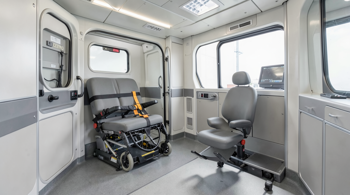
The accountability structure also varies significantly between these services. Professional medical transport companies adhere to specific safety protocols and insurance requirements tailored to patient transit, which helps mitigate the risks inherent in moving frail or recovery-focused individuals 8. Families should assess whether the intended service offers door-through-door support, as this level of service ensures the patient is safely transferred into the care of medical staff rather than being dropped off at a curb, which is the standard limitation of most rideshare options 3.
Assessing Individual Mobility and Support Needs
Before booking any transportation service, it is necessary to conduct a thorough assessment of the patient's specific requirements. This inventory should document whether the passenger requires a wheelchair-accessible vehicle, if they need assistance with stairs, and if they will be accompanied by a caregiver or medical equipment 6. Clear communication of these needs at the time of booking is vital; failing to disclose a walker or oxygen tank can result in the dispatch of an incompatible vehicle, potentially leading to a canceled trip and a missed appointment 3.
Furthermore, families must consider the timing and nature of the medical appointment itself. Recurring appointments, such as dialysis or infusion therapy, require a stable, repeating transportation schedule rather than one-off bookings 6. Establishing this rhythm with a consistent provider can reduce the administrative burden on caregivers and ensure that the patient receives the same level of safety and reliability for every session, thereby stabilizing their overall treatment plan 1.
Local and Community Resources for Senior Transit
Beyond federal and insurance-funded programs, local aging-services agencies often maintain directories of community transport options tailored to seniors 3. These organizations may include volunteer driver networks, local council transport schemes, or specialized non-profit services that bridge the gap for those who may not meet the strict criteria for Medicaid or Medicare Advantage NEMT 9. Utilizing these community-based resources can provide a reliable safety net for errands or follow-up appointments that may fall outside the scope of insurance-covered transportation 7.
| Transport Type | Primary Oversight | Typical Requirement |
|---|---|---|
| Medicaid NEMT | State/Regional Broker | Proof of medical necessity |
| Medicare Advantage | Private Plan Provider | Prior authorization |
| Community/Volunteer | Local Aging Agency | Advance registration |
| Private Pay NEMT | Licensed Commercial Co. | Direct payment |
Establishing a Sustainable Backup Strategy
Transportation plans should never rely on a single point of failure. A comprehensive system includes a defined backup plan to account for unexpected cancellations, vehicle breakdowns, or sudden changes in appointment times 1. When a primary transport service is delayed, having an alternative arrangement, such as a secondary pre-vetted private provider or an emergency contact within the family network, can prevent the severe health consequences associated with missing a critical medical visit 1.
Caregivers should maintain a written binder containing all pertinent logistical information, including the contact numbers for transportation brokers, the patient's insurance identification, and a list of specific vehicle requirements. Keeping this information current ensures that if a primary caregiver is unavailable, anyone assisting the senior can efficiently manage the transportation requirements without disrupting the continuity of medical care 1.
Sources
- YouRetire: Medical Transportation for Older Adults: Family Ride Guide
- EliteMed Financials: How to Book NEMT: Complete Patient Guide (2026)
- DachiPlus: How Seniors Get Rides to Medical Appointments on Long Island
- Understood Care: Free Rides to the Doctor: Navigating Medical Transportation Benefits
- Understood Care: How to Schedule Medicare Advantage Transportation
- T7T Care: Medical Appointment Transportation Guide
- Saving Advice: Free Transportation Programs Older Adults Can Request
- LTC News: App-Based Medical Rides Put Older Adults at Risk
- LegalClarity: How to Get Medicaid Transportation Services: Who Qualifies