Pearl necklace trends: what is popular in 2026 | A reported style analysis
The question behind pearl necklace trends: what is popular in 2026 is tied to a broader fashion rebrand. Once associated mainly with royal wardrobes, formal occasions and uniform white strands, pearls are now being presented through asymmetry, mixed media, pendants, oversized forms and short chokers. 1
The shift from traditional to contemporary pearls
Pearl necklaces have a long association with status, purity and aristocratic dress, but their accessibility expanded after Kokichi Mikimoto created the first cultured pearls in 1893 and cultured production became widespread in the 1920s. Coco Chanel later helped establish pearls as a way to elevate casual clothing, creating an earlier bridge between heritage jewellery and everyday fashion. 1
In 2026, the strongest change is not the disappearance of the classic strand, but its reinterpretation. Contemporary designs value individuality, movement and contrast rather than perfectly matched shapes alone. John Atencio describes the current direction as a meeting between organic beauty and modern design, with pearls placed in architectural metal settings rather than treated as reserved occasion jewellery. 3
Baroque and organic shapes lead the visual change
Baroque pearls are among the most visible necklace trends because their irregular contours make each piece look distinct. Unlike evenly round pearls, baroque forms introduce uneven surfaces, asymmetry and natural variation. Timeless Pearl identifies baroque, oval and organic shapes as central to the contemporary category, while Gembea describes baroque necklaces as increasingly relevant to consumers seeking individuality over uniformity. 46
The sculptural treatment of pearls extends beyond the pearl itself. Strong clasps, visible links, solid bails and shaped metalwork give necklaces a more constructed appearance. This approach reflects the wider 2026 jewellery preference for sculptural forms, uneven silhouettes and tactile surfaces, allowing an organic pearl to sit beside a more deliberate architectural element. 37
Chokers, collars and deliberate layering
Short pearl chokers and collar-length designs occupy an important place in the 2026 trend cycle. Coveteur specifically identifies the choker format as part of the pearl necklace revival, alongside oversized pearls and pendant-led designs. The shorter proportion helps reposition pearls for open collars, tailoring and casual clothing without relying on the visual language of formal evening jewellery. 1
Layering is another defining method. A pearl strand may be combined with heavier chains, longer necklaces or pendants, creating contrast between soft lustre and harder metal. Timeless Pearl notes that pearls are being worn with denim, crisp button-downs and sharp tailoring, while the desired effect is designed rather than accidental. 4
- Short chokers create a concentrated focal point near the neckline. 1
- Longer strands provide proportion when paired with shorter chains. 4
- Mixed-metal links make a traditional pearl element appear more contemporary. 3
Mixed materials, pendants and detachable details
Mixed-media construction is a recurring feature in current pearl necklaces. Designers are pairing pearls with gold, silver, aluminium, bronze, coloured stones and chain elements. British Vogue reports examples from Hemmerle, Louis Vuitton, Tiffany and Co. and Chaumet in which pearls are integrated into high jewellery through unusual metals, custom-cut stones and distinctive settings. 2
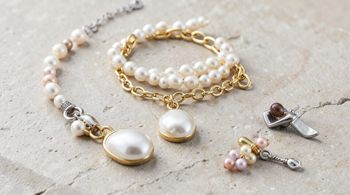
Pendants and detachable elements add another layer of flexibility to the category. A pearl can function as the central feature of a necklace, a suspended accent or part of a convertible design. Vogue India reports that contemporary jewellers are reworking the traditional seven-string satlada through cultured pearls, coloured stones and detachable components, showing how heritage formats are being adapted to changing ways of wearing jewellery. 9
Oversized pearls and high-value statement pieces
Large-scale statement necklaces are gaining attention alongside delicate everyday pieces. Anthony The Pearl Guy reports a 2026 market shift toward larger South Sea and Tahitian pearls, with high-millimetre examples described as increasingly scarce because of environmental pressures and longer cultivation cycles. The same report identifies pearls measuring 12 to 16 millimetres or more as a particularly scarce category. 5
The statement trend also includes baroque and organic pearls treated as wearable sculptures rather than standardised strands. British Vogue’s high jewellery coverage illustrates this direction with natural saltwater, baroque-shape and coloured pearls incorporated into brooches, earrings and necklaces. These examples belong to the high jewellery sphere, so they should not be treated as a measure of ordinary jewellery availability or typical consumer pricing. 2
Heritage references and modern cultural styling
Royal and historical references continue to influence pearl necklace design. Vogue reports that the Princess of Wales wore a five-strand pearl necklace with Bahrain pearl drop earrings for the 2026 Commonwealth Day Service, reinforcing the continuing visibility of multi-strand pearl jewellery in ceremonial dress. Such appearances preserve the association between pearls, formal presentation and inherited jewellery traditions. 8
At the same time, the satlada demonstrates how regional heritage is being redesigned rather than simply copied. Traditionally made with seven strings, the Hyderabad-linked necklace required closely matched pearls and historically belonged to royal and aristocratic settings. Current versions may use cultured pearls, coloured stones and detachable elements, reflecting both sourcing constraints and a preference for adaptable jewellery. 9
What to assess before interpreting the trend
Trend visibility does not establish equal availability, quality or value across all pearl necklaces. Natural pearls, cultured pearls and different pearl varieties are not interchangeable categories, and the supplied market reporting links high-millimetre South Sea and Tahitian pearls with scarcity. Irregular shape may be intentional design value, but it also means pieces should be assessed by their stated materials, provenance, lustre and construction rather than by trend language alone. 25
There are also practical friction points in heritage formats. A complete seven-strand necklace requires pearls close in size, colour and lustre, while natural Basra pearls are described as nearly impossible to source in the quantities traditionally required. The supplied reports do not identify a single regulatory standard governing trend claims, so descriptions such as rare, natural, cultured or high-value require careful verification from qualified jewellery professionals and documented information. 9
Overall, the 2026 pearl necklace direction is defined by contrast: traditional material against chunky chains, irregular forms against structured metal, and ceremonial references against everyday clothing. Chokers, layered strands, baroque shapes, pendants, mixed materials and oversized statement pearls represent the most consistently reported developments, while classic white strands remain part of the wider category rather than its only expression. 134
Sources
- Coveteur, The Pearl Necklace Trend Is Making a Comeback
- British Vogue, Princess Or Punk? How To Wear Pearls Now
- John Atencio, Pearl Jewelry Trends 2026: Layered, Minimal and Sculptural
- Timeless Pearl, Biggest Pearl Jewelry Trends for 2026
- Anthony The Pearl Guy, Market Intelligence: The Shift Toward High-Value Pearl Statements in 2026
- Gembea Jewelry, Top Baroque Pearl Necklace Trends for 2026
- INSTORE, The Soft Sell: Jewelers Say Pearls Still Have a Pulse
- Vogue, Kate Middleton Is Making Pearls Her Signature
- Vogue India, The Satlada Once Belonged to Nizam Treasuries