Pet adoption unites families with companions: A Journalistic Analysis of Rescue Integration and Community Impact
Pet adoption unites families with companions by offering a second chance to animals in need while providing households with loyal partners. Recent reports from the Burlington County Animal Shelter highlight this transition, where bonded poodles Dale and Dana were recently matched with the Acosta family after being found neglected 1. This pairing represents a broader trend in animal welfare where intentional matchmaking, supported by dedicated volunteers and shelter staff, replaces opportunistic pet acquisition to ensure long-term stability in the domestic environment 1.
Institutional Support and Community Fostering
The success of modern pet adoption often relies on the intermediary work of foster caregivers who bridge the gap between shelter environments and permanent homes. In the case of the poodles Dale and Dana, volunteer Dawn Eisenhardt provided a temporary home for over a week, allowing the animals to recover from matted coats and neglect before they were presented to the public 1. Commissioner Randy Brolo, a liaison to the Burlington County health department, noted that such communal efforts are essential for preparing animals for their forever homes, as they allow for the assessment of temperament and health in a realistic setting 1.
Furthermore, the motivation for adoption often stems from a desire to heal following the loss of a previous pet. The Acosta family, who had previously owned a toy poodle, sought a new companion specifically because of their familiarity with the breed 1. This pattern of seeking familiar traits is common among adopters, as it reduces the initial friction of integration. Shelters facilitate these connections by utilizing social media platforms to broadcast animal histories, which helps prospective owners identify potential matches before visiting the facility in person 1.
National Trends in Animal Intake and Placement
Data regarding national animal welfare indicates a significant volume of pets moving through the shelter system annually. Research shows that roughly 6.5 million animals enter shelters each year, yet only approximately 3.2 million are successfully adopted 2. While these numbers suggest a surplus of animals, there has been a notable improvement in recent decades. Compared to data from 1973, the current number of cats and dogs entering shelters has dropped from over 20 million annually 2. This decline is attributed to better sterilization programs and increased public awareness regarding the benefits of rescue animals.
| Metric | Estimated Annual Value |
|---|---|
| Animals entering U.S. shelters | 6.5 million |
| Total annual adoptions (Dogs and Cats) | 4.1 million |
| U.S. families currently owning pets | 85 million |
| Average window for finding lost pets in shelters | 72 hours |
Despite the high volume of intakes, the progress toward no-kill shelter status is accelerating. Last year saw the sharpest drop in dogs and cats killed in shelters since 2020, reflecting a shift in public sentiment where 96 percent of Americans now report a moral duty to protect animals 2. Current estimates suggest that about 28 percent of dogs and 31 percent of cats are adopted out of shelters each year, contributing to the 147 billion dollars spent on pet care annually by American households 2.
The Dynamics of Bonded and Multi-Pet Households
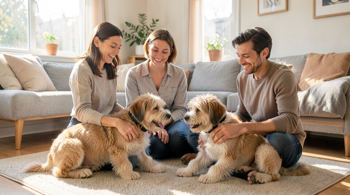
Adopting animals in pairs is a strategy frequently recommended by behaviorists to reduce separation anxiety and promote healthy socialization. Bonded pairs, such as the poodles Dale and Dana or the dogs Tator and Bailey, rely on each other for emotional security 1, 3. Cindy and Jeff Fronk, for instance, originally intended to adopt only one dog, Tator, but were swayed by the immediate connection with a second dog, Bailey, who made a clear impression during the meeting 3. Experts suggest that pets raised together or bonded in shelters often adapt to new environments faster than single animals 4.
Multi-species households also report high success rates when young animals are introduced simultaneously. Puppies and kittens raised together develop superior social skills and behavioral adaptability, which helps minimize territorial conflicts 5. This cross-species companionship provides constant emotional support, which is particularly beneficial for families who are away from home for long periods. Research consistently shows that kittens adopted in pairs demonstrate fewer behavioral problems and better social development compared to those raised in isolation 5.
Senior Animal Advocacy and Specialized Programs
Senior pets represent a unique segment of the rescue population, offering mature temperaments and pre-established training that younger animals lack. Programs like Seniors for Seniors, hosted by organizations such as the Rhode Island SPCA, waive adoption fees for individuals over the age of 65 to encourage the placement of older animals 6. These programs often include additional support, such as orthopedic beds and medical reimbursement plans, to ensure the comfort of both the pet and the owner 6. Mature dogs like Darla, an eight year old Lab mix, are described as being particularly loyal and capable of building deep bonds without the high energy demands of a puppy 7.
The benefits of senior pets include house training, fully developed personalities, and predictable medical needs. Unlike puppies, whose final size and temperament may be uncertain, senior animals allow families to select a companion that fits their current lifestyle perfectly 8. Advocacy groups, including Chewy, have celebrated anniversaries by covering adoption fees for senior pets, noting that these animals often spend the longest time waiting in shelters despite their high capacity for affection and gratitude 9.
Genetic Identification and Legacy in Adoption
Advancements in DNA testing have added a new layer of discovery to the adoption process. In a notable case in Alameda, the Reiff family adopted a senior dog named Ziggy from the Muttville senior dog rescue, only to discover via an Embark DNA test that Ziggy was the biological father of their recently deceased dog, Rufus 10. Rufus had been a member of the family for nine years, witnessing major milestones such as the birth of their children. The uncanny physical resemblance between the two dogs, initially noted by the family's daughter Maya, was later confirmed by genetic science 11.
This discovery underscores the deep-rooted connections that can exist within the shelter system. Many families seek out specific breeds or physical types to honor the memory of a past pet. For example, Leah Braly searched for over a year to find a rescue Corgi to satisfy her son's long standing desire for the breed 12. Since only about 5 percent of shelter dogs are purebred, such successful placements are rare and often require extensive monitoring of adoption listings and social media posts 12.
Rehabilitation of Animals with Behavioral Challenges
Rescuing animals that have survived significant trauma often results in a profound bond of resilience. Buddy, a dog who was filmed being thrown over a six foot fence at a Giles County shelter, was eventually adopted by Isabella Forte after a 1,200 mile transport to Massachusetts 13. Despite his traumatic past, his new family reports that he now shows a happy disposition, illustrating the capacity for animals to recover when placed in a safe environment. Similarly, a Pit Bull named Scar, who was found underweight on a highway in Philadelphia, gained 15 pounds and became a central part of his owner's life within a year 14.
These case studies highlight the importance of patience during the transition period. Animals like Jack, a Bernese Mountain Dog surrendered by his family after six years, required significant time and space to overcome anxiety and medical setbacks such as bloat 15. Through consistent care and non-forced socialization, Jack eventually learned to trust strangers and enjoy car rides again. Such outcomes reinforce the value of pet adoption as a means to restore the well-being of animals while enriching the lives of the families who welcome them 15.
Sources
- Courier Post: Poodles Dale and Dana adopted from Burlington County Animal Shelter
- The Zebra: Pet Adoption Statistics in 2026
- Best Friends Animal Society: Couple’s plan to adopt one dog changes with a bark
- WeRescue: Bonded Pair Adoption: Why Two Pets Are Better Than One
- JustHappyDog: 6 Reasons Why Adorable Puppies and Kittens Are Perfect Pairs
- RISPCA: Special Adoption Programs
- Orillia News: ADOPT ME: Darla is ready to be your loyal companion
- WeRescue: Senior Pet Adoption: Why Older Dogs & Cats Make Perfect Companions
- iHeartDogs: Chewy Celebrates 15th Anniversary by Helping Senior Pets Find Loving Homes
- ABC7 San Francisco: Bay Area family discovers newly-adopted dog is biological father of pet who passed away
- Alameda Post: Alameda Family Goes Viral for Amazing Dog Rescues
- Newsweek: Mom Captures Kids’ Reactions As She Reveals They’re Adopting Rescue Corgi
- WSMV4: TN dog finds love with new family after being literally thrown away
- DogTime: Human Brings Rescue Dog Into Her Home, Unaware That He’d Slowly Become Her Whole Life
- AOL: How Jack the Bernese Mountain Dog Overcame Abandonment and Found His Forever Home