Colorado Mountain Train Tours for Travelers: An Analytical Overview of Heritage Rail Systems and High-Altitude Corridors
Colorado mountain train tours for travelers represent a specialized segment of the high-altitude tourism industry, offering access to rugged terrains and remote canyons that are often inaccessible by standard road vehicles 12. These rail systems utilize a combination of historic steam-powered locomotives and modern luxury coaches to navigate the complex topography of the Rocky Mountains, providing a unique vantage point for geological and historical observation 15. This report analyzes the diverse rail corridors currently operational within the region, focusing on their technical infrastructure and the logistical frameworks surrounding their use as heritage transport.
Historical Evolution of Colorado Narrow-Gauge Rail Infrastructure
The development of rail systems in Colorado was fundamentally driven by the mining and logging demands of the late 19th century, particularly during the Gold Rush era 1. These routes, many of which utilized narrow-gauge tracks for greater maneuverability on steep mountain inclines, have been preserved as heritage lines. The Durango and Silverton Narrow Gauge Railroad, established in 1881, continues to operate steam-powered locomotives through the San Juan National Forest, following the Animas River through the Animas Gorge 1. This line serves as a primary example of 19th-century engineering designed to transport mineral wealth from high-altitude boomtowns to processing centers in the lower valleys 11.
Preservation efforts have successfully maintained the original 1880 condition of several routes, including the Cumbres and Toltec Scenic Railroad, which is co-owned by the states of Colorado and New Mexico 22. This specific corridor spans 64 miles of narrow-gauge track and has been designated a National Historic Landmark due to its authentic representation of the American West’s industrial expansion 22. The historical context of these trains is often highlighted through on-site museums, such as the Colorado Railroad Museum and the National Mining Hall of Fame and Museum, which provide technical background on the transition from freight transport to passenger-focused heritage tourism 3.
Engineering Specifications of High-Altitude Cog and Steam Systems
Operating rail systems at elevations exceeding 10,000 feet requires specialized engineering solutions to overcome gradients that conventional locomotives cannot manage. The Broadmoor Manitou and Pikes Peak Cog Railway utilizes a distinct rack and pinion mechanism to generate traction on steep slopes 17. This railway is the highest and longest cog railroad in the world, ascending to the 14,115-foot summit of Pikes Peak, often referred to as America’s Mountain 10. The system covers approximately 9 miles of track, transitioning from the Eastern Plains through ecosystems of sagebrush and scrub oak into high-alpine environments 16.
Steam-powered systems, such as the Cumbres and Toltec Scenic Railroad, demonstrate the mechanical resilience of coal-fired engines in rugged wilderness. This route reaches its peak elevation of 10,015 feet at Cumbres Pass, which represents the highest sustained elevation for a steam railroad in North America 21. The locomotives must navigate a demanding 4 percent grade while traversing the border between Colorado and New Mexico a total of 13 times 1. These technical parameters distinguish Colorado’s mountain rail tours from standard transit systems, requiring specialized maintenance protocols for both the track and the vintage rolling stock 11.
Trans-Regional Corridors and Luxury Rail Operations
While heritage lines focus on historic preservation, modern trans-regional corridors prioritize passenger comfort and daylight-only sightseeing. The Canyon Spirit rail journey, operated by Rocky Mountaineer, connects Denver with Salt Lake City, Utah, via a route through the Colorado Rockies and the red rock deserts of Moab 6. This operation is characterized by its use of glass-domed coaches that offer panoramic views of Ruby Canyon, Glenwood Canyon, and the Continental Divide 15. Unlike traditional overnight trains, these luxury services operate exclusively during daylight hours to ensure that passengers maintain visibility of the landscape throughout the journey 18.
Logistical structures for these luxury tours often include multi-day itineraries that integrate rail travel with terrestrial accommodations. For instance, a typical three-day journey between Moab and Denver includes overnight stays in Glenwood Springs, allowing travelers to explore the local hot springs and resort town history 8. The service model emphasizes regionally inspired cuisine and onboard storytelling, which serves to educate passengers on the geology and Native American heritage of the regions they traverse 15. These premium operations represent a significant portion of the rail market, catering to travelers seeking a high-service environment combined with wilderness access.
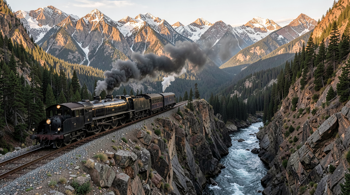
Geospatial Distribution of Scenic Heritage Routes
The following table outlines the key operational data and geographic locations of major Colorado rail tours currently available for research and travel planning.
| Railroad Name | Primary Location | Key Landmark/Feature | Elevation/Length |
|---|---|---|---|
| Manitou and Pikes Peak | Manitou Springs, CO | Pikes Peak Summit | 14,115 ft Elevation |
| Durango and Silverton | Durango, CO | Animas River Gorge | 45 miles of track |
| Cumbres and Toltec | Antonito, CO | Cumbres Pass | 64 miles of track |
| Royal Gorge Route | Canon City, CO | Arkansas River Canyon | 1,000 ft granite walls |
| Georgetown Loop | Georgetown, CO | Devils Gate High Bridge | Narrow-gauge history |
| Leadville and Southern | Leadville, CO | Rocky Mountain views | Historic mining region |
The Royal Gorge Route Railroad, operating out of Canon City, follows the original 1879 rail line along the Arkansas River 1. Passengers on this route observe granite canyon walls rising 1,000 feet above the water from First Class vista-dome cars 1. Meanwhile, the Georgetown Loop Railroad connects the mining towns of Georgetown and Silver Plume, featuring the notable Devils Gate High Bridge, an engineering feat that allowed trains to gain significant elevation in a confined space 9. These diverse routes provide a comprehensive network of rail access across the southern and central corridors of the state.
Operational Frameworks and Traveler Logistics for Multi-Day Tours
Organized rail tours in Colorado frequently adopt a multi-day format to encompass multiple rail lines and national parks. Research indicates that typical tour durations range from 6 to 9 days, often beginning in Denver 3. For example, the Colorado Rail Experience tour spans 8 days and features six heritage trains, including the Leadville Railroad and the Georgetown Loop 1. These structured programs often include additional sightseeing at natural monuments, such as the Garden of the Gods or the Black Canyon of the Gunnison National Park 11. Group sizes can vary, with some operators limiting travel to small groups of 14 people to provide a more personalized guided experience 4.
Economic data for these tours reflects a range of service levels. Comprehensive 9-day tours are frequently cited starting from approximately 3,599 to 3,799 dollars per person 1, 7. These costs generally cover lodging, specific meals, and admission to various national parks and historic sites. Travelers are advised to confirm specific inclusions, as baggage handling and transfers between hotels and rail depots are standard in high-end packages but may differ in basic itineraries 3. Seasonal demand is high, with peak operations occurring between June and October to coincide with favorable mountain weather and autumn foliage cycles 5, 8.
Regulatory Oversight and Environmental Realities of Mountain Transit
Operating historical rail equipment in high-altitude environments presents ongoing maintenance and safety challenges. Regulatory bodies and preservation groups monitor the structural integrity of vintage steam engines and historic wooden passenger cars to ensure compliance with safety standards 22. Environmental factors, such as unpredictable mountain weather and the physical demands of high-elevation grades, require operators to implement seasonal schedules. Most heritage railroads operate primarily from late spring through early autumn, as heavy snowfall can render mountain passes impassable for vintage equipment 13.
Furthermore, travelers must consider the physiological effects of high altitude. Ascending to 14,000 feet on the Pikes Peak Cog Railway or over 10,000 feet on the Cumbres and Toltec requires adequate hydration and awareness of altitude sickness risks 13. Operators often provide guidance on clothing, as temperatures at summits can be significantly lower than at the departure stations 13. These environmental and regulatory realities are essential components of the operational framework of Colorado mountain rail, ensuring that both the historical heritage and the safety of the public are maintained within the challenging Rocky Mountain landscape.
Sources
- Vacations by Rail
- TAP Into Travel
- Sun Tours
- Uncommon Journeys
- Trains.com
- Vacations by Rail (Canyon Spirit)
- TourRadar
- RockyTrain.com
- Janes Journeys
- Visit Denver
- Altair Travel
- Decorhint.com
- Happytovisit.com
- Amateur Traveler
- National Geographic
- Islands.com
- Travel and Leisure Asia
- Ambassadair
- Alamo Travel Group
- Seniors on the Go
- Family Destinations Guide (Cumbres)
- Group Tour Magazine
- TravelManagers Australia
- Flat Beds Travel