Best Eye Creams to Reduce Fine Lines and Under-Eye Bags
The search for the best eye creams to reduce fine lines and under-eye bags is one of the most common skincare pursuits, yet it remains one of the most misunderstood. The skin surrounding the eye is approximately 0.3 mm thick compared to 2 mm on the cheeks, making it structurally distinct and uniquely vulnerable to early aging. 1 Matching the right active ingredient to the right concern determines whether a formula delivers measurable results or simply adds moisture.
Why the Under-Eye Area Ages Differently
The periorbital region has fewer sebaceous glands, experiences constant muscle movement from blinking and facial expressions, and receives cumulative UV exposure throughout life. These combined factors accelerate the breakdown of collagen and elastin faster than elsewhere on the face. 1 Under-eye puffiness and dark circles, while often grouped together, arise from distinct mechanisms: vascular dark circles emerge when thin skin exposes blood vessels beneath, pigmented circles result from melanin deposits, and structural hollows involve fat pad descent that topical creams cannot correct. 2
Puffiness, on the other hand, is largely driven by fluid retention and vascular dilation. Clinical studies consistently support caffeine as the most evidence-backed ingredient for this concern, working through vasoconstriction to reduce fluid accumulation in the delicate tissue. 8 Understanding which mechanism is causing a specific symptom is the prerequisite to selecting an effective formulation.
Key Active Ingredients and What Clinical Evidence Supports
Retinol remains a widely cited gold standard for stimulating collagen production and accelerating cell turnover to address fine lines. 6 Clinical retinol concentrations appropriate for the eye area typically range from 0.1% to 0.3%, a range that reduces wrinkle depth over 8 to 12 weeks while minimizing the irritation associated with higher face-use concentrations. 1 RoC Retinol Correxion Line Smoothing Eye Cream, formulated with patented clinical retinol and retailing around $21.99, reported in clinical testing that crow's feet were visibly reduced by 50%, 90% of users saw dark circles visibly reduced, and 84% saw reduced puffiness. 3
Peptides represent a gentler but increasingly well-supported category. Board-certified dermatologist Helyn Alvarez, MD, FAAD, explains that peptides act as signaling molecules, telling skin to support processes tied to firmness, hydration, and repair without compromising the skin barrier. 4 Hyaluronic acid and glycerin function as humectants, temporarily plumping the skin surface and improving the visible appearance of fine lines by drawing water into the upper skin layers. 7 Ceramides reinforce the moisture barrier, sealing hydration in and reducing inflammation that can worsen dark circles and puffiness. 2
Clinically Studied Formulas Across Price Points
Several formulas carry published consumer or clinical trial data. The Shiseido Benefiance Wrinkle Smoothing Eye Cream, retailing around $67 for 0.51 oz, was consumer-tested by 110 women, with 100% reporting smoother eyes, 97% reporting reduced crow's feet, 96% seeing reduced wrinkles and diminished dark circles, and 90% noting reduced puffiness after just 7 days. 5 Caudalie Premier Cru The Eye Cream, priced at approximately $85 for 15 ml and formulated with Micro Hyaluronic Acid and the brand's Longevity Patent, reported in a 56-day clinical study that 88% of volunteers saw crow's feet reduced and 84% saw a smoother and brighter-looking eye contour. 9
The bareMinerals SKINLONGEVITY Revitalizing Eye Cream, a gel-cream formulated with a proprietary Mineral Herb Complex, reported that 93% of users showed reduced fine lines and wrinkles after four weeks, radiance improved by 30%, dark circles improved by 28%, and puffiness was reduced by 22% in the same period. 10 At the accessible end of the market, the CeraVe Eye Repair Cream, which retails around $14, relies on three ceramide variants (NP, AP, and EOP) alongside hyaluronic acid and niacinamide, garnering more than 48,000 five-star ratings on Amazon from shoppers reporting visible reductions in under-eye puffiness and dark circles. 11
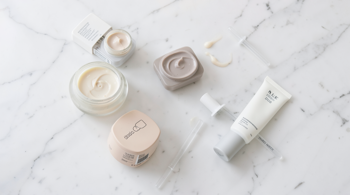
Notable Formulas by Concern Type
| Product | Key Ingredients | Primary Concern Addressed | Approximate Price |
|---|---|---|---|
| RoC Retinol Correxion Eye Cream | Patented Clinical Retinol | Fine lines, dark circles, puffiness | $21.99 |
| Tatcha The Brightening Eye Cream | Vitamin C, Niacinamide, Japanese Plum | Dark circles, hyperpigmentation, puffiness | $65 |
| Shiseido Benefiance Wrinkle Smoothing Eye Cream | Peptides, Squalane, Ginseng Extract, Vitamin E | Wrinkles, crow's feet, puffiness | $67 |
| Caudalie Premier Cru Eye Cream | Micro Hyaluronic Acid, Longevity Patent | All signs of aging, dark circles | $85 |
| Clinique All About Eyes Rich | Caffeine, Hyaluronic Acid, Whey Protein | Puffiness, dark circles | $39 |
| CeraVe Eye Repair Cream | Ceramides NP/AP/EOP, Hyaluronic Acid | Hydration, barrier repair, puffiness | ~$14 |
Application Technique and Realistic Timelines
Correct application technique is consistently cited by dermatologists as a factor that affects both efficacy and tolerability. The ring finger applies the least pressure, making it the recommended digit for patting, not rubbing, a rice grain-sized amount around the orbital bone. 5 Applying at both morning and evening is the standard protocol for most clinically studied formulas. Visible results from over-the-counter eye creams typically require 6 to 12 weeks of consistent daily use, a timeline that differs substantially from the immediate results implied by some marketing claims. 2
Peptide eye creams, according to esthetician Elizabeth Grace Hand of Stalle studios, occupy a useful middle ground: they are powerful but low in terms of irritation, safe for consistent long-term use, and capable of targeting multiple pathways without compromising the skin barrier. 4 Retinoid-based formulas, by contrast, carry a higher risk of irritation when first introduced. Starting with lower concentrations and limiting application to every other day during an adjustment period is a widely recommended approach for sensitive skin. 2
Limitations, Risks, and When Topical Treatments Are Not Sufficient
No topical eye cream can correct structurally caused under-eye bags, which result from the descent of fat pads or volume loss in the tear trough. Clinical studies and dermatologic guidance consistently note that these structural concerns may require professional procedures such as filler injections or surgery. 2 Additionally, potent actives like retinoids carry a meaningful risk of irritation, peeling, and barrier disruption, particularly in the periorbital region where skin is thinnest. Fragrance, which appears in some formulas including Tatcha's Silk Peony, can also be a sensitizing factor for reactive skin types.
The American Academy of Dermatology's guidance places daily broad-spectrum SPF use above any topical treatment as the most effective measure for preventing new fine lines, since UV exposure is a primary driver of photoaging around the eye area. 6 Eye creams do not replace sun protection, and many professionals note that daytime use of an eye cream should be followed by a broad-spectrum SPF moisturizer. Vogue's reporting on the peptide eye cream category notes that the segment is positioned for significant market growth through 2034, according to Data Insights Market, reflecting the category's rising consumer priority but also the commercial pressure that drives exaggerated marketing claims. 4
Sources
- skinoptimizer.com - Ultimate Guide to Anti-Aging Eye Creams
- beautyappeals.com - Best Eye Creams for Dark Circles and Puffiness
- rocskincare.com - Retinol Correxion Line Smoothing Eye Cream
- vogue.com - 10 Best Peptide Eye Creams to Lift, Firm, and Hydrate
- ulta.com - Shiseido Benefiance Wrinkle Smoothing Eye Cream
- American Academy of Dermatology / Cleveland Clinic - Retinol and SPF Guidance
- DermNet NZ - Hyaluronic Acid
- Skin Cancer Foundation / Healthline - Caffeine for Under-Eye Puffiness
- us.caudalie.com - Premier Cru The Eye Cream
- bareminerals.com - SKINLONGEVITY Revitalizing Eye Cream
- realsimple.com - CeraVe Eye Repair Cream Review