5-day Colorado Rocky Mountains package with full board and coach travel: An evidence-based planning review
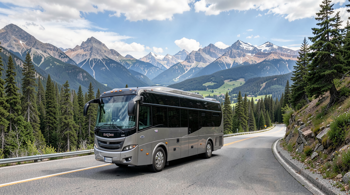
A 5-day Colorado Rocky Mountains package with full board and coach travel generally combines Denver, Rocky Mountain National Park, Estes Park, and selected mountain towns in a tightly scheduled itinerary. Documented five-day programs include Denver, Rocky Mountain National Park, Vail, Aspen, Glenwood Springs, Garden of the Gods, and Manitou Springs, but the available meal arrangements do not automatically amount to full board. 11
What a five-day itinerary can realistically cover
Rocky Mountain National Park is the central geographic attraction for a Colorado Rockies itinerary and lies near Estes Park, approximately 70 miles northwest of Denver. A practical five-day structure can therefore use Denver as the arrival point, Estes Park as the principal park gateway, and a coach route through additional mountain communities where road and weather conditions permit. 1
One documented small-group itinerary begins at Denver International Airport, includes four hotel nights, and uses a passenger vehicle, minivan, van, or full-sized bus with a professional driver and guide. Its stated route includes Denver highlights, Rocky Mountain National Park, Vail, Aspen, Glenwood Springs, Maroon Bells or Dillon Lake in the off-season, and Colorado Springs attractions. 11
Coach travel and route logistics
Private charter-coach travel is more suitable than scheduled public transport when a group requires coordinated sightseeing, luggage handling, and restaurant timing. Colorado’s Bustang network provides scheduled intercity bus connections between Denver and several mountain destinations, but its role differs from a dedicated package coach operating according to a group itinerary. 4
Road planning remains a material constraint. The Colorado Department of Transportation publishes travel and road-condition information relevant to mountain travel, while the National Park Service identifies seasonal operating conditions on Trail Ridge Road. That road crosses the park at elevations reaching 12,183 feet and may be closed or restricted during winter conditions, requiring an alternate sightseeing plan. 23
Full-board meals versus documented inclusions
Full board conventionally means breakfast, lunch, and dinner are included each day, with the precise treatment of drinks and snacks stated separately. This distinction matters because one documented five-day tour lists breakfast as included but separately identifies meals, food, and beverages as excluded. That structure should not be represented as a full-board arrangement without written clarification. 11
A properly specified meal plan would identify the number of breakfasts, packed or restaurant lunches, and evening dinners, together with dietary handling, meal locations, and whether meals are provided during long sightseeing days. Comparable escorted Colorado research shows that meal inclusion can vary considerably, with one longer itinerary listing nine breakfasts, one lunch, and three dinners, while another lists seven breakfasts, one lunch, and four dinners. 56
Park reservations, permits, and compliance
Rocky Mountain National Park operates a timed-entry permit system during designated periods, so an itinerary cannot treat park admission as an informal detail. Applicable reservation rules, entry windows, vehicle requirements, and any additional fees should be checked for the exact travel dates. The National Park Service remains the controlling source for current park access information. 3
Documented tour conditions may also distinguish between mandatory attraction charges and additional national park fees. One five-day listing identifies fees connected with Rocky Mountain, Red Rocks Park and Amphitheater, and Glenwood Springs, while also stating that an additional national park entrance charge may apply to non-U.S. residents. These terms demonstrate why a package description should separate included permits from participant-paid charges. 11
Accommodation, activity level, and weather exposure
A five-day coach program normally requires four nights of accommodation when the first and final travel days are counted within the tour duration. A documented itinerary follows that pattern, while a lodge-based Rocky Mountain National Park program also lasts five days and uses YMCA lodge rooms in Estes Park. The lodge-based program includes outdoor activities, meals, equipment, permits, and local activity transportation, but excludes travel to and from the start and end location. 711
Activity expectations differ by itinerary. The lodge-based program is rated between activity levels two and three and includes hiking, rafting, and fly fishing, whereas the sightseeing coach model emphasizes guided stops and scenic drives. High-elevation conditions can change rapidly, so planning should allow layered clothing, weather checks, flexible sightseeing, and contingency arrangements. The National Weather Service provides forecasts and warnings for Colorado’s Front Range and mountain areas. 78
Alternatives and limitations to assess
Colorado has several transport alternatives, but they do not duplicate a five-day coach circuit. Amtrak’s California Zephyr serves Colorado destinations including Denver and Granby-area locations, offering a rail option for part of a journey. The Rocky Mountaineer Rockies to the Red Rocks route is a two-day scenic rail experience between Denver and Moab, rather than a coach-based Rocky Mountain National Park package. 910
The principal friction points are compressed travel time, seasonal road access, park reservation requirements, meal-plan ambiguity, and the distance between attractions. Maroon Bells sightseeing may be substituted with Dillon Lake during the off-season in one documented program, illustrating that named attractions can depend on operating conditions. A neutral comparison should therefore evaluate route feasibility, included services, physical demands, and exclusions rather than relying only on the headline duration. 11
Sources
- National Park Service, Rocky Mountain National Park, https://www.nps.gov/romo/index.htm
- National Park Service, Trail Ridge Road, https://www.nps.gov/romo/planyourvisit/trail_ridge_road.htm
- National Park Service, Timed-Entry Permit System, https://www.nps.gov/romo/planyourvisit/timed-entry-permit-system.htm
- Bustang, Routes and Maps, https://ridebustang.com/routes-maps/
- North America Travel Service, Welcome to Colorado, https://www.northamericatravelservice.com/itinerary/welcome-to-colorado/
- The Cruise Company, The Colorado Rockies featuring National Parks and Historic Trains, https://www.thecruisecompany.com/collette-us/16685/the-colorado-rockies
- Wilderness Inquiry, Rocky Mountain National Park Lodge-Based Adventure, https://wildernessinquiry.org/trip/rocky-mountain-national-park-lodge-based-adventure/
- National Weather Service, Boulder and Front Range Forecasts, https://www.weather.gov/bou/
- Amtrak, California Zephyr, https://www.amtrak.com/california-zephyr-train
- Rocky Mountaineer, Rockies to the Red Rocks, https://www.rockymountaineer.com/train-routes/rockies-red-rocks
- Travel Network, 5 Day Small Group Tour Denver Rocky Mountains Aspen and More, https://travelnetwork.org/tours/5-day-small-group-tour-denver-rocky-mountains-aspen-and-more/