Maltese rescue dogs and puppies: how local adoption visits usually work | A practical U.S. guide
Key facts
- Published 2026 guides place general U.S. dog adoption fees at about $50 to $500, with variation by organization and age 1.
- A 2026 shelter-fee review found median charges of $269 for puppies, $161 for adults, and $93 for seniors across its sample 2.
- Maltese-specific adoption searches may involve foster homes rather than public facilities, so meetings often require advance coordination 3.
- Adoption fees commonly contribute toward sterilization, core vaccinations, microchipping, and veterinary examinations, but inclusions vary by organization 1.
Understanding how local adoption visits usually work can make a search for Maltese rescue dogs and puppies more predictable. In the United States, the process may involve a municipal shelter, an all-breed rescue, a breed-focused group, a foster home, or an adoption event. Each organization sets its own eligibility rules, appointment system, medical procedures, fees, and placement terms, so a meeting is best treated as an evaluation of fit rather than a guaranteed path to adoption.
Where Maltese rescue dogs and puppies may be found
Local options include open-intake shelters, nonprofit animal rescues, foster-based groups, and organizations focused on Maltese or small companion breeds. Breed-specific groups may receive Maltese mixes as well as dogs identified as purebred. A national adoption-search service describes partnerships with more than 15,000 shelters, rescues, and rehoming pet parents across the United States and Canada, illustrating how broad the network can be 4. Availability changes as dogs are surrendered, transferred, placed on hold, or adopted.
Physical visits are not identical across these settings. A shelter may have scheduled visiting hours, while a foster-based rescue may arrange a private meeting after reviewing an application. Some groups ask for a telephone conversation or references before introducing a dog. Listings and profiles can provide an initial description, but the organization should confirm whether the dog is still eligible for adoption, where the meeting occurs, which household members should attend, and whether resident animals can participate.
- Municipal shelters may offer public kennel visits and standardized adoption procedures.
- All-breed rescues may have Maltese mixes in foster homes or temporary facilities.
- Breed-focused rescues often coordinate meetings through volunteers and foster carers.
- Adoption events can allow brief introductions, followed by additional screening before placement.
What usually happens before the visit
Before an in-person meeting, an organization commonly asks for an application containing identification, contact details, housing information, household composition, work schedule, prior pet history, and veterinarian information when applicable. A landlord or housing authority may need to confirm that a dog is permitted. Some groups also ask about children, other pets, fencing, travel, grooming arrangements, and plans for veterinary care. Requirements differ, and meeting a dog does not necessarily mean that an application has been approved.
The organization may review the dog’s records before arranging an appointment. Available information can include age estimate, vaccination status, sterilization status, microchip information, medication, previous veterinary findings, and observations from a foster home. A rescue history may remain incomplete when a dog was found as a stray, transferred between organizations, or surrendered without detailed records. Questions about uncertainty are appropriate because a profile is not a substitute for a veterinary examination or a long-term behavior assessment.
What to observe during a Maltese meeting
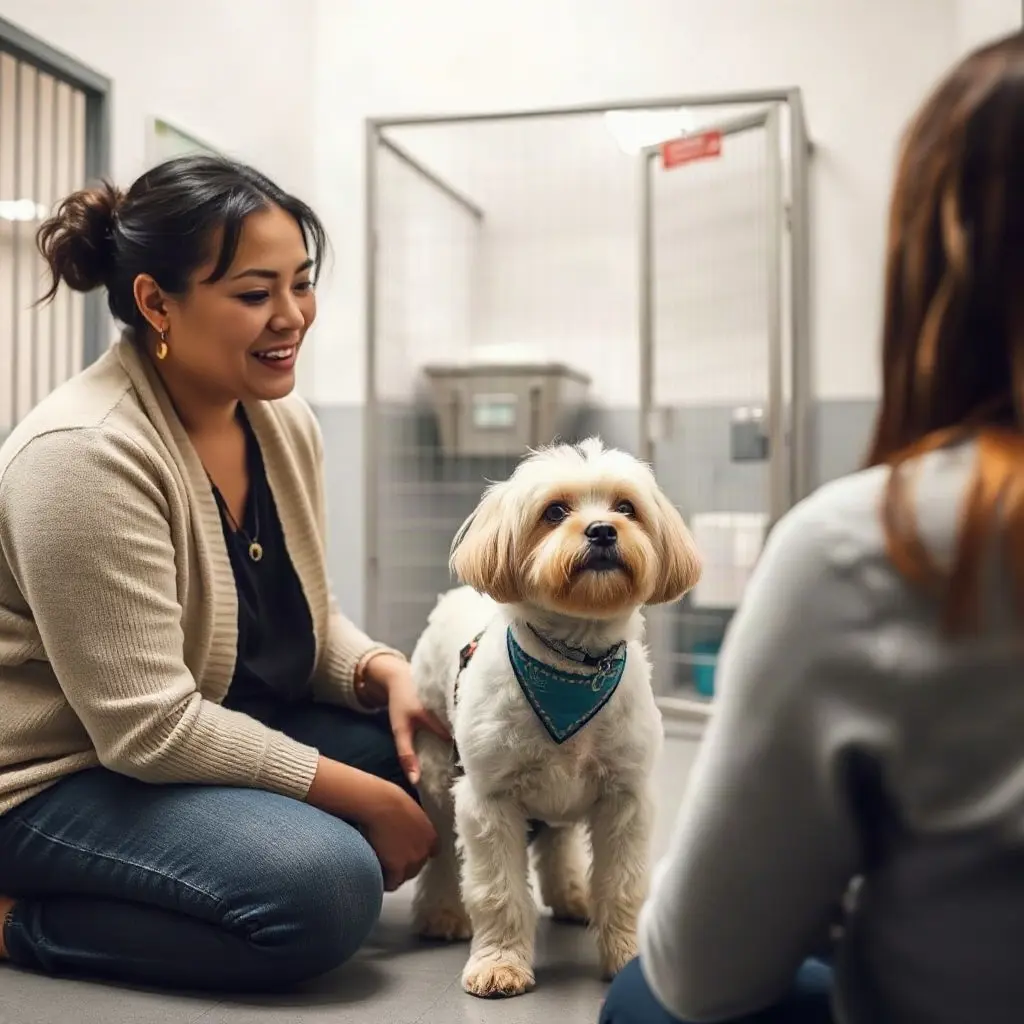
A meeting should allow calm interaction without forcing contact. The dog’s response to unfamiliar people, handling, movement, noise, food, toys, and separation from the foster carer can provide useful observations, although one appointment captures only a small part of behavior. Maltese are small dogs with long, fine coats that generally need regular grooming. Small size alone does not establish suitability for young children, apartment living, or homes with other animals.
When appropriate, household members and resident dogs may be included in the introduction. The observer can note whether the dog approaches voluntarily, retreats, guards resources, startles easily, seeks reassurance, or settles after initial excitement. Puppies may have limited house training and social experience, while adults may have established habits or medical needs. Breed tendencies should not replace evidence about the individual dog’s comfort, energy, handling tolerance, and ability to cope with the proposed household.
- Ask whether the dog has lived with children, cats, or other dogs, and in what circumstances.
- Observe movement, breathing, eyes, coat condition, appetite information, and signs of discomfort without attempting diagnosis.
- Discuss barking, separation behavior, house training, leash skills, grooming tolerance, and bite or fear history.
- Allow the rescue representative to explain any handling limits or safety instructions.
Questions about screening, records, and eligibility
Useful questions focus on facts that affect daily care and placement risk. Ask why the dog entered rescue if known, how long the organization has observed it, and whether the behavior description comes from a shelter kennel, foster home, or several settings. Clarify vaccination dates, sterilization status, microchip registration, medications, diagnosed conditions, dental concerns, and which records will be transferred. A written adoption agreement should identify follow-up duties and the organization’s policy if the placement does not work.
Screening can include an interview, landlord confirmation, reference checks, a virtual or in-person home assessment, and a meet-and-greet with resident animals. A 2026 adoption guide reports that some small-dog rescues use waiting lists or foster-to-adopt trials, particularly when demand is high 5. These arrangements are not universal. Before taking a dog home, confirm who retains ownership during a trial, how medical expenses are handled, the length of the arrangement, and the process for returning the dog if the match is unsuitable.
Typical adoption fees and initial costs in 2026
Published 2026 guides place general U.S. dog adoption fees at about $50 to $500, with variation by organization and age 1. Maltese-specific estimates published in 2026 range from $50 to $700, reflecting differences among shelters, specialty rescues, age groups, medical work, and regional operating costs 6 7. These are market facts, not a quote for a particular dog. The amount should be confirmed directly with the organization before a meeting or placement decision.
A 2026 shelter-fee review found median charges of $269 for puppies, $161 for adults, and $93 for seniors across its sample 2. Adoption fees commonly contribute toward sterilization, core vaccinations, microchipping, and veterinary examinations, but inclusions vary by organization 1. Additional household costs can include grooming, food, licensing, preventive veterinary care, supplies, training, medication, and treatment for conditions not apparent at the visit. A low fee does not indicate low responsibility, and a higher fee does not guarantee a particular health outcome.
| Dog category | Published 2026 median or range | What can affect the amount |
|---|---|---|
| Puppy | $269 median in one shelter sample; $50 to $700 reported for adoption generally | Age, medical preparation, demand, and organization policy |
| Adult | $161 median in one shelter sample | Veterinary history, location, and included services |
| Senior | $93 median in one shelter sample | Age policy, medical needs, and sponsorship arrangements |
What happens after the visit
Possible next steps include approval, additional screening, a second meeting, foster-to-adopt placement, or a decision that another household is more suitable. A responsible organization should explain the timeline, payment terms, record transfer, microchip registration, follow-up contact, and return procedure in clear language. If the dog shows stress or the household’s needs do not align with its behavior, declining the match is safer than treating hesitation as a problem to overcome.
Before finalizing, review housing rules, grooming capacity, daily supervision, exercise and enrichment needs, emergency veterinary planning, and compatibility with children or other pets. Maltese dogs can differ substantially in confidence, sociability, training, and health history. A careful visit therefore combines direct observation with documented records and candid discussion of uncertainty. Local procedures vary, but informed questions and realistic expectations are consistent parts of responsible adoption planning.
Sources
- How Much Does It Cost to Adopt a Dog? Fees, Breeds & More: https://www.sniffspot.com/blog/sniffspot-community/how-much-does-it-cost-to-adopt-a-dog
- Dog Adoption Fees — What 18 US Shelters Actually Charge (2026) | Pawdget: https://pawdget.com/guides/dog-adoption-fees/
- Where to Adopt a Maltese Dog: Top Rescue & Shelter Guide – GetBuddy: https://www.getbuddy.com/blogs/pet-adoption/where-to-adopt-a-maltese-dog
- How does Adopt a Pet work?: https://www.adoptapet.com/blog/adoption/how-does-adopt-a-pet-work
- How to Adopt a Maltipoo - Dog Adoption - Dog Academy: https://dogacademy.org/adoption/adopt-a-maltipoo/
- How Much Does a Maltese Cost? (2026 Update): https://www.dogster.com/lifestyle/how-much-does-a-maltese-cost/
- Maltese Dog Price: What a Maltese Really Costs in 2026 | Sidewalk Dog: https://sidewalkdog.com/articles/maltese-dog-price