Eczema or Psoriasis: A Dermatologist's Guide to Spotting the Difference
Facts:
- Eczema often starts in childhood, while psoriasis typically appears in early adulthood.
- New biologic treatments are revolutionizing care for many with a chronic skin condition.
Decoding Your Skin: Key Distinctions Between Eczema and Psoriasis
Millions of people live with red, itchy, and uncomfortable skin, often wondering about the root cause. Two of the most common culprits are eczema and psoriasis, conditions that are frequently confused due to their similar symptoms. However, understanding the subtle but crucial differences is the first step toward effective management. A proper diagnosis from a specialist is vital because the treatment paths for these conditions diverge significantly. This guide will break down how experts differentiate eczema vs psoriasis, looking at appearance, location, and sensation to help you understand what might be causing your skin inflammation.
The Visual Clues: What Does the Rash Look Like?
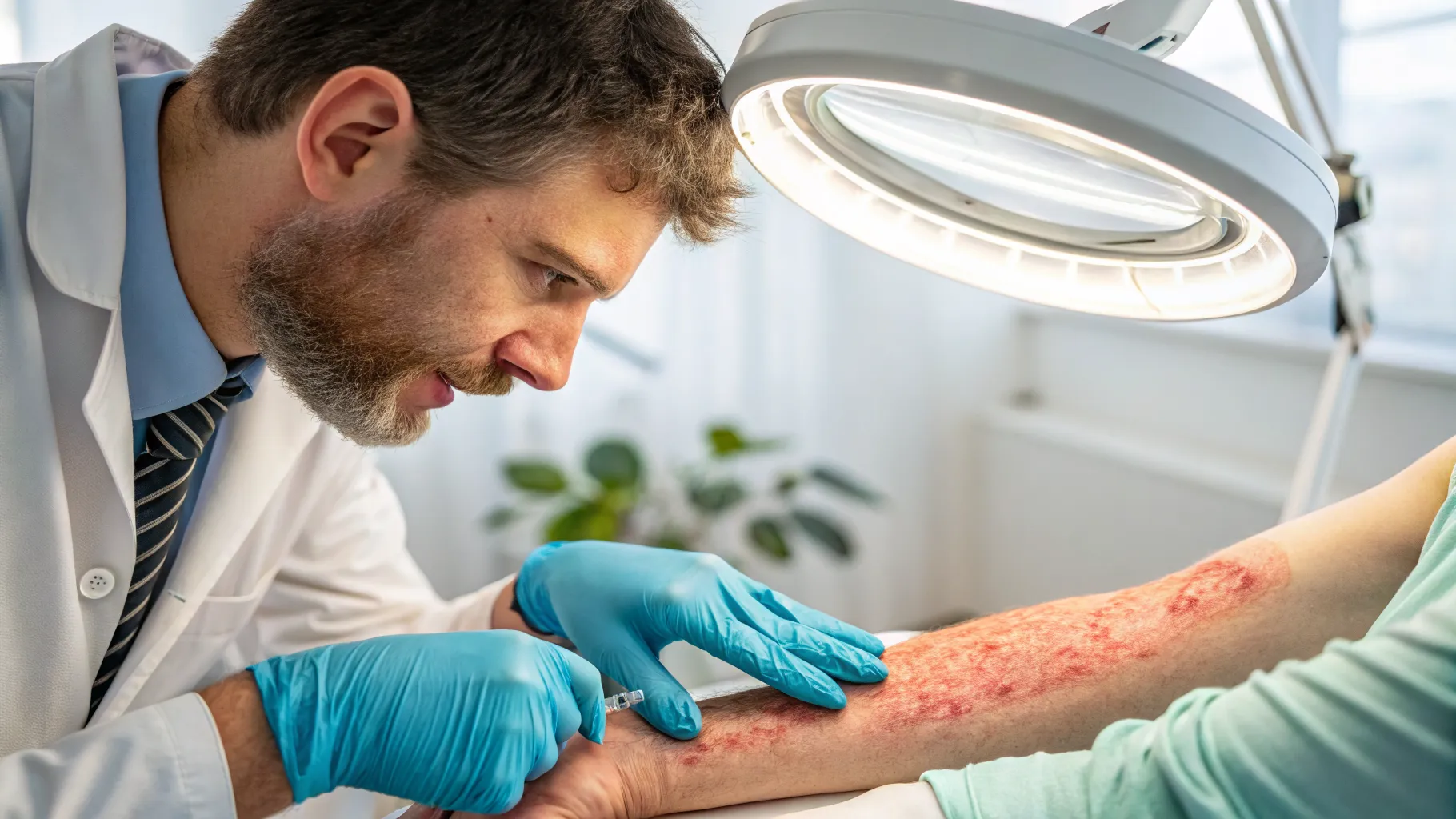
At first glance, both conditions present as red, inflamed patches of skin, but a closer look reveals key differences. Eczema (atopic dermatitis) typically appears as poorly defined dry, red patches. During a flare-up, the skin can become weepy, producing a clear fluid that can crust over. The skin often looks raw and is intensely itchy. This type of skin rash can vary in severity, but the weeping and crusting are classic signs. In contrast, psoriasis presents as well-demarcated, thick, raised red or pink plaques. The most telling feature of psoriasis plaques is the presence of silvery-white scales on top. These scales are composed of dead skin cells that have built up rapidly due to an overactive immune response. Trying to remove these scales can sometimes cause pinpoint bleeding, a phenomenon known as the Auspitz sign.
Location, Location, Location: Where Does It Appear?
The location of the skin rash is another significant clue for a dermatologist. Eczema loves to hide in the flexural areas, or the bends of your body. It is commonly found in the creases of the elbows, behind the knees, on the neck, wrists, and ankles. In infants, it often appears on the face and scalp. Psoriasis, on the other hand, favors extensor surfaces—the outside of joints. The most common locations for psoriatic plaques are the elbows, knees, scalp, and lower back. It can also affect the fingernails and toenails, causing pitting, discoloration, and separation from the nail bed, which is not a typical feature of eczema.
The Sensation Factor: An Intense Itch vs. a Burn
While both conditions can be itchy, the quality and intensity of the sensation often differ. Eczema is renowned for its relentless, intense itch. The urge to scratch can be overwhelming, especially at night, and scratching can lead to further skin inflammation, damage, and potential infection, creating a vicious itch-scratch cycle. Psoriasis can also be itchy, but many patients describe the sensation differently. They may experience a burning or stinging feeling in addition to the itch. Some people with psoriasis report that their plaques feel sore or painful to the touch, which is less common with eczema.
Under the Microscope: A Dermatologist's Diagnostic Tools
While visual inspection and patient history provide most of the clues, sometimes a definitive diagnosis is needed. A dermatologist diagnosis is the gold standard. A dermatologist will perform a thorough physical examination, asking detailed questions about your personal and family medical history, as both conditions can have a genetic component. If the presentation is atypical or the diagnosis is uncertain based on visual inspection alone, the doctor may perform a skin biopsy. This simple procedure involves taking a small sample of the affected skin to be examined under a microscope. A pathologist can identify the specific cellular changes that distinguish psoriasis from eczema, confirming the chronic skin condition and ensuring the correct treatment plan is developed.
Actionable Advice: Navigating Triggers and Treatment
Getting the right diagnosis is critical because treatments are tailored to each specific chronic skin condition. Here’s a brief overview of management strategies:
- For Eczema: The focus is on healing the skin barrier and reducing skin inflammation. This involves using thick moisturizers (emollients) liberally, avoiding known triggers like harsh soaps or allergens, and using topical corticosteroids or other anti-inflammatory creams during flare-ups.
- For Psoriasis: Treatment aims to slow down the rapid growth of skin cells and remove scales. This can include topical treatments like corticosteroids and vitamin D analogues, phototherapy (light therapy), and in more severe cases, systemic or biologic medications that target the specific immune response driving the disease.
Frequently Asked Questions
What is the most important first step for a correct dermatologist diagnosis?
The most crucial first step is to see a board-certified dermatologist. Self-diagnosing can lead to using the wrong treatments, which can worsen your condition. A dermatologist can accurately assess your skin rash, consider your medical history, and provide a definitive diagnosis, sometimes with the help of a skin biopsy.
Can you have both eczema and psoriasis at the same time?
Yes, although it is uncommon, it is possible for a person to have both conditions. This is known as an overlap syndrome. Having a chronic skin condition like one of these can sometimes make you more susceptible to others, which is why an expert dermatologist diagnosis is so important for complex cases.
Are eczema and psoriasis contagious?
No, neither eczema nor psoriasis is contagious. They are both autoimmune and inflammatory conditions, not infections. You cannot catch either skin inflammation by touching someone who has it or sharing personal items.
References
- National Eczema Association Clinical Guidelines.
- American Academy of Dermatology Association Psoriasis Clinical Hub.
- Journal of Investigative Dermatology Studies on Skin Barrier Function.
- The Psoriasis and Psoriatic Arthritis Alliance Publications.