Dance Sessions for Seniors: A Report on Access, Safety, and Wellness
Dance sessions for seniors are increasingly framed as a way to stay active, social, and healthy while enjoying music and movement. Programs described in the available research include gentle, seated, supported, ballroom, salsa, line-dance, creative-movement, and online formats, with options intended for different abilities and experience levels.
Documented health and cognitive considerations
Dance combines rhythmic movement, weight shifting, coordination, and attention. Research cited in the supplied material associates regular dancing with improved balance, gait, physical stability, cardiovascular activity, and cognitive health. A New England Journal of Medicine study is specifically cited for an association between frequent dancing and a higher cognitive reserve, with a reported dementia-risk reduction of up to 76%; that figure describes the cited research context, not a guaranteed outcome for every participant. 1
Fall prevention is a central reason programs emphasize lower-body strength, balance, posture, and directional changes. The CDC source identifies physical activity as relevant to reducing fall risk, while a National Institutes of Health review identifies potential benefits of ballroom dancing for gait and physical stability. These findings support dance as one possible component of an active-aging routine, but they do not replace medical assessment, prescribed rehabilitation, or individualized exercise advice. 2
Formats and movement modifications
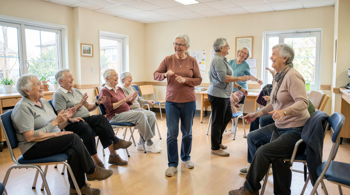
Senior-focused instruction commonly modifies choreography rather than requiring a single physical standard. Chair-based exercises, seated dancing, standing work, supported movement, gentle stretching, and low-impact steps can make a session more adaptable for people with limited mobility. A Darwin Seniors Month session, for example, described seated, standing, and supported ballet-inspired options for adults aged 60 and older, while a West Harlem class allowed participants to move at their own pace from a chair or while standing. 3
Class content varies substantially. SilverSneakers describes online cardio dance, line dancing, slower fluid-motion sessions, and instructor-led routines aimed at balance, flexibility, coordination, and heart health. A Palm Beach Gardens program combines ballroom steps such as waltz, foxtrot, and rumba with balance training and a cool-down. These examples indicate that “dance” may mean anything from artistic exploration to structured fitness, so the stated pace, support options, footwear guidance, and instructor qualifications deserve review. 4
Social connection and emotional well-being
Group dance can provide structured social contact alongside physical activity. The supplied AARP research describes dance as a way to encourage community engagement and address social isolation, while the American Dance Therapy Association identifies dance movement therapy as an intervention associated with emotional well-being and geriatric depression care. A welcoming atmosphere, partner-free participation, and opportunities for self-expression may be especially relevant for older adults seeking routine social interaction. 5
Program design influences whether those social benefits are realistic. West Harlem’s Mindful Movement description emphasizes music, mindfulness, creativity, and meaningful connection, with all abilities and experience levels welcomed. BomGo’s London salsa project similarly describes beginner-inclusive teaching and participation across ages, genders, and nationalities. Such descriptions are program statements rather than clinical outcome measurements, so they should be distinguished from evidence collected through formal trials or validated mental-health assessments. 6
Examples of community and online models
Community offerings can be organized through senior centers, arts organizations, libraries, studios, and local recreation systems. Documented examples include a weekly creative-aging class at Hamilton Grange Senior Center, a hybrid creative-movement series from The Dance Centre for adults aged 55 and older, and an ArtYard workshop designed for adults 55 and older, including consideration for people living with Parkinson’s disease or other neurological conditions. Locations, schedules, registration rules, and fees vary by program and date. 7
Online instruction expands access for people who cannot easily travel or prefer home participation. SilverSneakers reports instructor-led online dancing and on-demand options covering cardio dance, line dancing, and gentler routines. In-person classes may provide more direct observation and social contact, whereas home sessions require adequate space, stable internet access, safe flooring, and the ability to stop without assistance if symptoms occur. Virtual access therefore improves convenience but does not eliminate safety or accessibility barriers. 8
Eligibility, costs, and practical barriers
Eligibility is not standardized. Examples in the supplied material use thresholds of 55, 60, or 65 and older, while some activities are aimed at people holding a particular seniors card or living within a service area. SilverSneakers access may depend on participating health-plan eligibility, and community programs may use senior-center registration or local residency rules. Area Agencies on Aging and community centers are identified as possible channels for subsidized programming, but availability must be confirmed locally. 9
Published program examples show a wide cost structure, including donation-based sessions, class-series charges, and publicly organized activities with booking requirements. The Dance Centre listed a Monday hybrid series as donation-supported and a Wednesday in-person series at 150 dollars plus GST for 10 classes. By Your Side Dance Studio described a suggested donation of 5 to 10 dollars for a Culver City beginner ballroom class. These figures are examples from supplied pages, not universal rates or guarantees of current availability. 10
Safety screening and condition-specific participation
Risk management begins with matching the session to current mobility, balance, pain, fatigue, and medical limitations. Low-impact does not mean risk-free: turning, weight transfer, uneven flooring, crowded rooms, and unexpected changes in rhythm can challenge stability. A participant may need a chair, wall, companion, or instructor-approved modification. Any new exercise routine should be discussed with an appropriate healthcare professional when medical conditions, recent falls, neurological symptoms, or substantial mobility restrictions are present. 11
Parkinson’s-focused dance illustrates the need for specialized design. Dance for PD is identified as an internationally recognized model using dance to address motor control, rhythm, mobility, and quality of life for people with Parkinson’s disease. It should not be confused with general recreational dance or represented as a cure. Before attending, it is reasonable to verify whether instructors understand the relevant condition, whether seated participation is supported, how emergencies are handled, and whether transportation, bathrooms, flooring, and class size meet individual needs. 12
How to evaluate a session objectively
A useful comparison focuses on documented features rather than promotional language. Important questions include whether beginners are accepted, whether a partner is required, what age or membership criteria apply, whether the class is seated, standing, or hybrid, and whether the instructor explains modifications. The Tracy, California, “Just Dance” listing, for example, stated that no partner was required but recommended prior dance experience, demonstrating why the description should be read carefully rather than inferred from the class title. 13
- Check the stated intensity, class duration, location, and accessibility arrangements.
- Confirm registration procedures, cancellation rules, and whether spaces are currently available.
- Ask about chairs, supported movement, breaks, footwear, water, and emergency procedures.
- Separate wellness claims from clinically measured outcomes.
The strongest fit is usually the session whose pace, environment, transportation demands, and support options match the participant’s actual circumstances. Creative movement may suit someone seeking expression and social participation, while ballroom or line dancing may appeal to someone seeking structured patterns. Online instruction may reduce travel demands, but a clear floor and reliable support remain important. Evaluating these practical details helps limit avoidable injury, disappointment, and access problems. 14
Sources
- New England Journal of Medicine, study on leisure activities and dementia risk
- Centers for Disease Control and Prevention, fall prevention and physical activity
- City of Darwin Seniors Month and West Harlem Arts Alliance program descriptions
- SilverSneakers and Palm Beach Dancing program descriptions
- AARP and American Dance Therapy Association
- West Harlem Arts Alliance and BomGo CIC
- The Dance Centre and ArtYard
- SilverSneakers online dance classes
- National Association of Area Agencies on Aging and SilverSneakers
- By Your Side Dance Studio and The Dance Centre
- Centers for Disease Control and Prevention
- Dance for PD
- Active.com, Tracy senior dance listing
- National Institutes of Health review on ballroom dancing and physical stability