Best Short Pixie Cuts for Fine Hair Textures: A Style Analysis
How Fine Hair Changes the Pixie Decision
Fine hair describes strand diameter, while thin or low-density hair describes the number of strands present. A person can therefore have fine but full hair, or fine hair with visibly low density, and the most suitable pixie shape differs between those conditions. The Right Hairstyles notes that high-density fine hair can support a short sleek crop with cropped bangs, while lower-density hair benefits from longer sections that create coverage and movement. 2
Stylist Dale Herne of Hershesons recommends restraint for fine hair, including keeping the length slightly longer and emphasizing the overall shape rather than cutting every section extremely short. Fine strands tend to sit close to the head, so carefully retained length can create an impression of density without making the style heavy. Precision is particularly important because a short cut leaves less hair available to disguise uneven shaping. 1
Textured and Choppy Pixies
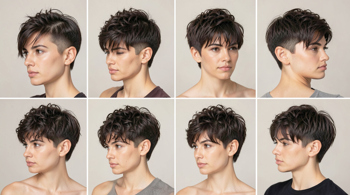
A textured or choppy pixie uses short, separated layers and piece-y ends to introduce visible movement. This approach is especially relevant for low-density hair because longer sections remain on top while the sides and back are reduced, allowing the crown to be styled upward, sideways, or into a lightly spiked finish. The effect is not additional hair, but an optical increase in dimension created by varied lengths and directional styling. 2
Texture must be controlled rather than applied indiscriminately. The supplied stylist guidance warns that removing too much weight can make fine hair appear sparse, while selective texturing can preserve a stronger silhouette. A light texturizing product or matte spray can add grip, but heavy pomades and excessive layering may flatten or separate delicate strands. Dry styling and finger shaping are useful for defining individual pieces without forcing the crown into a rigid shape. 3
Side-Swept and Fringe-Focused Shapes
A side-swept pixie provides an adjustable transition into short hair because the front remains longer than the sides or back. The longer front section can be directed across the forehead, parted deeply, or softened around the face. This arrangement also redirects attention from areas that appear less dense, including the temples, while creating an asymmetrical outline that prevents the cut from looking flat or uniform. 2
Fringe length should match the density available at the front. A wispy micro fringe keeps the shape light, whereas a longer angled fringe offers more coverage and styling flexibility. Mini bangs can emphasize the eyes and soften the forehead line, but they require accurate placement because a very short fringe exposes more of the hairline. A small round brush and light hairspray can help hold a side sweep without coating the hair in weighty product. 3
Tapered, Blunt, and Structured Options
A tapered pixie narrows the perimeter at the nape and around the ears while leaving measured length on top. This creates a clean outline and allows the upper sections to retain softness and lift. Steven Picciano describes tapering the perimeter as a way to produce a cleaner, thicker-looking appearance, with enough length and weight on top to support volume. Such precision is more important than aggressive thinning when the hair has limited density. 7
A blunt or strongly outlined pixie can also make fine ends appear fuller because the perimeter finishes in a clear, compact line. However, a completely uniform blunt shape may lack movement, particularly in fuller fine hair. Selective removal of internal weight is more suitable than indiscriminate thinning when many individual strands are present. The stylist must balance a visible edge with enough softness to prevent a helmet-like result. 1
Undercuts, Micro Pixies, and Very Short Crops
An undercut removes hair from selected areas beneath the top section, creating contrast between a close perimeter and a longer crown. This can reduce excess weight and make the top appear more prominent, but it is not automatically suitable for every fine texture. If the top lacks coverage, exposing more scalp may emphasize sparsity rather than disguise it. Longer, textured crown pieces are therefore important when an undercut is considered. 3
A micro pixie is the most committed option because the sides, back, and sometimes the top are cut close to the head. Very short cuts can allow fine strands to stand away from the scalp because less length is pulling them downward, yet the same reduction can reveal scalp more clearly. The supplied guidance recommends textured top layers, side-swept sections, or carefully placed color contrast as visual coverage strategies for very short fine-hair crops. 3
Curly, Wavy, and Pixie-Bob Variations
Fine curly hair requires a different cutting balance from fine straight hair. Herne recommends shorter sides and back for structure while preserving length through the top, which can be shaped freehand to maintain curl movement. Cutting too short through the crown can push the result toward a buzzcut appearance and remove the softness that makes curls look intentional. Curl distribution, shrinkage, and the desired silhouette should be assessed before the cut is finalized. 1
A pixie bob, sometimes called a bixie, retains more length than a traditional crop while using pixie-style layering. It can suit someone who wants the visual lightness of a pixie but needs additional front or side length for styling changes. Fine hair often benefits from avoiding excessive length, although retaining too much can restore the limpness caused by gravity. A precise shape, limited layering, and controlled lift are central to this compromise. 4
Styling and Maintenance Realities
Fine pixie cuts generally depend on lightweight support rather than dense layers of product. Volumizing mousse, texturizing spray, dry shampoo, and light-hold hairspray are identified in the supplied styling guidance as options for lift, grip, and definition. Blow-drying with a round brush can raise the crown, while a flat iron can smooth selected ends. Styling time may range from approximately 10 to 15 minutes, depending on the finish and tools used. 9
Maintenance is a significant trade-off. A classic cropped pixie requires frequent trims to preserve its intended outline, and the very short textured example supplied recommends a four-week trimming cycle. Longer pixies and pixie bobs may provide more tolerance between appointments, but they can lose volume when the shape grows out. Product buildup, over-thinning, and excessive heat can also make fine strands look flatter or more fragile, so the cut should be paired with restrained styling practices. 3
Sources
- ELLE UK, The Best Modern Pixie Cuts To Bring Body And Movement To Fine Hair
- The Right Hairstyles, 36 Cute and Stylish Pixie Haircuts for Fine Hair
- Tattoo Wishlist, 18 Very Short Pixie Haircuts for Fine Hair That Deliver
- Short Haircuts Models, Short Pixie Haircuts for Fine Hair: A Modern Guide That Actually Works
- ChicnStylish, 22 Pixie Haircuts for Thin Fine Hair Easy to Style at Home
- Hairmova, 15 Pixie Haircuts for Fine Hair Volume and Easy Style
- Booboone, The Secret to a Perfect Pixie Cut for Fine Hair
- Haircut Tips, 13 Wispy Pixie Hairstyles That Look Polished
- ShunSalon, Effortless Chic: Styling A Pixie Cut For Fine Hair
- EverydayGlowVibes, 34 Best Very Short Pixie Haircuts for Fine, Thin Hair