How urinary tract infection symptoms differ from kidney infection: A Clinical Overview
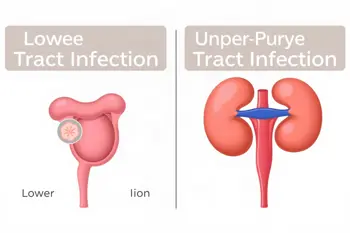
A urinary tract infection (UTI) generally refers to an infection involving the lower urinary tract, specifically the bladder and urethra 4. While these conditions are closely linked to kidney infections, known medically as pyelonephritis, they represent distinct levels of severity within the urinary system 6. Distinguishing between a localized bladder infection and an upper urinary tract infection is critical because the latter poses a higher risk of systemic complications, including sepsis 2. Identifying these differences relies on observing how symptoms transition from localized discomfort to systemic distress 7.
Understanding Lower Urinary Tract Infections
Lower urinary tract infections primarily manifest in the bladder and urethra. Common indicators include a burning sensation during urination, a persistent urge to urinate even when the bladder is nearly empty, and frequent, small-volume urination 6. Patients may also experience localized pressure or cramping in the lower abdomen or pelvic region 4. These symptoms are often described as localized, meaning they are concentrated in the pelvic area and do not typically involve the entire body 9. The urine itself may appear cloudy, dark, or emit a strong, unpleasant odor, and some individuals may notice blood in the urine 4.
Defining Kidney Infections (Pyelonephritis)
A kidney infection, or pyelonephritis, occurs when bacteria-often originating from the bowel-travel from the bladder upward through the ureters into one or both kidneys 1. While kidney infections may share the same urinary symptoms as bladder infections, they are distinguished by the addition of systemic, whole-body symptoms 7. Because the kidneys are vital organs with significant blood flow, an infection in this region is considered more severe and requires immediate clinical assessment to prevent permanent renal damage or the spread of bacteria into the bloodstream 3. About 80% of community-acquired pyelonephritis cases are attributed to Escherichia coli (E. coli) 1.
Key Symptomatic Differences
The primary difference between a bladder UTI and a kidney infection is the systemic response of the body. While a bladder infection is usually characterized by local discomfort, a kidney infection often induces a fever, which may exceed 100.4°F, accompanied by chills 8. A defining clinical sign of pyelonephritis is flank or mid-back pain, located just under the ribs on one or both sides 6. Furthermore, kidney infections frequently cause gastrointestinal distress, such as nausea and vomiting, which are rarely associated with uncomplicated lower urinary tract infections 6.
| Symptom | Lower UTI (Bladder) | Kidney Infection (Pyelonephritis) |
|---|---|---|
| Burning urination | Common | Common |
| Frequent/Urgent urination | Common | Common |
| Fever and Chills | Absent | Common |
| Flank or Back Pain | Absent | Common |
| Nausea or Vomiting | Absent | Common |
| General Malaise/Fatigue | Mild | Significant |
High-Risk Demographics and Clinical Variables
Symptom presentation can vary significantly based on age and health status. Children younger than age two, for instance, may exhibit only a high fever without the standard urinary complaints, often accompanied by poor weight gain or feeding difficulties 2. In older adults, the clinical picture is frequently less typical; symptoms may manifest as sudden confusion, agitation, increased forgetfulness, or a marked decline in daily functioning, which can be easily mistaken for other age-related conditions 4. Pregnant individuals, children, and the elderly are considered higher risk populations and should receive prompt medical evaluation even when symptoms appear mild 3.
When to Seek Professional Medical Care
Recognizing the transition from a lower UTI to a kidney infection is essential for timely intervention. Individuals experiencing fever, chills, vomiting, or significant pain in the back or side should seek medical attention immediately, as these indicate the infection may have ascended to the kidneys 5. Sepsis is a rare but life-threatening complication of untreated kidney infections, manifesting through symptoms such as confusion, rapid heart rate, breathing difficulties, and severe exhaustion 2. It is advised that if symptoms of a standard bladder infection do not resolve within a few days or begin to escalate in intensity, a professional health assessment is necessary 4.
Diagnostic Processes and Treatment Outlook
Healthcare professionals diagnose kidney infections using a combination of medical history, physical examinations, and diagnostic testing 7. Urine cultures are typically ordered to identify the specific bacteria present and determine the most effective antibiotic treatment 1. In cases of severe infection, persistent high fever, or significant vomiting, medical providers may require imaging tests to check for structural abnormalities, kidney stones, or obstructions that could prevent the normal flow of urine and facilitate the upward migration of bacteria 1. Timely antibiotic treatment, potentially coupled with intravenous fluids in clinical settings, is the standard approach to managing pyelonephritis and preventing long-term complications 7.
Sources
- Merck Manual Consumer Version - Kidney Infection (Pyelonephritis)
- National Institute of Diabetes and Digestive and Kidney Diseases (NIDDK) - Symptoms & Causes of Kidney Infection
- Kidney Fund - Kidney Infection (Pyelonephritis) Symptoms, Treatment, and Prevention
- Penn Medicine - Urinary Tract Infection: Symptoms and Causes
- Kidney Research UK - Kidney Infections
- Advanced Urology - Kidney Infection vs. UTI: How to Tell the Difference
- Acibadem Hospitals Group - Kidney Infection Symptoms, Causes & Care
- Bidwell Health - UTI vs. Kidney Infection: How to Tell the Difference
- Family Urgent Care - UTI or Kidney Infection: How to Know the Difference