Evening routine optimization for improved rest: 4 weeks to better sleep quality: A Clinical Protocol for Circadian Realignment
Evening routine optimization for improved rest: 4 weeks to better sleep quality represents a systematic approach to addressing chronic fatigue and cognitive decline by aligning behavioral habits with biological requirements. Clinical data suggests that sleep is not merely a state of inactivity but a highly structured biological process requiring specific physiological triggers to initiate properly 10. By following a sequenced protocol that prioritizes screening, environmental control, and stimulus management, individuals can often normalize sleep architecture within a month 8.
Week 1: Clinical Screening and Circadian Anchoring
The first phase of the protocol focuses on identifying mechanical or medical barriers to rest before implementing behavioral changes. Research indicates that obstructive sleep apnea affects approximately 25 to 30 percent of men and 10 to 15 percent of women, necessitating a STOP-BANG screening to evaluate risk factors such as snoring, tiredness, and neck circumference 1. If a score of 3 or higher is recorded, a home sleep test is typically the primary clinical recommendation, as behavioral hygiene cannot resolve a physical airway obstruction 1. Additionally, the Insomnia Severity Index (ISI) helps categorize the intervention track, where scores between 0 and 7 suggest a standard behavioral approach is sufficient 1.
Once medical screening is complete, the focus shifts to anchoring the circadian phase through consistent timing. Maintaining a fixed wake time within a 30-minute window across both weekdays and weekends is cited as the single most powerful behavioral lever for stabilizing the internal clock 10. This consistency prevents social jetlag, a phenomenon where weekend schedule drift creates metabolic stress and impairs mood regulation 20. To support this, individuals are encouraged to seek natural light exposure within 30 minutes of waking to program the body for melatonin release 14 to 16 hours later 13.
Week 2: Environmental Optimization and Stimulus Control
The second week involves refining the sleep environment to facilitate the necessary drop in core body temperature required for sleep onset. Clinical studies suggest that a bedroom temperature between 16 and 19 degrees Celsius (60 to 67 degrees Fahrenheit) is optimal for shortening sleep latency and increasing the duration of slow-wave sleep 10. A cool environment assists the body in achieving a natural 1 degree Celsius decline in temperature, which serves as a biological signal for the brain to transition into rest mode 23. Paradoxically, a warm bath or shower before bed can assist this process by causing vasodilation, which helps evacuate heat from the core 13.
| Environmental Variable | Optimal Range/Threshold | Biological Impact |
|---|---|---|
| Bedroom Temperature | 16 to 19°C (60 to 67°F) | Shortens sleep onset latency |
| Evening Light Intensity | Less than 50 Lux | Facilitates melatonin rise |
| Noise Level | Minimal (or white noise) | Prevents sleep fragmentation |
| Screen Cutoff | 60 to 90 minutes before bed | Maintains circadian alignment |
Light management is equally critical during this phase. Exposure to blue-enriched light from electronic screens can suppress melatonin production and delay the circadian rhythm 22. Reducing light intensity to below 50 lux in the 60 to 90 minutes preceding bedtime allows for the natural rise of melatonin concentrations 10. This environmental adjustment, combined with removing all non-sleep activities from the bedroom, helps the brain associate the bed strictly with rest rather than cognitive arousal or work-related stress 21.
Week 3: Establishing Psychological Wind-Down Rituals
As the foundational habits and environment stabilize, the third week introduces structured rituals to transition the nervous system from a sympathetic state of alertness to a parasympathetic state of rest. A 60-minute wind-down protocol is often recommended to reduce cortisol levels and lower beta-wave brain activity 5. During this period, low-stimulation activities such as reading a physical book, practicing meditation, or gentle stretching can signal to the brain that the day is concluding 2. Data indicates that consistent pre-sleep routines can reduce the time it takes to fall asleep by an average of 23 minutes 28.
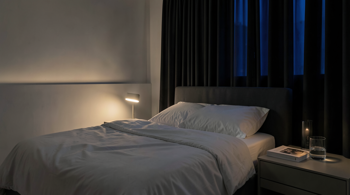
Psychological preparation also includes managing the cognitive load that often keeps the brain active after lights are out. Writing a to-do list for the following day or practicing gratitude journaling can help externalize worries and prevent the default mode network from engaging in repetitive thought patterns 6. Furthermore, implementing a 10 to 20 minute meditation or progressive muscle relaxation session has been shown to reduce sleep onset latency by 10 to 15 minutes within just two weeks 27. These rituals function as sensory cues that condition the nervous system to expect sleep 5.
Week 4: Long-Term Maintenance and Cognitive Protection
The final week of the protocol is dedicated to locking in these behaviors and monitoring their impact on cognitive performance. Neuroscientific research highlights that consistently obtaining less than 7 hours of sleep per night can decrease cognitive abilities by up to 30 percent 13. Furthermore, significant fluctuations in sleep duration can lead to impairments in memory and processing speed equivalent to 4 to 7 years of biological aging 15. By Day 30, the goal is to have established a minimum viable sleep protocol where the established habits feel automatic 8.
Habit formation typically takes an average of 66 days to become truly sustainable, meaning the fourth week serves as the bridge to long-term adherence 28. Individuals are encouraged to continue tracking their sleep metrics to identify how specific variables, such as late-day exercise or social events, influence their recovery 13. Maintaining the same wake and sleep times even on weekends remains the most critical factor in preventing the erosion of the progress made during the four-week intervention 24.
Dietary Influences and Metabolic Timing
The timing of nutritional and chemical intake plays a significant role in sleep architecture and quality. Caffeine has a half-life of 5 to 6 hours, meaning that a cup of coffee consumed at 2:00 PM still results in significant concentrations in the bloodstream at 8:00 PM 13. To prevent sleep fragmentation, experts suggest limiting caffeine consumption to the morning hours 13. Similarly, while alcohol may reduce initial sleep onset time, it significantly disrupts REM sleep and causes frequent awakenings later in the night, particularly if consumed within three hours of bedtime 11.
Metabolic activity during digestion can also interfere with the core temperature drop needed for deep sleep. It is recommended to maintain a 2 to 3 hour buffer between the last meal and bedtime to ensure active digestion does not elevate body temperature 13. For some, specific nutrient supplementation may support the transition: studies have shown that 200 to 400 milligrams of magnesium glycinate consumed 2 to 3 hours before bed can improve sleep quality and reduce nighttime wakefulness within a few weeks 8. However, dietary foundations should always precede supplementation for the best results 10.
Managing High-Arousal and Clinical Risks
For those struggling with hyperarousal, where the brain remains wired despite physical exhaustion, additional behavioral techniques may be necessary. Stimulus control therapy involves leaving the bed if sleep does not occur within 20 minutes to prevent the brain from associating the bed with wakeful anxiety 21. This prevents the strengthening of neurological pathways that link the bedroom environment with stress and frustration 18. For chronic insomnia, Cognitive Behavioral Therapy for Insomnia (CBT-I) is considered the gold-standard treatment, addressing the underlying psychological factors that keep the brain in a state of alert mode at night 18.
It is important to recognize that while a 4-week optimization plan can improve sleep quality for many, it is not a substitute for medical intervention in cases of clinical disorders. Conditions such as narcolepsy, restless leg syndrome, or chronic apnea require professional diagnosis and specialized care 19. However, for the general population, the integration of consistent timing, light management, and temperature control provides a robust physiological foundation for restorative rest and improved daytime cognitive function 16.
Sources
- Protocol.us
- Sleep Foundation
- Panda London
- Simon & Schuster
- RestEase
- GW Cancer Center
- Better Sleep
- Seralene
- Cleveland Clinic
- BiologicalX
- Arthur Brooks
- Dr. Judy Ho
- Productivity Hub
- SleepWiseReviews
- Fitness Health
- Smart Sleep Routine
- GQ (Dr. Matthew Walker)
- Neuroscience & Wellness
- Astrara
- FreeOnlineNoSignup
- Engineered.at
- SleeBD
- Vitalisys
- Happy Sleep
- BBC Sounds
- Barnes & Noble
- Sleep Health Journal
- Sleep Medicine Reviews