NHS knee replacement 2026: eligibility and waiting times explained
NHS knee replacement surgery remains one of the most frequently requested orthopaedic procedures in the UK, yet the gap between the constitutional standard and real-world delivery has widened considerably in 2026. According to NHS England Referral to Treatment (RTT) data from January 2026, only 61.6% of patients begin treatment within the 18-week target, against an official government goal of 92% 1. Understanding eligibility thresholds, realistic timelines, and regional variation is essential for any patient currently navigating the pathway.
What NHS Knee Replacement Surgery Involves
Knee replacement surgery, clinically known as knee arthroplasty, involves removing damaged surfaces of the knee joint and fitting artificial components made from metal and durable plastic designed to recreate smoother movement. The primary objective is to reduce chronic pain, restore functional mobility, and improve quality of life when the joint has deteriorated beyond the point where conservative management remains effective 2. The procedure may involve total replacement of all three knee compartments or a partial replacement targeting only the most damaged area, depending on clinical assessment.
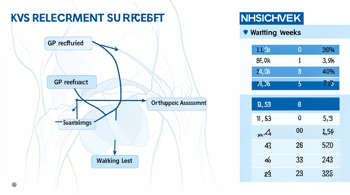
The NHS pathway follows a structured sequence: a GP evaluates symptoms and range of motion, refers the patient to an orthopaedic specialist, who then confirms that non-surgical options have been exhausted before placing the patient on the waiting list 3. Conservative treatments such as physiotherapy, weight management, pain relief medications, and corticosteroid injections are expected to have been attempted before a surgical referral is considered appropriate. NICE guidance confirms that knee replacement is recommended for end-stage osteoarthritis when conservative treatment has failed and pain significantly impacts quality of life 4.
Eligibility Criteria in 2026
Clinical eligibility for NHS knee replacement is not determined by a single threshold. Clinicians assess a combination of factors including severity of pain, degree of functional impairment, radiological evidence of joint damage on X-ray or MRI, and the patient's overall health status. There is no absolute imaging finding that mandates surgery; the decision is instead centred on whether the patient's quality of life is significantly affected and whether the joint's capacity for natural repair has been exhausted 5. Common underlying causes leading to referral include osteoarthritis, rheumatoid arthritis, and post-traumatic joint damage following fracture.
Comorbidities play a meaningful role in surgical timing. Conditions such as poorly controlled diabetes, cardiovascular disease, or obesity can delay a patient's eligibility while clinical teams manage underlying risk factors. Patients in England have a legal right under the NHS Choice Framework to select which hospital they attend for their surgery, provided the provider is contracted by the NHS 6. The official NHS tool for checking expected waiting times at specific trusts is the My Planned Care platform, which is updated periodically with trust-level data 7.
BMI Policies and the Postcode Lottery
One of the most contested eligibility factors in 2026 is body mass index. An analysis conducted by Arthritis UK found that 31 out of 42 NHS Integrated Care Boards (ICBs) currently have policies linking BMI to hip and knee replacements 8. Specifically, eight ICBs, representing 19% of the total, are rationing procedures by setting defined BMI thresholds as a criterion for surgical referral, while a further 23 have policies that encourage or mandate weight loss before eligibility is confirmed. Only 11 ICBs do not restrict or alter access to joint replacement surgery based on BMI at all.
Arthritis UK has described this as creating a postcode lottery of care, warning that policies have been inappropriately applied to patients with lower BMI thresholds such as 35, affecting thousands who would otherwise have received measurable improvements in pain and function 8. Notably, NICE advises against using BMI to exclude patients from referral to surgery, and research shows significant surgical risk is only demonstrated at very high BMI levels. Deborah Alsina, chief executive of Arthritis UK, stated that this practice is unfair and conflicts with clinical evidence. Patients who believe a BMI-based denial is inconsistent with NICE guidance can raise the matter through their GP or via a formal NHS complaint.
National Waiting Time Data for 2026
The national median NHS wait for knee replacement surgery, based on NHS England RTT data for April 2026, stands at approximately 15 weeks, while the 92nd percentile wait reaches 39 weeks, meaning the longest-waiting patients face more than nine months from referral to treatment 9. A separate analysis using January 2026 data places the average wait at 28.7 weeks, approximately 6.5 months, with around 49,509 patients currently on the NHS knee replacement waiting list in England 1. The broader NHS elective waiting list across all specialties sits at approximately 7.1 to 7.3 million pathways, of which trauma and orthopaedics is one of the largest contributors, with over 800,000 patients waiting for orthopaedic treatment of any kind 10.
The government has pledged to restore the 92% within-18-weeks standard, but the target restoration date is March 2029 11. In May 2026, NHS England reported a 5% reduction in the number of patients waiting over 52 weeks for elective procedures, attributed partly to investment in new surgical hubs, though Health Secretary Wes Streeting acknowledged that the postcode lottery of care remains a primary concern 12. The proportion of patients receiving treatment within 18 weeks improved to 65.3% during March 2026, described as the best performance seen in several years but still significantly below the constitutional standard 10.
Regional Variation Across England
Waiting times differ substantially depending on geographic location and local trust capacity. Analysis of NHS England RTT data shows the following regional trauma and orthopaedic waiting list volumes as of February 2026 13:
| Region | Approximate Patients Waiting (Orthopaedics) | Illustrative City Median Knee Wait |
|---|---|---|
| Midlands | ~173,000 | 16 weeks (Oxford, Nottingham) |
| South East | ~138,000 | 16 weeks (Southampton) |
| North West | ~118,000 | 8 weeks (Liverpool) |
| North East and Yorkshire | ~114,000 | Varies by trust |
| East of England | ~96,000 | 19 weeks (Norwich) |
| London | ~96,000 | 13 weeks (London median) |
| South West | ~89,000 | Varies by trust |
The data illustrates that even within a single region, individual trust performance varies considerably. In London, the median NHS wait across nine trusts is 13 weeks, yet only 56% of patients are seen within 18 weeks and the 92nd percentile wait reaches 48 weeks 14. In Norwich, the median wait is 19 weeks with a 92nd percentile of 54 weeks and only 49% treated within target 15. Southern regions have shown more aggressive reductions in long-term waits in 2026, attributed to higher surgical hub density and lower anaesthetic staff vacancy rates, while North West trusts have cited higher patient comorbidity burdens as a factor slowing elective throughput 12.
Key Considerations and Systemic Risks for Patients
Patients placed on the NHS knee replacement list should be aware that waiting periods are dynamic and can extend due to clinical re-prioritisation, trust-level capacity changes, or personal health developments that require further pre-operative management. Research published in peer-reviewed literature has documented significant deterioration in quality of life and increased patient frailty among those waiting more than six months for knee arthroplasty, underscoring the clinical cost of extended delays 11. Patients are entitled to request a transfer to a faster NHS trust or independent provider through the NHS right-to-choose framework, a legal entitlement that is often underutilised.
Local ICB policies, including those around BMI, smoking status, and broader fitness-for-surgery criteria, mean that two patients with clinically similar conditions may face different access outcomes depending solely on their postcode. The NHS Constitution sets a maximum waiting time of 18 weeks for non-urgent consultant-led treatments, and patients who have waited beyond this point can formally request that their referral is expedited or redirected 6. Patients tracking their position on the list are encouraged to use the My Planned Care platform and to maintain regular contact with their GP if symptoms deteriorate materially while waiting, as clinical reassessment can alter prioritisation status.
Sources
- goingprivateuk.co.uk - NHS Knee Surgery Waiting Times UK 2026: Real Data and Options
- allhealthandcare.co.uk - Knee Replacement Surgery in the UK: NHS vs Private, The Complete Guide
- mypatientadvice.co.uk - When is knee replacement recommended?
- nice.org.uk - NICE Guidance NG157: Osteoarthritis and Knee Replacement
- dramirazam.com - Knee Replacement Waiting Times: NHS vs Private Care
- gov.uk - The NHS Constitution for England
- myplannedcare.nhs.uk - My Planned Care NHS Platform
- independent.co.uk - UK patients denied joint replacement operations by NHS boards because they are obese
- treatcompare.com - Knee Replacement Surgery UK 2026: NHS Wait vs Private from £11,000
- news.mymedicalgateway.com - NHS Waiting Lists in 2026: What Patients Can Realistically Expect?
- wellnessholidaychina.co.uk - Joint Replacement Waiting List UK 2026: Your Options
- hiyastar.co.uk - NHS Waiting List Update: 52-Week Surgery Delays Fall in May 2026
- news.mymedicalgateway.com - Cracking the NHS Waiting Times in Your Area
- treatcompare.com - Knee Replacement Surgery London 2026
- treatcompare.com - Knee Replacement Surgery Norwich 2026