Unlocking Healing: The Power of Transcranial Magnetic Stimulation for Depression Treatment
Facts:
- TMS is a non-invasive procedure.
- Growing adoption in mental health clinics for patients.
Exploring the Mechanisms and Applications of Transcranial Magnetic Stimulation
Transcranial magnetic stimulation (TMS) represents a groundbreaking advancement in neurological and psychiatric treatment, offering a non-invasive approach to modulate brain activity. This innovative technique utilizes magnetic fields to stimulate nerve cells in the brain, particularly in regions associated with mood control and other cognitive functions. For individuals seeking alternatives to traditional pharmacological interventions or those who haven't responded to conventional treatments, TMS therapy presents a promising pathway to relief and improved quality of life. Understanding the intricate workings and diverse applications of this sophisticated form of brain stimulation is crucial for appreciating its potential to revolutionize mental health care and beyond.
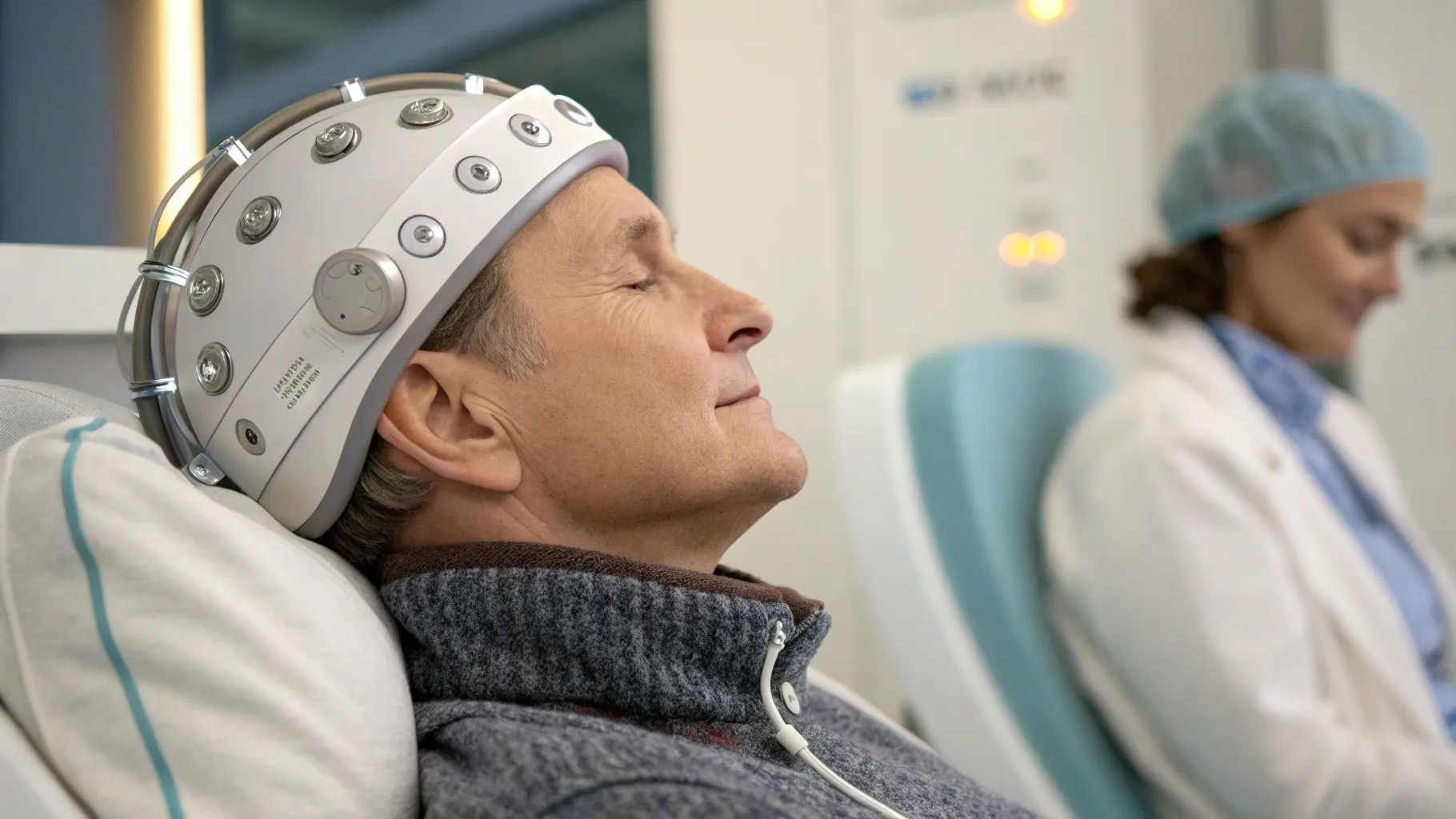
What is Transcranial Magnetic Stimulation?
Transcranial magnetic stimulation works by delivering highly focused magnetic pulses to specific areas of the brain. These pulses pass painlessly through the skull and induce small electrical currents in targeted brain cells, influencing their activity. Unlike electroconvulsive therapy (ECT), TMS does not involve seizures, anesthesia, or a significant recovery period, making it a generally well-tolerated outpatient procedure. The primary goal of this targeted brain stimulation is to either activate or inhibit neural circuits, depending on the therapeutic objective. For instance, in depression treatment, TMS typically aims to stimulate underactive prefrontal cortex regions, restoring more balanced brain function and alleviating symptoms. This precise control over neural activity is what makes neuromodulation via TMS such a compelling and effective treatment option for various conditions.
Key Conditions Treated with TMS Therapy
While originally FDA-approved for major depressive disorder, the applications of TMS therapy have expanded, and research continues to uncover its potential in treating a broader spectrum of neurological and psychiatric conditions. Its ability to precisely target and modify brain activity makes it a versatile tool in the arsenal against complex brain disorders.
Major Depressive Disorder
Major Depressive Disorder (MDD) is the most common indication for Transcranial magnetic stimulation. For patients who have not achieved satisfactory results from antidepressant medications or psychotherapy, TMS offers a non-pharmacological alternative. It targets the dorsolateral prefrontal cortex, a region often underactive in individuals with depression. By stimulating these areas, TMS helps to reset the neural pathways involved in mood regulation, leading to significant and often sustained reductions in depressive symptoms. The success rates for depression treatment using TMS are encouraging, providing hope to those who felt their options were exhausted.
Obsessive-Compulsive Disorder (OCD)
In recent years, neuromodulation using TMS has also gained FDA approval for the treatment of Obsessive-Compulsive Disorder (OCD). Unlike depression, OCD treatment often involves targeting different brain regions and using specific stimulation protocols. The goal is to disrupt the overactive neural circuits associated with compulsive behaviors and intrusive thoughts. Patients undergoing TMS for OCD typically experience a reduction in the severity and frequency of their symptoms, allowing for greater functional improvement and a better quality of life. This demonstrates the versatility of brain stimulation beyond mood disorders.
Emerging Applications
Beyond MDD and OCD, research is actively exploring the potential of Transcranial magnetic stimulation for a variety of other conditions. These include chronic pain, migraines, post-traumatic stress disorder (PTSD), anxiety disorders, and even certain aspects of rehabilitation after stroke. Early findings suggest that precise neuromodulation can offer therapeutic benefits in these areas by targeting specific neural networks implicated in their pathophysiology. The ongoing studies aim to refine protocols and identify optimal stimulation parameters, paving the way for broader clinical applications of this powerful technology.
The Procedure: What to Expect During TMS
Undergoing Transcranial magnetic stimulation is a straightforward and generally comfortable process. Patients remain awake and alert throughout the sessions, which typically last between 20 to 60 minutes. The procedure involves a small electromagnetic coil being placed against the scalp, delivering magnetic pulses to the target brain area. While patients may feel a tapping sensation on the head and hear clicking sounds, it is usually not painful, and most individuals can return to their daily activities immediately after treatment.
- Initial Consultation and Mapping: Before treatment begins, a clinician will conduct an initial consultation to determine the appropriate treatment protocol. This involves mapping the specific brain region to be targeted and determining the optimal dose of magnetic energy, often by identifying the motor cortex.
- Treatment Sessions: A typical course of TMS therapy involves daily sessions, usually five days a week, for four to six weeks. The exact duration and frequency can vary based on the individual's condition and response to treatment. During each session, the patient sits comfortably in a reclining chair.
- Sensations During Treatment: Patients will experience a tapping or clicking sensation on their scalp, which some describe as similar to a woodpecker. Mild discomfort may occur initially, but it typically subsides after the first few sessions. Earplugs are usually provided to dampen the noise from the coil.
- Potential Side Effects: The most common side effect is mild scalp discomfort or headache at the treatment site, which usually lessens after the first week. More serious side effects are rare. Patients can typically drive themselves to and from appointments and resume normal activities immediately.
Advantages and Efficacy of Neuromodulation with TMS
The efficacy of Transcranial magnetic stimulation has been well-established through numerous clinical trials, particularly in the context of treatment-resistant depression. Many patients experience significant symptom reduction, with some achieving full remission. Its non-invasive nature and generally favorable side effect profile make it an attractive option compared to more invasive procedures or systemic medications with broader side effects. The ability of neuromodulation to precisely target specific brain circuits contributes to its effectiveness while minimizing unwanted impacts on other body systems. This selective approach sets it apart in the landscape of therapeutic interventions for mental health.
When comparing Transcranial magnetic stimulation to other forms of depression treatment, distinct advantages emerge. Unlike antidepressant medications, which require daily adherence and can have systemic side effects affecting digestion, sleep, and libido, TMS works locally in the brain and its effects tend to be localized. Furthermore, for individuals who have failed multiple medication trials, TMS often provides a viable path to improvement. Compared to Electroconvulsive Therapy (ECT), which is highly effective but involves inducing a seizure under general anesthesia and often leads to memory side effects, TMS is non-convulsive and does not require sedation, allowing patients to remain awake and alert throughout the procedure and immediately resume their daily activities. This makes brain stimulation via TMS a less disruptive and more convenient option for many patients seeking effective relief from severe mental health conditions.
Future Directions in Brain Stimulation Research
The field of Transcranial magnetic stimulation is continuously evolving, with ongoing research focused on optimizing existing protocols and exploring new therapeutic applications. Scientists are investigating personalized TMS approaches, using advanced neuroimaging to more precisely target individual brain networks. Efforts are also underway to develop novel coil designs and stimulation patterns that could enhance efficacy and reduce treatment duration. The potential for TMS to address a wider range of neurological and psychiatric conditions, including neurodevelopmental disorders and substance use disorders, underscores its role as a frontier technology in brain stimulation. As our understanding of brain connectivity and function deepens, the capabilities of neuromodulation techniques like TMS are expected to grow exponentially, offering even more refined and effective treatments in the years to come.
Frequently Asked Questions
Is Transcranial Magnetic Stimulation painful?
Most patients describe TMS as uncomfortable rather than painful. You might feel a tapping or flicking sensation on your scalp and hear clicking sounds during the treatment. Any discomfort typically diminishes after the first few sessions.
How long does a TMS therapy course last?
A typical course of TMS therapy for depression involves daily sessions, usually five days a week, for four to six weeks. The total duration can vary based on individual response and the specific condition being treated.
Are there any long-term side effects of brain stimulation?
Long-term side effects of Transcranial magnetic stimulation are rare and generally mild. The most common immediate side effects are headache and scalp discomfort, which usually resolve within the first week of treatment. TMS is considered a very safe procedure with a low risk profile.
References
- National Institute of Mental Health. Transcranial Magnetic Stimulation (TMS).
- Mayo Clinic. Transcranial magnetic stimulation.
- American Psychiatric Association. Guideline Watch: Practice Guideline for the Treatment of Patients with Major Depressive Disorder.