Reliable Used Cars: Evaluation Tips for Smart Buyers: An Evidence-Based Assessment Framework
Start With the Vehicle, Not the Listing
Reliable used cars require evaluation beyond appearance, asking price, or mileage. A sound process begins by matching the vehicle with its intended use, then comparing the model year, powertrain, maintenance history, condition, safety record, and ownership costs. Kelley Blue Book advises buyers to look beyond age and odometer readings because condition, maintenance, and use history can matter more than either number alone. 2 This approach reduces the risk of selecting a vehicle whose attractive presentation conceals expensive age-related or usage-related wear.
Model-year research is also important because reliability can vary significantly within the same nameplate. Research should include known mechanical problems, recall patterns, crash-test results, and typical repair requirements for the exact year and trim. Federal complaint data can reveal recurring issues that a short test drive may not expose, while safety ratings are assigned by model and year rather than by brand alone. 7 A shortlist based on documented evidence is more useful than a shortlist based only on styling or seller descriptions.
Verify the Vehicle History and Identity
A vehicle history report can disclose accident records, title status, odometer readings, previous ownership, repairs, and reported maintenance. Experian identifies the VIN-based history report as a central step because it provides information that cannot be confirmed reliably through visual inspection alone. 1 The report should be read line by line, with attention to mileage progression, ownership changes, collision severity, title brands, and gaps between recorded services. A clean report is useful evidence, but it is not proof that every incident was reported.
Identity checks are particularly important when dealing with private sellers or imported vehicles. The VIN should match across the dashboard, door-jamb label, registration documents, and other legal records. In New Zealand, NZ Transport Agency records can help confirm registration history and reported write-off information, while Japanese-import buyers should seek evidence that the odometer has been certified. 11 Any mismatch between the car, paperwork, or seller identity should be treated as a material risk rather than an administrative detail.
Check Safety Records and Legal Status
Safety research should cover both the individual vehicle and the wider model-year record. The National Highway Traffic Safety Administration recall lookup can identify unrepaired safety recalls by VIN, and complaint databases can show patterns involving brakes, steering, airbags, engines, electrical systems, or other components. 10 An open recall does not automatically establish that a vehicle is unsuitable, but the repair status should be verified and safety-critical warnings should be considered before regular use.
Legal and financial status also affects ownership security. In New Zealand, a Personal Property Securities Register check is used to determine whether money remains owing on a vehicle, a concern because an unresolved security interest can create complications for a new owner. 13 Buyers should also distinguish between private sellers and registered motor vehicle traders because their legal rights and obligations differ under Commerce Commission guidance. 17 Written records, valid registration information, and a clear bill of sale provide important protection.
Inspect Mechanical Condition in Person
A visual inspection should examine body-panel alignment, paint consistency, rust, glass, lights, tires, and signs of water intrusion. Uneven panel gaps or mismatched paint can indicate collision repairs, while uneven tire wear may point to alignment, suspension, or inflation problems. Under the hood, evidence of leaks, battery-terminal corrosion, worn belts, damaged hoses, or neglected fluids deserves further investigation. These observations do not establish a final diagnosis, but they identify areas requiring professional confirmation.
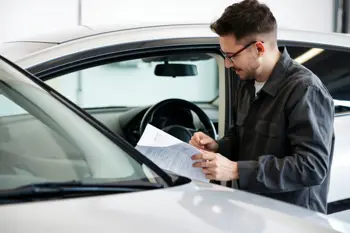
The test drive should include urban roads and higher-speed roads where conditions permit. Changes in transmission behavior, steering response, braking, suspension movement, engine noise, warning lights, and vibration may become clearer under different loads and speeds. A vehicle that starts smoothly when cold and reaches normal operating temperature provides more information than a brief loop around a parking area. The inspection should also compare the vehicle’s actual condition with the maintenance claims recorded in its history report.
Use an Independent Pre-Purchase Inspection
An independent pre-purchase inspection is one of the strongest safeguards against hidden mechanical or structural problems. A qualified mechanic can assess deferred maintenance, wear items approaching replacement, fluid condition, diagnostic trouble codes, evidence of prior repairs, and underbody damage. Negotiated describes an inspection at a buyer-selected shop as a way to supplement, rather than replace, the vehicle history report. 9 The mechanic should receive the VIN and any available records before examining the vehicle.
Inspection arrangements also reveal information about the seller. A seller who permits an independent examination allows the vehicle’s condition to be evaluated by someone without a direct financial interest in the transaction. Resistance, pressure to skip the inspection, or insistence on using only a preferred workshop should be recorded as warning signs. AA New Zealand similarly emphasizes professional pre-purchase inspections as a means of identifying repair exposure before ownership changes. 12 The report should separate urgent safety defects from routine maintenance and cosmetic observations.
Assess Records, Ownership Costs, and Seller Transparency
Maintenance documentation is often more informative than a low odometer reading. Consistent oil changes, scheduled servicing, repair invoices, inspection certificates, and mileage records help establish how the vehicle was used and cared for. The Motor Trade Association provides guidance on evaluating genuine service histories and odometer legitimacy, particularly where imported vehicles are involved. 14 Missing records do not automatically prove neglect, but they increase uncertainty and make a thorough mechanical inspection more important.
The final assessment should include ongoing maintenance, insurance, registration, fuel or charging requirements, tires, likely repairs, and recall completion. Luxury, performance, heavily modified, and technologically complex vehicles can involve greater repair complexity even when their purchase price appears attractive. A written comparison of condition, history, safety, inspection findings, and total ownership exposure helps prevent emotional decisions. The appropriate outcome may be proceeding, negotiating based on documented defects, arranging repairs in writing, or walking away when evidence remains contradictory.
Sources
- Experian, How to Buy a Used Car
- Kelley Blue Book, Buying Older, Used Cars in 2026
- PlainCars, How to Research a Used Car's Safety History Before You Buy
- RecallCheck, Buying a Used Car: Recall and Complaint Checks
- Negotiated, How to Buy a Used Car Without Getting Burned
- NZ Transport Agency
- AA New Zealand
- Consumer NZ
- Motor Trade Association
- Commerce Commission New Zealand